GT survey shows SCO member states’ youth embrace Shanghai Spirit, seek closer ties with China
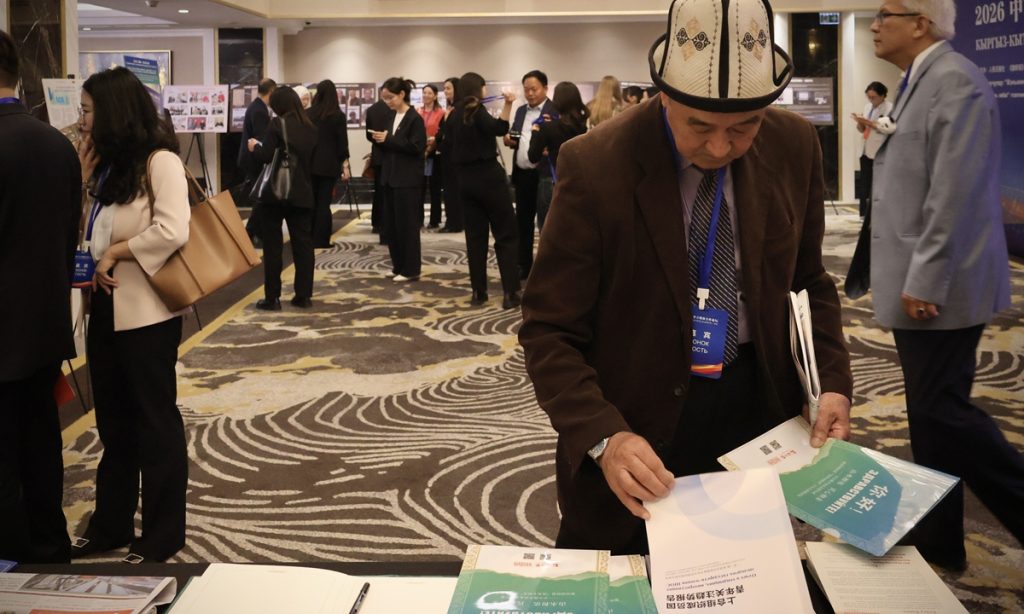
Young people across the Shanghai Cooperation Organisation (SCO) widely endorse the concepts and actions of the SCO, highly appreciate its positive role in global governance and hold high expectations for deepening cooperation across various fields among member states, according to a report released in Bishkek, Kyrgyzstan, on May 27.

The report on interest trends among youth in SCO member states was jointly released by the Secretariat of the Belt and Road News Network (BRNN) and the Global Times at the 2026 China-Kyrgyzstan Media Cooperation Forum held in Bishkek. It is based on a 2025 survey of 10 official SCO member states, as well as data from Global Public Opinion. Focusing on youth perceptions and emerging trends, the report finds that young people are highly invested in employment, entrepreneurship, education, cultural ties, and global partnerships.

The findings show that young respondents strongly identify with the principles of the Shanghai Spirit, featuring mutual trust, mutual benefit, equality, consultation, respect for diverse civilizations and the pursuit of common development. More than 80 percent of respondents believe that development cooperation within the SCO framework has brought tangible benefits to their own countries. Among them, 72 percent cited "promoting high-quality development in home countries," and 62 percent pointed to "bringing more international cooperation and development opportunities." Over 80 percent also affirmed the SCO's positive role in global governance.

China, as a founding member of the SCO, has consistently upheld and acted on the Shanghai Spirit by deepening practical cooperation in various fields with other member states and promoting shared development. The survey shows that among young respondents in SCO countries other than China, more than 90 percent of respondents believe that cooperation with China can positively impact their own country's development and modernization.

More than 90 percent of respodents said that China's development experience in multiple areas is worth learning from. These figures reflect a strong desire among young people across the SCO to deepen cooperation with China and benefit from shared development opportunities.

People-to-people exchanges are one of the most-watched areas of cooperation for young people in SCO member states. More than 90 percent of respondents said they look forward to future SCO cultural and exchange programs and activities. Among the most popular were "youth exchanges," "university/student exchanges," "foreign language learning," and "vocational training." The report concludes that young people are not only interested in macro-level cooperation between countries, but also place great importance on the real-world opportunities brought by education, skills and cross-cultural communication.

Moreover, the concerns of young people in SCO member states show clear contemporary characteristics. Hot topics such as AI, skills development and cultural consumption have become key indicators of trends in employment, education and cultural life. According to the survey, in 2025, media coverage of topics related to "youth," "employment" and "entrepreneurship" in SCO member states saw a 141 percent year-on-year increase in mentions of AI. AI is emerging as an important driver for young people to explore innovation and expand their career opportunities. In education, young people place a high priority on digital skills, practical skills and innovation capabilities, with a clear trend toward digital, remote and cross-cultural learning. At the same time, young respondents maintain a strong sense of their own cultural identity and are developing a cultural awareness that is both locally rooted and globally minded.

Youth represent the future of the SCO and are an important force driving regional cooperation and shared development. The report provides a concentrated picture of the common understandings, real concerns and development expectations of young people in SCO member states, offering a valuable public opinion reference for deepening youth cooperation. Despite a complex and changing international environment, young people in the SCO remain positive about multilateral cooperation and shared development - a sign of the deep youth base and broad prospects for SCO cooperation.

Lao president arrives in Beijing

General Secretary of the Lao People's Revolutionary Party Central Committee and Lao President Thongloun Sisoulith arrives in Beijing, capital of China, June 4, 2026. Thongloun is in China for a five-day state visit. (Photo: Xinhua)

Forest fires should be included in carbon emission accounting system: Chinese scientists

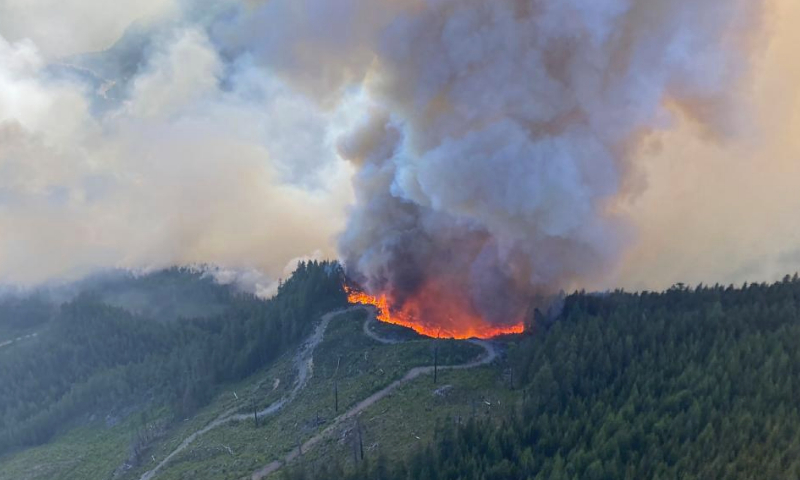
Chinese scientists urged the world to establish a comprehensive carbon accounting system that includes natural processes, especially extreme forest fires, as international delegates are gathering in Dubai to find a deal that will make a real difference in tackling the planet's climate issues at the 28th Conference of the Parties to the UN Framework Convention on Climate Change (COP28), according to the Shenyang-based Institute of Applied Ecology (IAE), Chinese Academy of Sciences (CAS), on Thursday at a press conference on a blue paper on the carbon emissions of forest fires.

Led by the Institute of Applied Ecology, and jointly compiled by the Institute of Earth Environment and the Institute of Atmospheric Physics of the CAS, the document points out that, from 2001 to 2022, the annual average area of forest burned globally was 46.95 million hectares, which is 11 times the annual average increase in artificial forest area during the same period.

During this period, the total carbon dioxide emissions from global forest fires reached 33.9 billion tons, which could increase atmospheric carbon dioxide concentration by 4.35 ppm (parts per million), the blue paper said.

Forest fires are a common disturbance in forest ecosystems, significantly affecting the composition, structure and succession characteristics of forests, thereby altering the material cycling and energy flow of forest ecosystems, said Xu Wenru, a researcher at the IAE and one of the lead authors of the blue paper.

Extreme forest fires have become more frequent in recent years, mainly due to climate change and human activities, leading to an increase in global carbon emissions, according to the blue paper.

"Our study has proven that the amount of emissions from forest fires is huge, so we think it is necessary to include forest fire carbon emissions into a carbon emission accounting system. On the other hand, once established, such a comprehensive accounting system will help urge related governments enhance prevention and management of extreme forest fires," Zhu Jiaojun, director of IAE, told the Global Times.

In terms of the impact of climate change and human activities on extreme forest fires, Zhu noted that these three elements are connected. He called for further scientific research and more international cooperation on fire carbon emissions.

Taking the extreme forest fires in Canada in 2023 as an example, the blue paper points out that direct carbon dioxide emissions from this fire exceeded 1.5 billion tons, higher than the total carbon dioxide emissions from forest fires in Canada over the past 22 years (1.374 billion tons). "This severely weakened the carbon sink function of forest ecosystems," Xu noted.

According to the blue paper, from May to August, the forest fires in Canada emitted a total of 10.02 million tons of PM2.5, causing environmental pollution not only in Canada but also significantly affecting air quality in large areas of the Northern Hemisphere.

The blue paper also presented significant spatial differences in global forest fire carbon dioxide emissions, with the carbon emissions from high-latitude coniferous forest areas in the Northern Hemisphere showing a rapid increasing trend. Between 2001 and 2022, Africa witnessed the largest areas that had been burned each year (33.32 million hectares), followed by Southern America (5.18 million hectares) and Asia (5.12 million hectares).

China's forest area accounts for 5.4 percent of the global total forest, but its carbon emissions from forest fires only account for 0.65 percent of the global total for forest fire emissions, significantly lower than the global average, the blue paper noted. From 2001 to 2022, China's carbon emissions from forest fires showed a significant downward trend, with annual average carbon dioxide emissions of 10 million tons.

China has adhered to the policy of "prevention as the primary focus, combining prevention and control." The country has also established an effective forest fire warning and monitoring system, and a comprehensive fire prevention network. Thanks to the efforts of the whole society, both the frequency and the burned area of forest fires have been declining since 2001, according to Xu.

Georgia: Ambassador attends the 5th China-CEEC SME Cooperation Forum

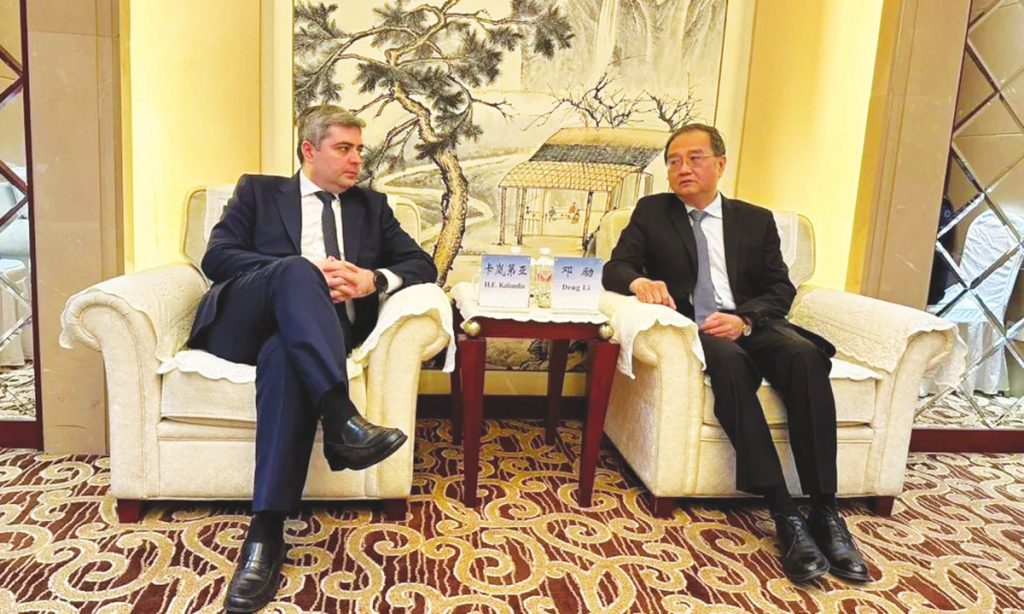
Georgian Ambassador to China Archil Kalandia participated in the 5th China-CEEC SME Cooperation Forum held in Cangzhou, North China's Hebei Province on Monday, with a total of more than 600 Chinese and Central and Eastern European enterprises participating in the forum. During the meeting, Ambassador Kalandia met with China's Vice Foreign Minister Deng Li. 

Ambassador Kalandia reiterated his desire for the Georgian side to be granted the status of observer state in the mechanism of cooperation between China and Central and Eastern European Countries (CEEC). Deng expressed his support for the ambassador's cause. The two sides will continue to hold consultations with the countries of Eastern and Central Europe on the above-mentioned issues.

Deng said that the strengthening of cooperation between small and medium-size enterprises (SME) in China and Central and Eastern European countries is of great practical significance. We should further buttress our development strategies, expand cooperation in areas such as green development and digital transformation, and create new growth points through innovative ways of cooperation, he said at the forum. 

Launched in 2012, the China-CEEC Cooperation Mechanism is a platform for cross-regional cooperation between China and European countries to promote the deepening of economic and trade cooperation between China and Europe.

Six-month-old babies know words for common things, but struggle with similar nouns

Around the six-month mark, babies start to get really fun. They’re not walking or talking, but they are probably babbling, grabbing and gumming, and teaching us about their likes and dislikes. I remember this as the time when my girls’ personalities really started making themselves known, which, really, is one of the best parts of raising a kid. After months of staring at those beautiful, bald heads, you start to get a glimpse of what’s going on inside them.

When it comes to learning language, it turns out that a lot has already happened inside those baby domes by age 6 months. A new study finds that babies this age understand quite a bit about words — in particular, the relationships between nouns.
Work in toddlers, and even adults, reveals that people can struggle with word meanings under difficult circumstances. We might briefly falter with “shoe” when an image of a shoe is shown next to a boot, for instance, but not when the shoe appears next to a hat. But researchers wanted to know how early these sorts of word relationships form.

Psychologists Elika Bergelson of Duke University and Richard Aslin, formerly of the University of Rochester in New York and now at Haskins Laboratories in New Haven, Conn., put 51 6-month-olds to a similar test. Outfitted with eye-tracking gear, the babies sat on a parent’s lap and looked at a video screen that showed pairs of common objects. Sometimes the images were closely related: mouth and nose, for instance, or bottle and spoon. Other pairs were unrelated: blanket and dog, or juice and car.

When both objects were on the screen, the parents would say a sentence using one of the words: “Where is the nose?” for instance. If babies spent more time looking at the nose than the other object, researchers inferred that the babies had a good handle on that word.

When the babies were shown tricky pairs of closely related objects, like a cup of juice and a cup of milk, the babies spent nearly equal time looking at both pictures, no matter what word their parents said. But when the images were really distinct (juice and car, for instance) the babies spent more time looking at the spoken word.
These babies detected a difference between the “milk-juice” pair and the “juice-car” pair, recognizing that one pair is similar and the other isn’t, the researchers conclude November 20 in the Proceedings of the National Academy of Sciences.
To see whether this ability was tied to domestic life, the researchers sent the babies home with specialized gear: vests with audio recorders and adorable hats outfitted with small video cameras, one just above each ear. A camera on a tripod in a corner of the home also captured snippets of daily life. The resulting video and audio recordings revealed that babies whose caregivers used more nouns for objects in the room were better at the word task in the lab.

That means that babies learn words well when they can actually see the object being talked about. Hearing, “Open your mouth. Here comes the spoon!” as they watch the spoon come flying toward their face makes a bigger vocabulary impression than “Did you like riding in the car yesterday?”

A similar idea came from a recent study on preschoolers. These kids learned best when they saw one picture at a time (or when parents pointed at the relevant object). Babies — and older kids, too — like to see what you’re talking about.

The results are too early to provide advice to parents, says Bergelson, a cognitive and developmental psychologist. “But I think one thing suggested by our work is that parents should consider their young baby to be a real conversational partner,” she says. “Even young infants are listening and learning about words and the world around them before they start talking themselves, and their caregivers make that possible.”

There’s still lots to figure out about how babies soak up vocabulary. And as scientists come up with more ways to peer into the mysterious inner workings of a baby’s mind, those answers might lead to even more interesting conversations with our babies.

Tree rings tell tale of drought in Mongolia over the last 2,000 years

A new analysis is shedding light on drought in Mongolia, both past and future.

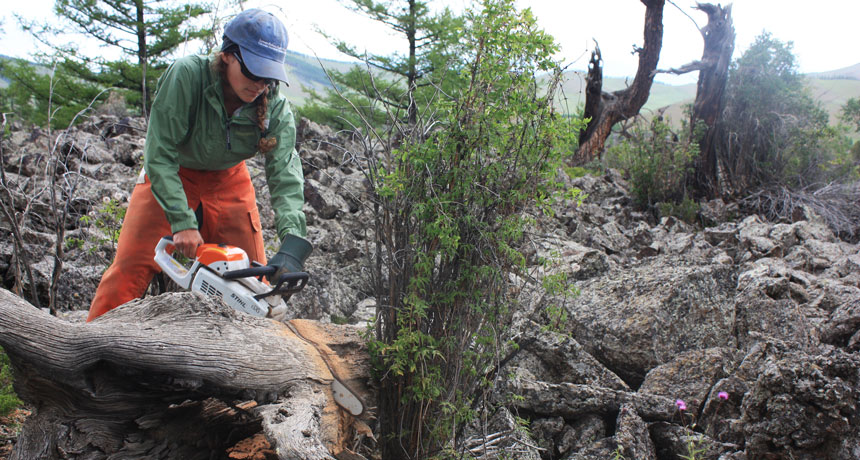
By studying the rings of semifossilized trees, researchers constructed a climate history for the semiarid Asian nation spanning the last 2,060 years — going 1,000 years further back than previous studies.

It was suspected that a harsh drought from about 2000 to 2010 that killed tens of thousands of livestock was unprecedented in the region’s history and primarily the result of human-caused climate change. But the tree ring data show that the dry spell, while rare in its severity, was not outside the realm of natural climate variability, researchers report online March 14 in Science Advances.
“This is a part of the world where we don’t know about the past climate,” says Park Williams, a bioclimatologist at Columbia University’s Lamont-Doherty Earth Observatory in Palisades, N.Y., who was not involved with the study. “Having this record is a great resource for trying to understand past droughts in the region.”

In recent years, many studies have sought to unsnarl the role of anthropogenic climate change from natural variability on extreme weather events (SN: 1/20/18, p. 6). Such work is necessary for more accurately predicting future climate trends and helping governments prepare for the most severe scenarios, says study coauthor Amy Hessl, a physical geographer at West Virginia University in Morgantown. This is especially true in countries like Mongolia that lack certain infrastructure, such as enough water reservoirs, to ease the impact of events like prolonged drought.

Hessl and her colleagues studied tree rings in hundreds of samples of Siberian pines, well-preserved by Mongolia’s naturally dry climate. A ring’s width indicates how much the tree grew in a year. In wet years, the rings are wider; in dry years, skinnier.
The recent dry spell was the severest in recorded history. But the rings showed that an even more severe drought took place around the year 800, long before anthropogenic climate change began.

Still, computer simulations suggest that about a third of the recent drought’s severity could have been caused by elevated temperatures linked to climate change, the researchers found. The finding is consistent with studies on how climate change has affected other recent droughts in South Africa and California.

Using computer simulations, Hessl and her colleagues conclude that droughts in coming decades may not be any worse than those seen in Mongolia’s past. The team predicts that as global temperatures rise over the next century, Mongolia will first become drier, then wetter. Increased heat initially will dry out the plains. But at a certain point, hot air holds more moisture, leading to increased precipitation.

Those climate patterns will likely guide how Mongolia develops, Hessl says, because they have in the past. In 2014, she and colleagues published a paper detailing how a 15-year period of unprecedented temperate and rainy conditions in 13th century Mongolia may have led to the rise of Genghis Khan (SN Online: 3/10/14).

Josep Cornella breaks boundaries to make new and better catalysts

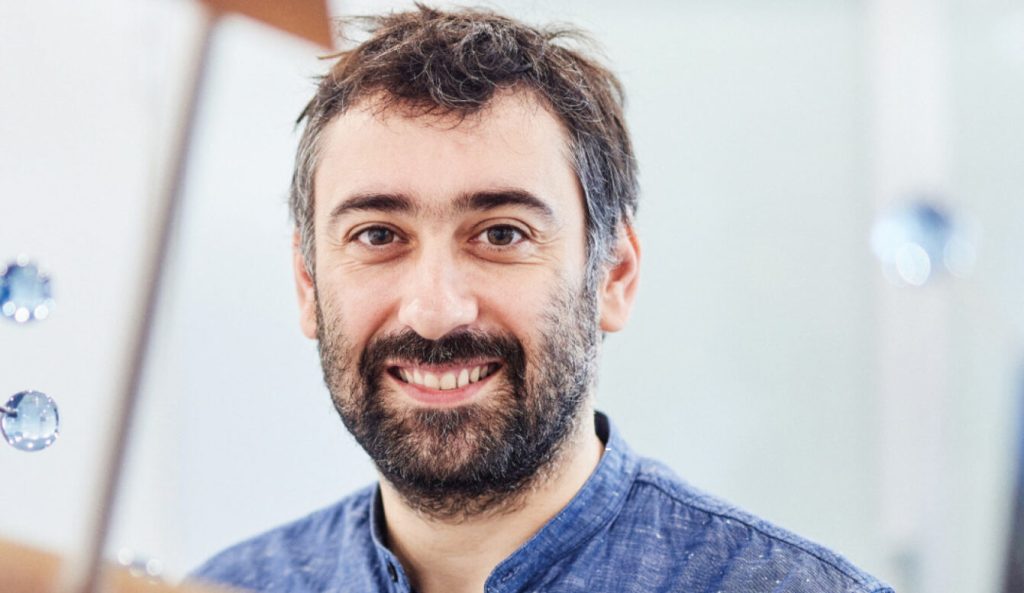
Josep Cornella doesn’t deal in absolutes. While chemists typically draw rigid lines between organic and inorganic chemistry, Cornella, a researcher at Max-Planck-Institut für Kohlenforschung in Mülheim an der Ruhr, Germany, believes in just the opposite.

“You have to be open to cross boundaries,” he says, “and learn from it.” The fringes are “where the rich new things are.”

Cornella is an organic chemist by industry standards; he synthesizes molecules that contain carbon. But he’s put together a team from a wide range of backgrounds: inorganic chemists, physical organic chemists, computational chemists. Together, the team brainstorms novel approaches to designing new catalysts, so that chemical reactions essential to pharmaceuticals and agriculture can be made more efficient and friendly for the environment. Along the way, Cornella has unlocked mysteries that stumped chemists for years.

“He has told us about catalysts … that we didn’t have before, and which were just pipe dreams,” says Hosea Nelson, a chemist at Caltech who has not worked with Cornella.
Bold idea
When Cornella heard a speaker at a 2014 conference say that bismuth was nontoxic, he was sure it was a mistake. Bismuth is a heavy metal that sits between toxic lead and polonium on the periodic table. But it is indeed relatively nontoxic — it’s even used in the over-the-counter nausea medicine Pepto-Bismol.

Still, bismuth remains poorly understood. That’s one reason it attracted him. “It was a rather forgotten element of the periodic table,” Cornella says. But, “it’s there for a reason.”

Cornella started wondering if an element like bismuth could be trained for use as a catalyst. For the last century, scientists have been using transition metals, like palladium and iron, as the main catalysts in industrial synthesis. “Could we actually train [bismuth] to do what these guys do so well?” he asked. It was a conceptual question that “was completely naïve, or maybe stupid.”

Far from stupid: His team successfully used bismuth as a catalyst to make a carbon-fluorine bond. And bismuth didn’t just mimic a transition metal’s role — it worked better. Only a small amount of bismuth was required, much less than the amount of transition metal needed to complete the same task.

“A lot of people, including myself and other [researchers] around the world, have spent a lot of time thinking about how to make bismuth reactions catalytic,” Nelson says. “He’s the guy who cracked that nut.”

Standout research
While the bismuth research is “weird” and “exciting,” Cornella says, it remains a proof of concept. Bismuth, though cheap, is not as abundant as he had hoped, so it’s not a very sustainable option for industry.

But other Cornella team findings are already being used in the real world. In 2019, the group figured out how to make an alternative to Ni(COD)2, a finicky catalyst commonly used by chemists in the lab. If it’s not kept at freezing temperatures and protected from oxygen by a layer of inert gases, the nickel complex falls apart.

The alternative complex, developed by Lukas Nattmann, a Ph.D. student in Cornella’s lab at the time, stays stable in oxygen at room temperature. It’s a game changer: It saves energy and materials, and it’s universal. “You can basically take all those reactions that were developed for 60 years of Ni(COD)2 and basically replace all of them with our catalyst, and it works just fine,” Cornella says.
Cornella’s lab is also developing new reagents, substances that transform one material into another. The researchers are looking to transform atoms in functional groups — specific groupings of atoms that behave in specific ways regardless of the molecules they are found in — into other atoms in a single step. Doing these reactions in one step could cut preparation time from two weeks to a day, which would be very useful in the pharmaceutical industry

Taking risks
It’s the success that gets attention, but failure is “our daily basis,” Cornella says. “It’s a lot of failure.” As a student, when he couldn’t get a reaction to work, he’d set up a simple reaction called a TBS protection — the kind of reaction that’s impossible to get wrong — to remind himself that he wasn’t “completely useless.”

Today he runs a lab that champions taking risks. He encourages students to learn from one another about areas they know nothing about. For instance, a pure organic chemist could come into Cornella’s lab and leave with a good understanding of organometallic chemistry after spending long days working alongside a colleague who is an expert in that area.

To Cornella, this sharing of knowledge is crucial. “If you tackle a problem from just one unique perspective,” he says, “maybe you’re missing some stuff.”

While Cornella might not like absolutes, Phil Baran, who advised Cornella during his postdoctoral work at Scripps Research in San Diego, sees Cornella as fitting into one of two distinct categories: “There are chemists who do chemistry in order to eat, like it’s a job. And there are chemists who eat in order to do chemistry,” Baran says. Cornella fits into the latter group. “It’s his oxygen.”

Mangrove forests expand and contract with a lunar cycle

The glossy leaves and branching roots of mangroves are downright eye-catching, and now a study finds that the moon plays a special role in the vigor of these trees.

Long-term tidal cycles set in motion by the moon drive, in large part, the expansion and contraction of mangrove forests in Australia, researchers report in the Sept. 16 Science Advances. This discovery is key to predicting when stands of mangroves, which are good at sequestering carbon and could help fight climate change, are most likely to proliferate (SN: 11/18/21). Such knowledge could inform efforts to protect and restore the forests.
Mangroves are coastal trees that provide habitat for fish and buffer against erosion (SN: 9/14/22). But in some places, the forests face a range of threats, including coastal development, pollution and land clearing for agriculture. To get a bird’s-eye view of these forests, Neil Saintilan, an environmental scientist at Macquarie University in Sydney, and his colleagues turned to satellite imagery. Using NASA and U.S. Geological Survey Landsat data from 1987 to 2020, the researchers calculated how the size and density of mangrove forests across Australia changed over time.

After accounting for persistent increases in these trees’ growth — probably due to rising carbon dioxide levels, higher sea levels and increasing air temperatures — Saintilan and his colleagues noticed a curious pattern. Mangrove forests tended to expand and contract in both extent and canopy cover in a predictable manner. “I saw this 18-year oscillation,” Saintilan says.

That regularity got the researchers thinking about the moon. Earth’s nearest celestial neighbor has long been known to help drive the tides, which deliver water and necessary nutrients to mangroves. A rhythm called the lunar nodal cycle could explain the mangroves’ growth pattern, the team hypothesized.

Over the course of 18.6 years, the plane of the moon’s orbit around Earth slowly tips. When the moon’s orbit is the least tilted relative to our planet’s equator, semidiurnal tides — which consist of two high and two low tides each day — tend to have a larger range. That means that in areas that experience semidiurnal tides, higher high tides and lower low tides are generally more likely. The effect is caused by the angle at which the moon tugs gravitationally on the Earth.

Saintilan and his colleagues found that mangrove forests experiencing semidiurnal tides tended to be larger and denser precisely when higher high tides were expected based on the moon’s orbit. The effect even seemed to outweigh other climatic drivers of mangrove growth, such as El Niño conditions. Other regions with mangroves, such as Vietnam and Indonesia, probably experience the same long-term trends, the team suggests.

Having access to data stretching back decades was key to this discovery, Saintilan says. “We’ve never really picked up before some of these longer-term drivers of vegetation dynamics.”

It’s important to recognize this effect on mangrove populations, says Octavio Aburto-Oropeza, a marine ecologist at the Scripps Institution of Oceanography in La Jolla, Calif., who was not involved in the research.

Scientists now know when some mangroves are particularly likely to flourish and should make an extra effort at those times to promote the growth of these carbon-sequestering trees, Aburto-Oropeza says. That might look like added limitations on human activity nearby that could harm the forests, he says. “We should be more proactive.”

Here’s how olivine may trigger deep earthquakes

Cocooned within the bowels of the Earth, one mineral’s metamorphosis into another may trigger some of the deepest earthquakes ever detected.

These cryptic tremors — known as deep-focus earthquakes — are a seismic conundrum. They violently rupture at depths greater than 300 kilometers, where intense temperatures and pressures are thought to force rocks to flow smoothly. Now, experiments suggest that those same hellish conditions might also sometimes transform olivine — the primary mineral in Earth’s mantle — into the mineral wadsleyite. This mineral switch-up can destabilize the surrounding rock, enabling earthquakes at otherwise impossible depths, mineral physicist Tomohiro Ohuchi and colleagues report September 15 in Nature Communications.
“It’s been a real puzzle for many scientists because earthquakes shouldn’t occur deeper than 300 kilometers,” says Ohuchi, of Ehime University in Matsuyama, Japan.

Deep-focus earthquakes usually occur at subduction zones where tectonic plates made of oceanic crust — rich in olivine — plunge toward the mantle (SN: 1/13/21). Since the quakes’ seismic waves lose strength during their long ascent to the surface, they aren’t typically dangerous. But that doesn’t mean the quakes aren’t sometimes powerful. In 2013, a magnitude 8.3 deep-focus quake struck around 609 kilometers below the Sea of Okhotsk, just off Russia’s eastern coast.

Past studies hinted that unstable olivine crystals could spawn deep quakes. But those studies tested other minerals that were similar in composition to olivine but deform at lower pressures, Ohuchi says, or the experiments didn’t strain samples enough to form faults.

He and his team decided to put olivine itself to the test. To replicate conditions deep underground, the researchers heated and squeezed olivine crystals up to nearly 1100° Celsius and 17 gigapascals. Then the team used a mechanical press to further compress the olivine slowly and monitored the deformation.

From 11 to 17 gigapascals and about 800° to 900° C, the olivine recrystallized into thin layers containing new wadsleyite and smaller olivine grains. The researchers also found tiny faults and recorded bursts of sound waves — indicative of miniature earthquakes. Along subducting tectonic plates, many of these thin layers grow and link to form weak regions in the rock, upon which faults and earthquakes can initiate, the researchers suggest.

“The transformation really wreaks havoc with the [rock’s] mechanical stability,” says geophysicist Pamela Burnley of the University of Nevada, Las Vegas, who was not involved in the research. The findings help confirm that olivine transformations are enabling deep-focus earthquakes, she says.

Next, Ohuchi’s team plans to experiment on olivine at even higher pressures to gain insights into the mineral’s deformation at greater depths.

Looking for a job? Lean more on weak ties than strong relationships

The key to landing your dream job could be connecting with and then sending a single message to a casual acquaintance on social media.

That’s the conclusion of a five-year study of over 20 million users on the professional networking site LinkedIn, researchers report in the Sept. 16 Science. The study is the first large-scale effort to experimentally test a nearly 50-year-old social science theory that says weak social ties matter more than strong ones for getting ahead in life, including finding a good job.
“The weak tie theory is one of the most celebrated and cited findings in social science,” says network scientist Dashun Wang of Northwestern University in Evanston, Ill., who coauthored a perspective piece in the same issue of Science. This study “provides the first causal evidence for this idea of weak ties explaining job mobility.”

Sociologist Mark Granovetter of Stanford University proposed the weak tie theory in 1973. The theory, which has garnered nearly 67,000 scientific citations, hinges on the idea that humans cluster into social spheres that connect via bridges (SN: 8/13/03). Those bridges represent weak social ties between people, and give individuals who cross access to realms of new ideas and information, including about job markets.

But the influential theory has come under fire in recent years. In particular, a 2017 analysis in the Journal of Labor Economics of 6 million Facebook users showed that increasing interaction with a friend online, thereby strengthening that social tie, increased the likelihood of working with that friend.

In the new study, LinkedIn gave Sinan Aral, a managerial economist at MIT, and his team access to data from the company’s People You May Know algorithm, which recommends new connections to users. Over five years, the social media site’s operators used seven variations of the algorithm for users actively seeking connections, each recommending varying levels of weak and strong ties to users. During that time, 2 billion new ties and 600,000 job changes were noted on the site.

Aral and his colleagues measured tie strength via the number of mutual LinkedIn connections and direct messages between users. Job transitions occurred when two criteria were met: A pair connected on LinkedIn at least one year prior to the job seeker joining the same company as the other user; and the user who first joined the company was there for at least a year before the second user came onboard. Those criteria were meant in part to weed out situations where the two could have ended up at the same company by chance.
Overall, weak ties were more likely to lead to job changes than strong ones, the team found. But the study adds a twist to the theory: When job hunting, mid-tier friends are more helpful than either one’s closest friends or near strangers. Those are the friends with whom you share roughly 10 connections and seldom interact, Aral says. “They’re still weak ties, but they are not the weakest ties.”

The researchers also found that when a user added more weak ties to their network, that person applied to more jobs overall, which converted to getting more jobs. But that finding applied only to highly digitized jobs, such as those heavily reliant on software and amenable to remote work. Strong ties were more beneficial than weak ties for some job seekers outside the digital realm. Aral suspects those sorts of jobs may be more local and thus reliant on members of tight-knit communities.

The finding that job seekers should lean on mid-level acquaintances corroborates smaller studies, says network scientist Cameron Piercy of the University of Kansas in Lawrence who wasn’t involved in either the 2017 study or this more recent one.

That evidence suggests that the weakest acquaintances lack enough information about the job candidate, while the closest friends know too much about the candidate’s strengths — and flaws. “There’s this medium-ties sweet spot where you are willing to vouch for them because they know a couple people that you know,” Piercy says.

But he and others also raise ethical concerns about the new study. Piercy worries about research that manipulates people’s social media spaces without clearly and obviously indicating that it’s being done. In the new study, LinkedIn users who visited the “My Network” page for connection recommendations — who make up less than 5 percent of the site’s monthly active users — got automatically triggered into the experiment.

And it’s unclear how LinkedIn, whose researchers are coauthors of the study, will use this information moving forward. “When you are talking about people’s work, their ability to make money, this is important,” Piercy says. The company “should recommend weak ties, the version of the algorithm that led to more job attainment, if its purpose is to connect people with work. But they don’t make that conclusion in the paper.”

Another limitation is that the analyzed data lacked vital demographic information on users. That was for privacy reasons, the researchers say. But breaking down the results by gender is crucial as some evidence suggests that women — but not men — must rely on both weak and strong ties for professional advancement, Northwestern’s Wang says.

Still, with over half of jobs generally found through social ties, the findings could point people toward better ways to hunt for a job in today’s tumultuous environment. “You may have seen these recommendations on LinkedIn and you may have ignored them. You think ‘Oh, I don’t really know that person,’” Aral says. “But you may be doing yourself a disservice.”