Rescue efforts continue as Shanxi coal mine blast leaves 82 dead, 2 missing

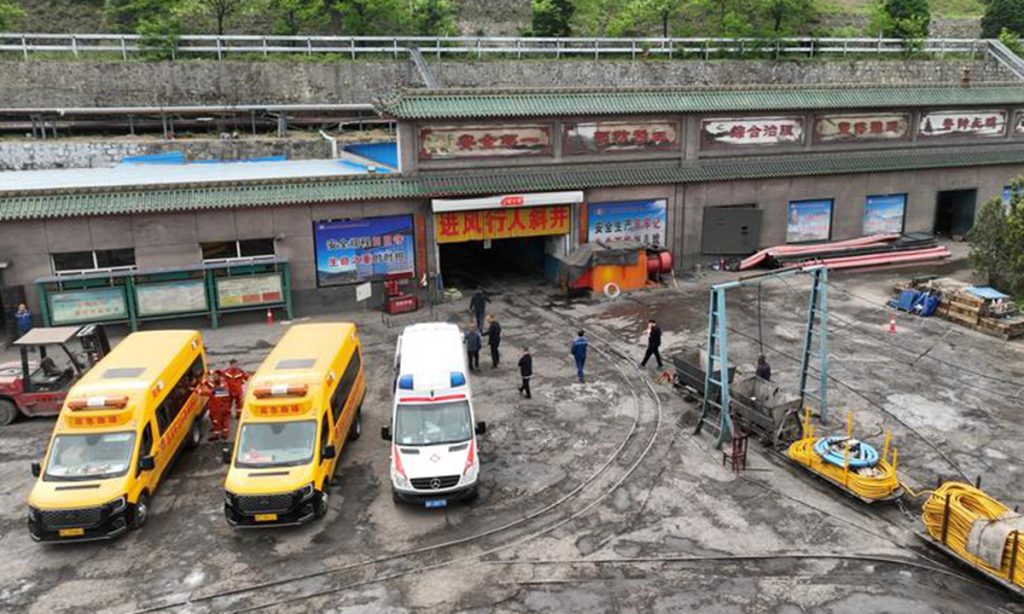
Rescue efforts continued on Sunday after a gas explosion hit Liushenyu coal mine in Qinyuan county of Changzhi, North China's Shanxi Province at 7:29 pm on Friday.

A total of 82 people have been confirmed dead, with two still missing and 128 injured.

The disaster at the Shanxi Tongzhou coal mine has drawn national attention as rescuers pressed ahead with search operations amid complex underground conditions, and the risk of secondary hazards. At the same time, growing scrutiny is being directed at the company's production safety management.

The gas explosion took place when more than 200 people were down the shaft, according to the county's emergency management bureau.

Chinese President Xi Jinping has urged all-out rescue of the missing and treatment of the injured, and demanded a thorough investigation into its cause, with accountability pursued in accordance with the law, according to the Xinhua News Agency.

Xi, also general secretary of the Communist Party of China (CPC) Central Committee and chairman of the Central Military Commission, stressed that authorities across the country must learn lessons from the accident, remain vigilant on workplace safety, and intensify efforts to identify and eliminate potential risks in order to prevent major accidents.

Vice Premier Zhang Guoqing, also a member of the Political Bureau of the CPC Central Committee, led a team to the site to oversee the rescue efforts and the handling of the accident's aftermath, Xinhua reported.

All-out rescue

Local officials said on Saturday that 128 injured people were rescued. Of these, 124 sustained minor injuries, two were seriously injured and two remained in critical condition, all of whom are receiving treatment at Changzhi People's Hospital. The latest reports indicate that the patients are in stable condition, and 124 patients with minor injuries had been transferred to tertiary hospitals for close observation and treatment, the Xinhua News Agency reported. 35 escaped unharmed, according to Xinhua.

The province has sent 755 people including rescuers and medical personnel to the site. The Ministry of Emergency Management earlier said it had dispatched six national mine emergency rescue teams, totaling 345 people, to assist in rescue efforts, Xinhua reported.

The rescue operation on Sunday focused on locating the two people still missing. Yang Yang, deputy head of the Shanxi Huayang branch team of the national mine emergency rescue Force, told the Global Times that the explosion caused partial collapses in underground tunnels, leaving debris and damaged structures that have complicated the search. 

Accumulated water underground and ventilation problems in some sections have further increased the difficulty and risks facing rescue teams, Yang said. 

Following the accident, several professional mine rescue teams have been taking turns entering the mine to search for the missing in flooded tunnels near the blast site. Rescuers found visible ground collapses in two underground tunnels and had to build temporary bridges to move forward, China Central Television (CCTV) reported on Sunday.

The operation has been further complicated by discrepancies between the maps provided by Liushenyu coal mine and the actual underground layout. Rescuers discovered two previously unmarked tunnels at the site and are continuing to check whether there are more hidden passages nearby. More than one kilometer of flooded tunnel near the explosion site still needs to be searched, adding to the difficulty and complexity of the ongoing rescue operation, CCTV noted. 

According to the rescue command center for the Liushenyu coal mine explosion in Shanxi, the priority on Sunday is to conduct repeated underground search operations, particularly re-searching areas that have already been covered, to ensure no location is missed. 

Rescuers early on Sunday deployed mine inspection robots underground to assist search efforts. The robots are equipped with gas sensors and real-time cameras, enabling it to enter areas inaccessible to rescuers to collect data and information. Rescue personnel also descended into the mine to operate the robots underground, Xinhua reported.

The most pressing technical challenge facing rescuers is preventing a secondary explosion. The initial blast may have left open flames and high-temperature spots underground, while gas continues to seep from coal seams. With the mine's ventilation system damaged, the gas cannot be effectively dispersed, creating a highly volatile environment in which gas and ignition sources could come into contact again at any time, Hu Qianting, a professor from school of Resources and Safety Engineering of Chongqing University, told that Global Times. 

Rescuers must first focus on locating and extinguishing fire sources while ensuring the safety of rescue teams. Large-scale search and rescue operations can only begin once fire hazards are brought under control and underground gas concentrations are reduced to safe levels, Hu said. 

Shanxi Province activated its medical emergency response mechanism, coordinating local medical resources and dispatching provincial medical experts to assist frontline rescue and treatment efforts.

China's National Health Commission organized multidisciplinary remote consultations involving trauma and intensive care specialists from Peking University People's Hospital and respiratory experts to optimize treatment plans. Three specialists from Beijing were also dispatched to the scene to support rescue and treatment efforts, per Xinhua. 

Multiple countries including Russia, South Korea Egypt, Canada, Pakistan, India and Japan have conveyed their condolences to the victims.

Russian President Vladimir Putin on Saturday expressed condolences. "Please convey my sympathy and support to the families of the deceased miners, as well as my best wishes for a speedy recovery to all those injured," Putin said, according to the Kremlin.

Kyrgyz President Sadyr Zhaparov on Saturday said he learned "with deep sorrow" about the loss of life caused by the explosion. "On behalf of the people of the Kyrgyz Republic and on my own behalf, I express my sincere condolences to the families and loved ones of the victims, sharing their grief at their loss, and I also wish a speedy recovery to all those injured," Zhaparov said, according to the Kyrgyz presidential press service.

South Korean President Lee Jae-Myung wrote in Korean and Chinese on X that "Upon learning of the gas explosion accident at a coal mine in Shanxi Province, China, which has caused significant casualties, I feel profound regret and sorrow. I hope that, through the efforts of the Chinese government and relevant departments, this incident will be properly handled at an early date."

Thorough investigation

In a meeting at the on-site command center, Chinese Vice Premier Zhang Guoqing, ordered a thorough investigation and strict accountability after the accident and urged authorities to mobilize professional forces to carry out scientific search and rescue operations with all-out efforts while preventing secondary casualties, per Xinhua. 

China's State Council investigation team should conduct a rigorous and uncompromising investigation into the explosion to thoroughly identify the cause of the accident, determine the responsibilities of local authorities, industry regulators and the enterprise involved, and impose strict penalties in accordance with laws and regulations, Zhang said.

According to the Shanxi Xinwen Lianbo, a local flagship daily news program, Shanxi vowed to carry out in-depth investigation and rectification of safety risks and hidden dangers in the coal mining sector across the entire province.

Changzhi held a press conference on Saturday to brief the public. Participants at the press conference stood in silence to mourn the victims. Chen Xiangyang, deputy Party chief and mayor of Changzhi, said preliminary assessments indicate that the coal mine company involved committed serious violations of laws and regulations, according to the People's Daily. 

Calling the accident "extremely serious" and its lessons "profoundly painful," Chen said Changzhi would draw lessons from the tragedy, conduct a thorough review, and launch a citywide campaign to identify and rectify workplace safety risks, with coal mines as the top priority.

Xinhua reported on Saturday that the persons responsible for the company involved in the mine accident are under investigation in accordance with the law, local authorities said. 

A report by CCTV on Sunday showed that a board recording underground personnel indicated that 124 people had entered the mine at the time of the explosion. However, after verification by multiple parties, the actual number of people underground was found to be 247, with 123 individuals lacking valid information in the system. 

Public records show that Liushenyu Coal Mine has a designed annual production capacity of 1.2 million tons and is classified as a high-gas mine. In 2024, the National Mine Safety Administration included four coal mines under Tongzhou Group on its list of operating coal mines facing serious disaster risks, including high gas levels and coal-and-gas outburst hazards. Among them was Shanxi Tongzhou Group Liushenyu Coal Industry Co. All four Tongzhou Group coal mines have now been ordered to suspend production for rectification, according to CCTV.

Moreover, a WeChat account affiliated with China Emergency Management News disclosed that 247 workers had entered the mine, but 103 of them were not carrying underground positioning cards. The maps submitted by the mine operator did not match the actual tunnel layout. The lack of personnel positioning data and accurate underground maps posed some of the biggest difficulties for the rescue operation. Some areas encountered by rescuers were not marked at all, forcing the command center to send in additional teams to conduct repeated tunnel-by-tunnel searches.

Hu said China's coal mine gas-monitoring technology and regulatory framework are already relatively mature, with systems designed to automatically sound alarms and transmit real-time data to local regulators once gas levels exceed limits. However, technology alone cannot guarantee safety. Its effectiveness depends on proper installation, truthful data collection and strict compliance with safety procedures. 

If companies evade supervision or put output and profit above safety, even advanced monitoring systems cannot prevent accidents. The key lies in enforcement, accountability and a genuine safety-first approach, Hu said, noting that as economic and social development advances, public expectations for safety will only continue to rise. Safety is never a finished task; it requires constant vigilance and continuous improvement.

A commentary published by the People's Daily on Sunday said that every accident should serve as a warning. Authorities at all levels must draw lessons from such tragedies, strengthen bottom-line and worst-case thinking, and always keep workplace safety at the forefront.

Safety must be secured in the process of development, and development must be pursued on the foundation of safety. Only with an unwavering sense of responsibility and constant vigilance over every link in workplace safety can the peace and well-being of millions of families be protected, read the article. 

Letters to home

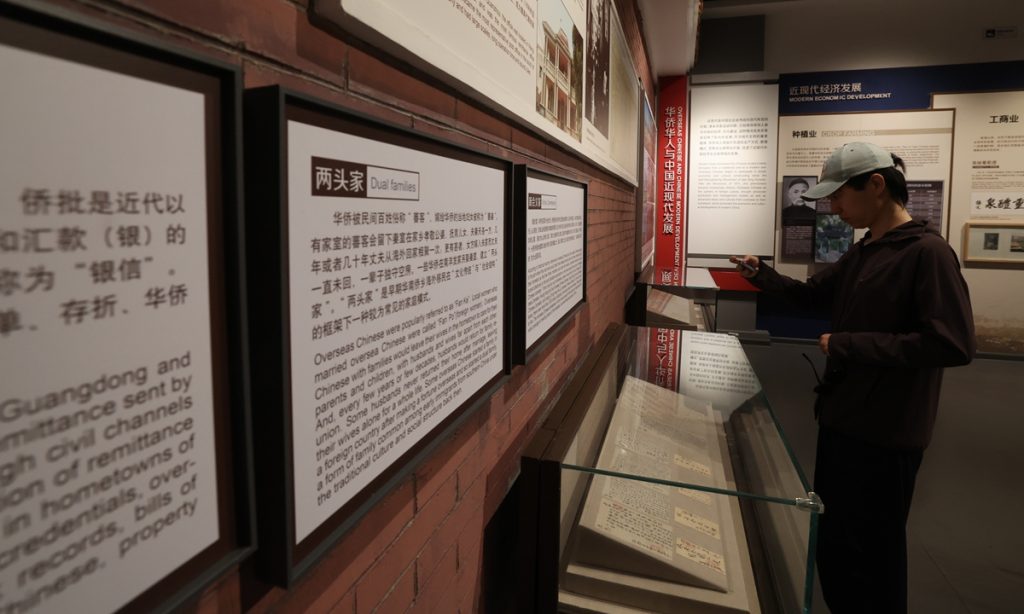
A visitor views exhibits related to "qiaopi," or personal letters sent by overseas Chinese, at the Overseas Chinese History Museum of China in Beijing on May 21, 2026. The unique form of family correspondence has drawn renewed public attention following the release of the film Dear You, which centers on the history and emotions behind "qiaopi." Photo: VCG

Water lilies bloom

Visitors admire and photograph blooming water lilies at Huqiu Wetland Park in Suzhou, East China's Jiangsu Province, on Thursday, May 21, 2026. Photos on this page: VCG

US business leaders express optimism on cooperation, highlight vital importance of Chinese market

Top US business leaders from Silicon Valley and Wall Street, joining US President Donald Trump on his China trip, reaffirmed the vital role of the Chinese market, as a key leaders' meeting in Beijing on Thursday brought renewed focus to deepening bilateral economic ties.

Besides meeting with President Trump, Chinese President Xi Jinping on Thursday also met with US entrepreneurs accompanying President Trump on his visit to China, the Xinhua News Agency reported.

Xi said that US companies are deeply involved in China's reform and opening up, and both sides have benefited from this. Noting that China's door will only open wider, the Chinese leader said China welcomes the US to enhance mutually beneficial cooperation with China, and expressed the belief that US companies will enjoy even broader prospects in China, according to Xinhua. 

Trump said that he had brought with him outstanding representatives from the US business community, all of whom respect and value China, and that he encourages them to expand cooperation with China, the report said.

The US entrepreneurs said that they attach great importance to the Chinese market, and hope to deepen their business operations in China and strengthen cooperation with China, Xinhua reported. 

According to Xinhua, senior executives from more than 10 well-known US companies are visiting China as part of the delegation, including Apple CEO Tim Cook, Nvidia founder and CEO Jensen Huang, and Tesla CEO Elon Musk.

The collective visit by these corporate leaders underscores the strong expectations within the US business community for deeper practical cooperation between China and the US, and for advancing mutual benefit and win-win outcomes, analysts said.

During the visit, multiple American business representatives in the delegation, who are leaders in their respective industries, expressed optimism about China-US cooperation while highlighting the importance of the Chinese market for their businesses. 

Apple CEO Tim Cook said it was "so great to be back in China," while NVIDIA CEO Jensen Huang described the experience as "incredible" and praised the warm hospitality, according to the CCTV News. 

Moreover, Huang said in an interview with the Xinhua News Agency that one of the single most important things China is already doing is focusing on AI and making sure that AI is being applied into every single industry, in healthcare and the life sciences and manufacturing. It's already opening up new opportunities for China, he added.

Tesla CEO Elon Musk told Xinhua that "I have a good feeling about these talks, and I think there will be good results." 

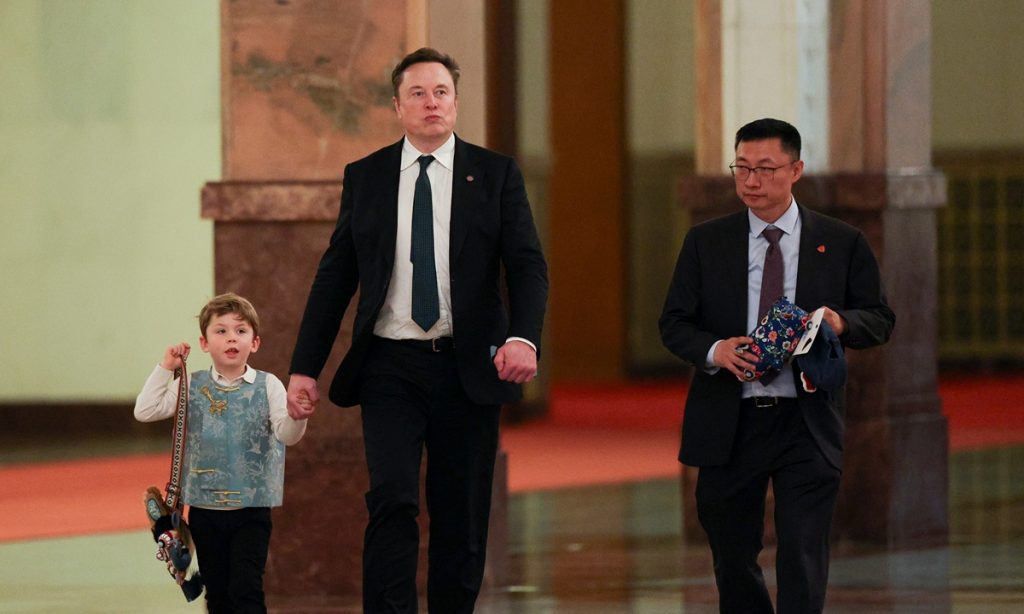
Furthermore, Musk was spotted in the Great Hall of the People in Beijing on Thursday, accompanied by his son, whose Chinese-style vest drew widespread media and online attention.

Cristiano Amon, president and CEO of Qualcomm, said in an interview with Xinhua that it's a great opportunity for everybody. "I'm very excited to be here and we had great meetings… I think you know China has a vibrant economy and will continue to play a role in the supply chain and especially we see a lot of opportunities combining US technology with China scale," Amon said.

These US CEOs are representatives of America's high-tech sector. Their statements showed that there is broad scope for cooperation between China and the US in high-tech fields, and that the Chinese market is of great importance to them, Hu Qimu, a professor at the Maritime Silk Road Institute of Huaqiao University, told the Global Times on Thursday.

On Thursday morning, Ren Hongbin, Chairman of the China Council for the Promotion of International Trade (CCPIT), met with Brendan Nelson, senior vice president of The Boeing Company and president of Boeing Global. A Global Times reporter on site observed that the two sides exchanged gifts: Nelson presented a model of the Boeing 777 aircraft, while Ren gave a mascot of the China International Supply Chain Expo.

In his remarks, Nelson mentioned that Boeing is full of confidence in cooperation and remains committed to deepening its partnerships in China. 

According to a latest report by the American Chamber of Commerce in China, despite global economic headwinds and heightened geopolitical risks, American companies in China continue to demonstrate remarkable resilience and confidence in the market. Half of the surveyed US companies still rank China among their top three global investment destinations, while 79 percent of respondents hold a positive or neutral outlook on the future of China-US relations in 2026, up 30 percentage points from last year.

Echoing the positive findings of the chamber survey, Jeffrey Lehman, chair of the American Chamber of Commerce in Shanghai, said, "I expect you will see the same results with the survey that the American Chamber of Commerce in Shanghai will publish in September."

Their business strategies are global strategies, and within those global strategies, the Chinese market remains an important component, said Lehman, noting that "Our members, stakeholders, benefit as long as they can sustain a strong competitive presence in China." 

Injecting greater stability

People across various sectors were closely watching the meeting between Chinese and US leaders, hoping that head-of-state diplomacy between China and the US will steer the giant ship of bilateral relations steadily forward and inject greater stability and certainty into a world marked by turbulence and change, Xinhua reported.

John Quelch, executive vice chancellor and distinguished professor of Social Science at Duke Kunshan University, told the Global Times on Thursday that head-of-state engagement helps reduce misunderstanding, builds channels of trust, and creates political space for pragmatic cooperation, even when differences remain in areas such as trade, technology, or security.

Quelch added that the world benefits when the two largest economies can maintain predictability, communicate candidly, and cooperate where interests align.

On a further note, Quelch said that the international environment today is undeniably complex. "Geopolitical tensions, economic fragmentation, armed conflicts, and technological disruption have all contributed to a heightened sense of uncertainty. In such an environment, major powers are increasingly expected to contribute not only to their own national development, but also to international stability," he said.

Echoing similar sentiments, Carl Fey, professor of Strategy, BI Norwegian Business School, told the Global Times, "A stable relationship between the US and China would be a huge benefit for China, the US, and the entire world… As the world's two largest economies in the world, if the two countries had a stable and collaborative relationship, it would provide an additional engine for growth."

China-US economic ties seek steadier footing after leaders’ meeting

As US President Donald Trump on Friday headed back to the US, the spotlight on Beijing did not move away from the two leaders' just-concluded summit. At the Foreign Ministry's regular press briefing, foreign reporters raised 11 questions related to the meeting between the two heads of state, seven of them on trade and economic issues.

From rare-earth supplies and Boeing aircraft to semiconductor export controls and oil purchases, those questions pointed to one issue now being closely watched by global markets: whether China and the US can turn recent high-level interactions into more stable economic and trade expectations, Chinese analysts said.

"The essence of China-US economic and trade relations is mutual benefit and win-win cooperation," and that both sides should jointly implement the important consensus reached by the two heads of state, so as to inject greater stability into China-US economic and trade cooperation and the world economy, Foreign Ministry spokesperson Guo Jiakun told the press briefing in response to reports that President Trump said in an interview with US media on Thursday that China had agreed to buy 200 Boeing jets.

During the visit, the two sides reached important common understandings on maintaining stable economic and trade ties, Guo said, when responding to a question by a US reporter over the status of export licenses of US beef.

"We stand ready to work with the US side to act on the important common understandings reached between the two presidents and continuously expand the list of cooperation and deliver for both peoples in the spirit of equality, respect and mutual benefit," Guo said.

Asked by The New York Times whether both sides had reached a new understanding regarding the supply of rare earths, Guo emphasized, " China is always committed to keeping global supply chains stable and secure."

On a question about whether China had agreed to purchase American oil in the future, the spokesperson said that China stands ready to work with all sides to ensure global energy security and keep global industrial and supply chains stable. "The pressing task is to restore peace and stability in the Gulf and Middle East region," he added.

Agriculture, long a major area of bilateral trade, was another field that received attention. When asked by The New York Times if there are any further agricultural deals that China has agreed to, Guo said that during the visit, the two sides reached important common understandings on maintaining stable economic and trade ties, expanding practical cooperation in various areas, and properly resolving respective concerns.

On the closely watched issue of AI cooperation, Guo said in response to a question on the outcomes and future implementation that "China believes all parties should jointly promote the open and inclusive development of AI for good and for all."

Economic and trade relations remain central to the broader China-US relationship. Despite friction and engagement continuing to coexist across key areas, sustained and open dialogue will help reduce miscalculation, manage risks and stabilize bilateral ties, Song Guoyou, deputy director of the Center for American Studies at Fudan University, told the Global Times on Friday.

Su Jian, a professor at Peking University's School of Economics and director of its National Center for Economic Research, told the Global Times that although China-US trade frictions have lasted for years, each round of dialogue has produced phased and practical outcomes that benefit both sides and the entire global economy.

When briefing the press about the just-concluded China-US leaders' meeting in Beijing on Friday, China's top diplomat Wang Yi said the economic and trade teams of China and the United States will work to expand two-way trade under a reciprocal tariff reduction framework.

The two sides have also agreed to establish a trade council and an investment council and address each other's concerns over market access for agricultural products, Wang said.

Expanding cooperation list

The positive signals were followed by concrete business engagement. Later the same day, officials from the National Development and Reform Commission (NDRC) and the China Council for the Promotion of International Trade (CCPIT) held separate meetings with senior US corporate executives.

The meetings involved senior US corporate executives from aviation, technology and agribusiness, including Boeing President and CEO Kelly Ortberg, GE Aerospace Chairman and CEO Larry Culp, Qualcomm President and CEO Cristiano Amon, and Cargill President, CEO and Board Chair Brian Sikes.

Chinese officials said that China's continued economic development will create long-term opportunities for companies from all countries, including US businesses, while pledging to deepen practical cooperation.

Ortberg said during his meeting with NDRC head Zheng Shanjie that Boeing remains committed to the Chinese market for the long term and is willing to work with Chinese partners to deepen aviation cooperation and deliver more practical results.

Amon and Sikes said during separate meetings with CCPIT Chairman Ren Hongbin that US businesses remain optimistic about China's development prospects and stand ready to deepen cooperation with China, contributing further to the growth of US-China economic and trade ties.

The positive tone struck by both leaders at what it called a productive summit sent a timely signal of confidence for American businesses in China, the American Chamber of Commerce in Shanghai told the Global Times on Friday.

Especially important is that both sides affirmed the significance of building a constructive China-US relationship of strategic stability. This new framing will foster healthy, sustainable growth in US-China economic and trade ties. A stable relationship is the top priority for our members, the chamber said.

Beyond traditional areas, AI points to the next frontier of China-US engagement - where competition remains evident but dialogue and cooperation are increasingly essential.

Nvidia CEO Jensen Huang said that the single most important things China is already doing is artificial intelligence and ensuring that AI is being applied into every industry, in healthcare and life science and manufacturing. "It is already opening up new opportunities in China," Huang said.

The visiting US press corps also saw that shift up close. Some reporters covering Trump's visit tried cashier-less supermarkets and watched performances by Unitree Robotics robots - a glimpse of China's AI applications beyond the policy table.

ABC News' Selina Wang sat down with young students in China who are embracing the new technology. An ABC News video put in its narration, "As the US debates the role of artificial intelligence in American life, China is racing to incorporate AI across society."

Xi says China, US must jointly answer questions of times

China and the United States must jointly answer the questions of our times, Chinese President Xi Jinping said on Thursday when holding talks with US President Donald Trump in Beijing.

Transformation not seen in a century is accelerating across the globe, and the international situation is fluid and turbulent, said Xi, stressing that the world has come to another crossroads.

"Can China and the United States overcome the Thucydides Trap and create a new paradigm of major-country relations? Can we meet global challenges together and provide greater stability for the world? Can we build a bright future together for our bilateral relations in the interest of the well-being of the two peoples and the future of humanity? These are the questions vital to history, to the world and to the people," said Xi.

"They are the questions of our times that the leaders of major countries need to answer together," he said. 

Report on Honduras 'reassessing ties, agreements with China' is distorted, inconsistent with facts: Chinese FM

A Chinese Foreign Ministry spokesperson on Friday rejected a Bloomberg report claiming that Honduras' newly elected president is reviewing ties and agreements with China, criticizing the report for distorting facts and sowing discord. The spokesperson stressed the one-China principle is the political foundation for China-Honduras relations and that bilateral cooperation should not be subject to interference from any third party.

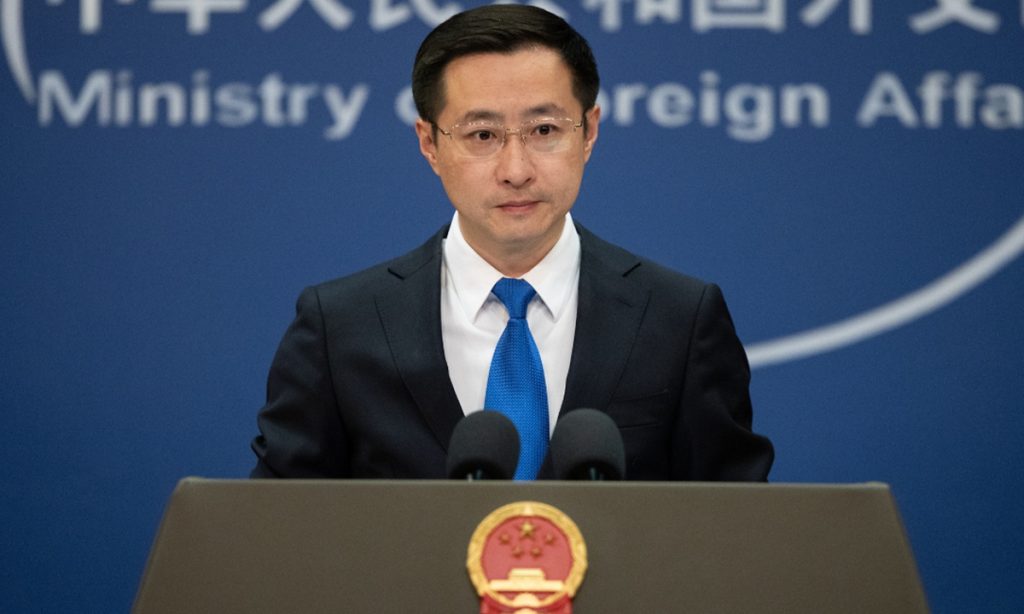
Chinese Foreign Ministry spokesperson Lin Jian made the remarks when asked by a foreign media reporter to comment on that according to Bloomberg on Thursday, Honduras' newly elected president, Nasry Asfura, "is reviewing" the country's relationship with China and several agreements previously reached between Honduras and China, as he seeks US investment.

Lin said, "I would like to point out that the relevant report distorted the facts, sowed discord, and is inconsistent with the facts. It seriously violates journalistic ethics. I want to emphasize that there is only one China in the world, Taiwan is an inalienable part of China's territory, and the Government of the People's Republic of China is the sole legal government representing the whole of China. The one-China principle is a universal consensus of the international community and a basic norm governing international relations. It is also the political foundation and prerequisite for China and Honduras to develop relations and carry out cooperation, and there is no room for any ambiguity."

Since China and Honduras established diplomatic relations, the two sides have carried out practical cooperation in various fields based on the principles of mutual respect and equal consultation, Lin said. Such cooperation has been mutually beneficial, achieved notable results, benefited the people of both countries, and received broad support from both peoples, said Lin. 

Facts have proven that upholding the one-China principle is the right decision, in line with the trend of history and the progress of the times, and serves the fundamental interests of Honduras and its people, Lin said. "Taiwan independence" separatist forces' attempts to split the country are unpopular and doomed to a dead end.

Regarding the China-related agreements involving Honduras mentioned by the reporter, Lin said, "I want to stress that China-Honduras cooperation targets no third party and should not be interfered with by any third party. China's legitimate and lawful rights and interests must be fully respected."

Chinese PLA Navy to host open-ship events celebrating 77th anniversary

The Chinese People's Liberation Army (PLA) Navy will open its barracks to the public in over 10 cities nationwide around April 23, marking its 77th anniversary, with over 40 active-duty vessels set for public visits.

A variety of active combat ships will be open to visitors, including guided-missile destroyers, as well as guided-missile frigates, minesweepers, missile boats and amphibious landing ships.

Additionally, auxiliary vessels, including comprehensive supply ships, ocean-going navigation training ships and hospital ships, will also be accessible to the public.

Many of the participating ships have carried out major missions such as escort missions in the Gulf of Aden, overseas visits and joint exercises.

The open-ship events will be held in cities including Dalian, Qingdao, Shanghai, Ningbo, Xiamen, Guangzhou and Sanya. Some vessels will be open to the public for the first time, while some will dock for the first time in the cities after which they are named.

Visitors will have opportunities to interact with naval personnel and experience naval culture.

In addition to ship visits, naval air force bases and ports will also be opened, alongside themed activities that highlight the ties between warships and their namesake cities.

Opening active-duty vessels to the public is a long-standing tradition among navies worldwide. In recent years, the PLA Navy has regularly held such events on its founding anniversary and the National Day, with growing scale and influence.

Reservation channels for this year's events have been gradually opening, and the public can register online through official platforms.

Forge a fulfilling youth with solid work and responsibility

Editor's Note:

In a reply letter to representatives of awardees of the China Youth May Fourth Medal and New Era Youth Pioneer ahead of China's Youth Day, Xi Jinping, general secretary of the Communist Party of China Central Committee, commended these exemplary young people, who work in grassroots positions spanning sci-tech innovation, rural revitalization, social services and border defense. He noted that they epitomize the confident, self-reliant and high-spirited outlook of Chinese youth in the new era, according to the Xinhua News Agency.

An ordinary welder diligently studied his craft and became a chief technician; a village official rooted in the deep mountains served the people with hard work, using youthful energy to transform the village; a delivery rider ran every order with dedication and developed a stronger sense of belonging to the city… Recently, 16 awardees who have won the titles since 2012 wrote to the General Secretary to report on their work and insights from serving at the grassroots level, and reaffirmed their resolve to contribute to national development. People's Daily reporters interviewed four representatives of the awardees of the China Youth May Fourth Medal and New Era Youth Pioneer to listen to their stories of great ideals and unwavering determination.

Focusing on small details to achieve great results

Pei Xianfeng, chief welding technician of China Petroleum First Construction Corp

By Zhu Peixian

Pei Xianfeng, who was born after 1990, rose from an ordinary welder to become the chief welding technician of China Petroleum First Construction Corp. He has received honors including the National Model Worker title and the China Youth May Fourth Medal.

Five years ago, during an interview, when asked about the secret to his welding skills, he said: "there is no secret - just dedicated learning and hard practice. If you're a worker, strive to be the best!"

Interviewing him again, Pei's spirit remained undiminished, and his brisk steps now carry more steadiness. He is no longer just a competitor holding a welding torch - he has become a "master teacher" who imparts knowledge and teaches his craft. He leads younger technicians across the country, honing their skills and striving for excellence on national priority projects. "From polishing a single screw to achieving millimeter-level precision, small details hold profound knowledge and can yield great results," Pei said.

He frequently visits schools and workshops, guiding young welders hands-on, sharing all he has learned - from winning individually to teaching others to win. Pei has completed the transition from an outstanding welder to an excellent coach. He is no longer just a brilliant "spark" but a torchbearer igniting countless "stars."

Pei uses his own journey to tell every young person: The best ability is to develop the core skills to ensure that "I can step up when the motherland needs me."

"The times are changing, and new technologies are advancing rapidly. I must continue to study and improve my skills with even younger colleagues, charging forward again, climbing higher peaks, and mastering new technologies," Pei said. "In the future, I will proactively integrate my personal aspirations into the bigger picture of national development, forging outstanding abilities with a fighting spirit, bravely tackling technical challenges and actively innovating, forging a fulfilling youth with solid work and responsibility, and contributing to mastering key technologies."

Devoting youth to deep mountains, serving villagers with hard work

Yang Ning, Party branch secretary of Jiangmen Village, Liuzhou, Guangxi Zhuang Autonomous Region

By Zhang Yunhe

As summer begins, the mountain breeze becomes warmer, and spring water flows with a gentle gurgle. Yang Ning walks briskly along the mountain paths.

"Devoting youth to deep mountains and working hard just for the villagers." Hailing from Rongshui, Liuzhou, South China's Guangxi Zhuang Autonomous Region, Yang has grown from a college-graduate village official to the Party branch secretary of Jiangmen Village, Anchui Township, dedicating 16 years to the mountains.

At the village's mountain spring water factory, production lines run at full capacity. Embracing the philosophy that "lucid waters and lush mountains are invaluable assets," Yang has harnessed the mountain springs to turn good ecology into good livelihoods. As the village's first self-initiated enterprise, the water factory, after starting production in 2025, increased the village's collective income by 200,000 yuan ($29,281.08), pushing per capita annual income across the village past 20,000 yuan.

Initially, Jiangmen Village had no path to prosperity. In 2010, after graduating from university, Yang gave up a job in Nanning and returned to her hometown to lead villagers in finding a way out. "I tried selling bamboo, planting chili peppers, planting kudzu - but with little success," Yang said.

After many setbacks, she calmed down to understand the local landscape's nuances and develop specialty industries suited to local conditions. She successfully cultivated high-mountain spring watermelons, built the "Miao Sisters" brand, utilized slope land for passion fruit, and promoted a "rice - duck - fish" co-cropping model. As she wrote in her social media: "No matter how countless the difficulties may be, I fear neither the high mountains nor the winding roads!"

With thriving industries, Jiangmen Village has transformed. After lifting itself out of poverty, it built a comprehensive rural revitalization industrial park, housing a cured meat processing plant and the spring water factory, enabling local agricultural products to be processed and sold, developing the village and enriching its people.

This year, under Yang's planning, the village formed a professional sales team for mountain spring water. She said confidently, "we will add new production lines and create online barrel spring water products, selling our village's high-quality water nationwide."

Running every order with heart, repaying a city with love

Chen Yiwen, delivery rider at Paige Network Technology Co, Ganzhou, East China's Jiangxi Province

By Yang Hao

In early summer in southern Jiangxi, vegetation is lush. At 6 am, amid the light mist on the streets of Ruijin, 38-year-old Chen Yiwen, a delivery rider for Paige Network Technology Co, tidied his uniform, fastened his helmet, checked his food box, and set off on his electric scooter, beginning a day of hustle. This has been his routine for eight years.

In 2018, Chen became a food delivery rider. New to the job, he struggled with unfamiliar roads, frequent late deliveries, and difficulty in finding buildings, and he even considered giving up. But with tenacity, he closely studied the distribution of buildings in old neighborhoods, restaurant preparation times, elevator peak-hour waiting times, and office building access rules, continuously improving his delivery efficiency.

On stormy days, he climbed stairs to ensure food arrived on time; when roads were blocked, he detoured 5 kilometers to keep meals warm. Over eight years, Chen's footprints have covered every corner of the city, consistently ranking as the "top rider" at his station.

Running every order with heart, and repaying a city with love. In the summer of 2020, he saw a middle school student fall from a bike and get injured. He immediately paused his orders, took the child for medical treatment, and accompanied him through registration and bandaging. In the winter of 2021, while delivering, he spotted a residential fire. He helped evacuate residents and called emergency services, staying until firefighters arrived before quietly leaving.

A striving youth should not only be about speed, but also about depth. Ruijin established the "Golden Brother Academy" for new employment groups, offering systematic training and career guidance. Chen eagerly signed up. Following his lead, 26 other delivery riders enrolled in training.

During a class on grassroots governance, the instructor said something Chen has never forgotten: "You delivery riders and couriers traverse the streets and alleys every day - you are the 'mobile detectors' of this city."

After class, with help from relevant personnel, Chen took the lead in creating a WeChat group named "Snapshot." Today, the group has over 300 delivery riders and couriers, who have reported over 1,000 leads on road damage, facility hazards, and fire safety risks, among others. With a 98-percent resolution rate, the group has become a vibrant force in grassroots governance.

From a "five-star rider" delivering meals precisely, to a "city hero" stepping up in emergencies, and to a "mobile grid worker" weaving through streets, Chen has run a career path full of warmth, conveying care between people and embodying the responsibility and dedication of new employment groups.

Wang Wei, deputy captain of the Manzhouli Entry-Exit Frontier Inspection Station, Inner Mongolia Autonomous Region —

Take root at the frontline of border defense to ensure safe passage

By Zhao Jingfeng

Just past midnight in Manzhouli, North China's Inner Mongolia Autonomous Region, headlights cut through the night as trucks orderly enter the Manzhouli road port. "Sir, please open the door." Taking his inspection tools and tightening his gear, Wang Wei briskly walks to a truck and politely calls to the driver.

The door opened, and Wang nimbly entered the cab, carefully checking the driver's documents and every corner of the cab while recording the entire inspection with his body-worn camera. "There are many blind spots at night; we must inspect meticulously," Wang said.

The Manzhouli road port requires 24-hour freight clearance. To ensure smooth vehicle entry and exit, staff must be on duty around the clock. Wang, 39, is deputy captain of the Sixth Duty Team at the Manzhouli Entry-Exit Frontier Inspection Station, part of the Inner Mongolia General Station of Exit-Entry Frontier Inspection. During busy periods, he assists in inspecting over 200 inbound and outbound trucks daily, alternating between day and night shifts, often leaving him with sore knees and aching back.

During holidays, he always volunteers for duty. He hasn't returned home for the Chinese Lunar New Year for five consecutive years. "My comrades come from all over the country. Many of them are far from home, and it's not easy for them to make the trip back. So during the holidays, I want to prioritize them first," Wang said.

Apart from long separations from family, the harsh climate also tests Wang and his comrades' resilience. Winters in Manzhouli often see temperatures below -30C. Most of their work time is outdoors. For ease of inspection and movement, they can only wear regular cotton shoes. The cold often numbed their soles, so they can only keep moving to generate warmth.

Wang's meticulous work habits have led him to repeatedly identify and eliminate safety risks. Due to his outstanding performance, he was awarded individual third-class merit three times in 2021, 2023 and 2024.

Beyond his main duties, Wang actively participates in education work. Talented and versatile, his self-directed and scripted Party building educational film was recognized as an excellent case by the National Immigration Administration. His original songs, original law promotion series, and various other works have been widely circulated, with millions of clicks.

Wang said he will strictly guard the port control line and ensure smooth and safe crossings, playing a pioneering role for young people, and encouraging more young people to take root at the border and fulfill their duties.