Immersive ‘red tourism’ with emotional resonance redefines history connection on Long March’s 90th anniversary

At 11:30 am, the valley at Loushan Pass echoes with the sharp sound of a bugle charge.

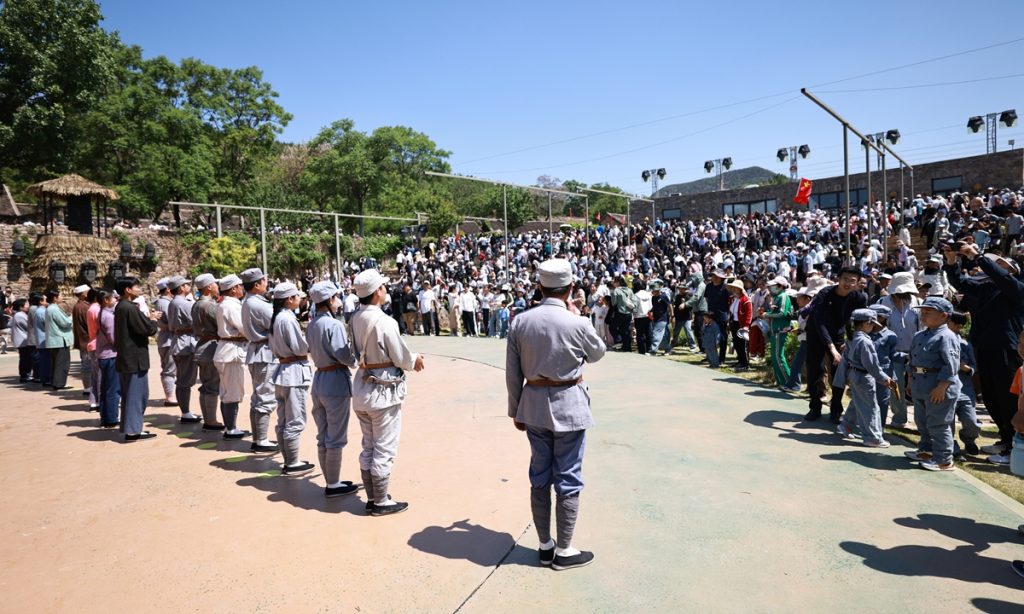
Battle flags whip in the wind as over 100 actors storm out of the trenches, followed by tourists in unified gray-blue Red Army uniforms, shouting as they rush up the slope. Gunfire and explosions erupt continuously, filling the air with the acrid smell of smoke grenades.

Chen Muyang, a 30-year-old visitor, suddenly felt a lump in her throat as she was running. Not from fear, but from a thought flashing through her mind: "This is exactly how the Red Army charged back then, except they had no smoke effects. For them, it was all real."

This is a daily scene at the Loushan Pass scenic area in Zunyi, Southwest China's Guizhou Province. The immersive experience project "follow the commander to attack Loushan Pass" recreates the smoky battlefield of how the Red Army secured an important victory in 1935 during the Long March. Visitors don military uniforms and immerse themselves in history under the guidance of non-player characters.

According to the China Military, the official news website of the Chinese People's Liberation Army, the battle of Loushan Pass was the Red Army's first major victory during the Long March. In 2026, marking the 90th anniversary of the Long March victory, this project unexpectedly became a viral hit on Chinese social media platforms. On short-video platform Douyin, videos of tourists charging uphill routinely garner tens of thousands of likes.

In China, "red tourism" is now shifting away from static visits like reading panels and listening to lectures toward "immersive theater." Some netizens even call these projects "the most suitable cosplay for Chinese people."

Across the country, new red tourism experiences centered on participation and emotional resonance are redefining how people connect with history, some scenic area managers told the Global Times.

'I was part of history'

"Knives out!" This was the caption on a highly popular Douyin video of the Loushan Pass project that Chen came across.

In the video, gunfire thundered and smoke filled the air as tourists charged up the hill with rifles. Inspired by the passionate atmosphere, Chen immediately decided to drive from Chongqing to experience it herself.

After watching the performance from a viewing platform, Chen entered the scenic area, changed into a military uniform, adjusted her cap and received a prop rifle. "The gun was heavier than I expected," she told the Global Times. "The atmosphere hit me instantly."

The real immersion began when the "commander" appeared. An actor playing a Red Army officer stood before the formation, first explaining the safety rules and the itinerary in detail. Then, as other actors delivered rousing pre-battle speeches in authentic dialects, all of the visitors listened intently.

As the group advanced along the mountain path, the first "blockade line" suddenly appeared. Fireworks and explosions erupted, with deafening gunfire coming from all directions. Visitors instinctively ducked and followed the commander's orders to push through quickly. After breaking through, the team continued along the trail. Publicity teams with clappers appeared along the roadside, chanting rhythmic verses to boost morale.

Chen said the walk wasn't tiring, but the tension kept building. "You knew a 'battle' was coming, but you didn't know when. The anticipation was agonizing."

The real fight then began. Visitors were split into two groups and led along different routes into the battlefield. Gunfire intensified, explosions detonated near their feet and thick smoke made it hard to see.
Halfway up the slope, Chen gasped for breath. Leaning against a rock and watching others push on, a thought struck her: "We're already this exhausted under modern conditions. Carrying rifles, wearing straw sandals and starving, how did the Red Army do it?"

That thought pierced her heart.

Finally, amid earth-shaking battle cries, the team captured the "enemy" position at Loushan Pass. Actors playing captured warlord soldiers were escorted out, and the visitors erupted in cheers. Loushan Pass has been taken.

Chen said the 40-minute experience was more unforgettable than any history book she had read.

"In school, the Long March spirit felt distant, just an exam point. But that afternoon in the valley, I felt I was part of history, close to the people whose names are in our textbooks," Chen said.

Thousands of visitors like Chen come every day during peak season. Yao Dihua, operations director of the company managing the scenic area, told the Global Times that participants include young people from other cities, parents with children, nostalgic middle-aged and elderly visitors, and corporate team-building groups.

According to Yao, the scenic area also offers other immersive Long March experiences. Visitors put on Red Army uniforms, shoulder rifles and retrace the grueling route: breaking through the first blockade line by blasting bunkers, crossing mountains, ambushing enemy sentries and breaking through heavy fire outside Zunyi to achieve victory, all while embodying the spirit of unity, mutual assistance and fearlessness in the face of hardship.

Additional activities include cooking Red Army-style meals over open fires and making traditional straw sandals. Once essential footwear during the Long March, straw sandals symbolize the unity between the military and civilians, as well as the resilience of ordinary people supporting the revolution. By handcrafting a pair themselves, visitors personally connect with this revolutionary legacy and help pass on the "straw sandal spirit" to future generations, Yao said.

Product speaks to the times

Yao noted that his team had been experimenting with immersive formats for 20 years, but audience interest was low back then. In recent years, as social trends shifted, people of all ages have become more open to such experiences.

In Zunyi, a former revolutionary base, immersive experiences now let visitors engage with history in a more direct and profound way.

Policy support is also strengthening. In March, the General Office of the Communist Party of China Central Committee and General Office of the State Council issued opinions on revitalizing old revolutionary bases, encouraging integrated cultural-tourism development, cross-regional collaboration, premium routes and improved infrastructure.

Yao said that in the traditional red tourism, many young people enter memorial halls and don't know how to connect with the exhibits. Knowledge is objective, but emotion is subjective. You can't force someone to feel moved.

What if visitors become the extras? The "follow the commander to attack Loushan Pass" originally focused on watching large-scale performances. After adding immersive elements in May 2025, it quickly became a phenomenon, exploding in popularity in 2026, Yao said.

"Key design elements include strong ritual, high-density sensory stimulation, and the power of collective action. These precisely address contemporary needs: authentic physical experiences to counter digital virtuality, and the desire to be emotionally drawn into history rather than be lectured," said Yao.

Similar immersive experiences are also emerging across the country. In Ganzhou, East China's Jiangxi Province, a large-scale red cultural tourism epic about stories of the Long March starting point has been performed over 619 times, attracting more than 338,500 viewers, according to the Ganzhou radio and television station. In Honghu, Central China's Hubei Province, an immersive project has transformed 81 revolutionary historical sites into a vast open-air theater without walls, according to the Jingzhou Daily.

In Linyi, East China's Shandong Province, a similar "follow the commander to attack the county town" experience reenacting the Chinese People's War of Resistance Against Japanese Aggression has also gone viral.

According to Yan Jisuo, deputy general manager of Linyi tourist attraction, most visitors are young people or families with children. Some foreign tourists have also taken part. "We occasionally see interpreters assisting them. Although they may not fully grasp every detail, they generally understand the storyline and have given positive feedback," Yan told the Global Times.

Yan added that despite the activity's high physical demands, elderly tourists, including one visitor in a wheelchair, have also actively participated.

"We previously received a 90-year-old veteran from Southwest China's Sichuan Province, who is our oldest participant to date," Yan said. "He fought in the War to Resist US Aggression and Aid Korea (1950-1953) and spoke highly of our project. He said, 'You have done an excellent job. Young people today need to experience this so that they understand the sacrifices made during wartime.'"
Balancing entertainment and serious education

Despite widespread acclaim, some have expressed concern that entertainment elements might undermine the solemnity of revolutionary history. Yan explained that, leveraging the region's rich revolutionary cultural heritage and its advantages as a film and television production base, their professional team has ensured the historical accuracy of both the storylines and the special effects.

Yan noted that the tourist area is located in Yinan County, one of the important birthplaces of revolutionary spirit, and has been a classic red tourism destination for 16 years. Many anti-war films and TV productions have been filmed on site.

"Between immersive experiences and solemn history, we have our own principles to maintain the right balance," Yao said.

When updating the project, the team spent considerable time on historical research, verifying the routes of the charges, the organization of the Red Army units, the enemy's firepower deployment and even the details of uniforms, all in an effort to achieve historical accuracy. For live combat performances, over 100 real guns and artillery pieces used during that era are employed. Each performance fires more than 500 rounds of ammunition and over 100 shells, with a cast of more than 200 people.

Yao also noted that the scenic area has created over 130 local jobs, 35 of which went to impoverished households, with more than 500 performances held annually. He believes this represents a form of passing on the red spirit that also benefits the people.

These immersive red tourism projects continue to evolve. Yao revealed that in celebration of the 90th anniversary of the victory of the Long March, the scenic area will plan special events, including enhanced visual effects for battle scenes, expanded cultural interaction and more photo-worthy installations.

"Our ultimate goal remains to let visitors feel, through the experience, that this is not a game, it is a chapter of history worth remembering," Yao said.

Every day, gunfire echoes through Loushan Pass valley. New groups of visitors don props, join the ranks and follow the "commander" through the smoke-filled "battlefield."

"I think the deepest value of immersive red experiences is that they allow everyone to become a 'feeler of history.' And feeling is often the first step toward true understanding. This approach is making better red education possible," Chen said.

Rescue efforts continue as Shanxi coal mine blast leaves 82 dead, 2 missing

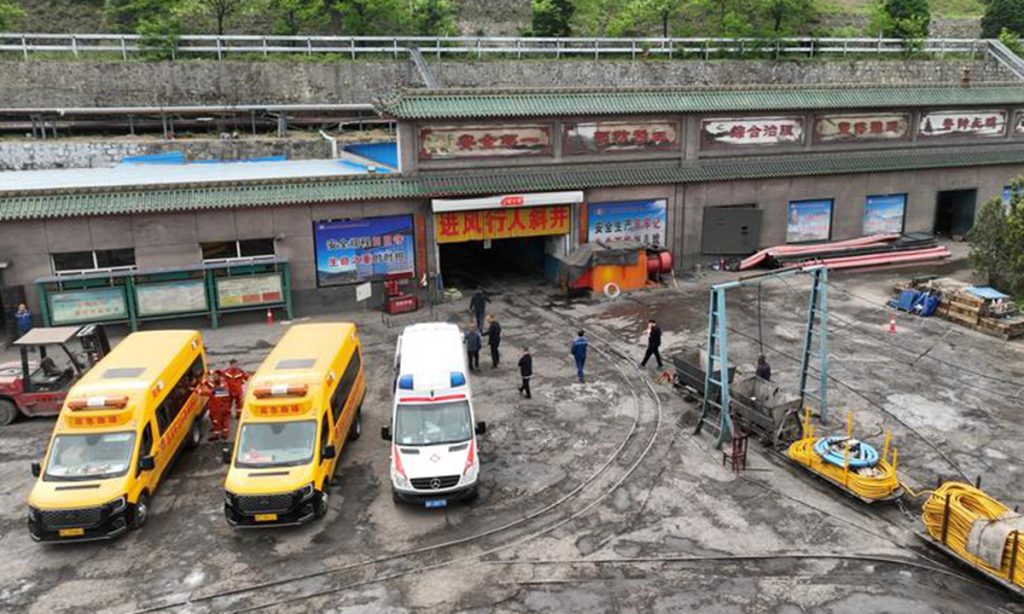
Rescue efforts continued on Sunday after a gas explosion hit Liushenyu coal mine in Qinyuan county of Changzhi, North China's Shanxi Province at 7:29 pm on Friday.

A total of 82 people have been confirmed dead, with two still missing and 128 injured.

The disaster at the Shanxi Tongzhou coal mine has drawn national attention as rescuers pressed ahead with search operations amid complex underground conditions, and the risk of secondary hazards. At the same time, growing scrutiny is being directed at the company's production safety management.

The gas explosion took place when more than 200 people were down the shaft, according to the county's emergency management bureau.

Chinese President Xi Jinping has urged all-out rescue of the missing and treatment of the injured, and demanded a thorough investigation into its cause, with accountability pursued in accordance with the law, according to the Xinhua News Agency.

Xi, also general secretary of the Communist Party of China (CPC) Central Committee and chairman of the Central Military Commission, stressed that authorities across the country must learn lessons from the accident, remain vigilant on workplace safety, and intensify efforts to identify and eliminate potential risks in order to prevent major accidents.

Vice Premier Zhang Guoqing, also a member of the Political Bureau of the CPC Central Committee, led a team to the site to oversee the rescue efforts and the handling of the accident's aftermath, Xinhua reported.

All-out rescue

Local officials said on Saturday that 128 injured people were rescued. Of these, 124 sustained minor injuries, two were seriously injured and two remained in critical condition, all of whom are receiving treatment at Changzhi People's Hospital. The latest reports indicate that the patients are in stable condition, and 124 patients with minor injuries had been transferred to tertiary hospitals for close observation and treatment, the Xinhua News Agency reported. 35 escaped unharmed, according to Xinhua.

The province has sent 755 people including rescuers and medical personnel to the site. The Ministry of Emergency Management earlier said it had dispatched six national mine emergency rescue teams, totaling 345 people, to assist in rescue efforts, Xinhua reported.

The rescue operation on Sunday focused on locating the two people still missing. Yang Yang, deputy head of the Shanxi Huayang branch team of the national mine emergency rescue Force, told the Global Times that the explosion caused partial collapses in underground tunnels, leaving debris and damaged structures that have complicated the search. 

Accumulated water underground and ventilation problems in some sections have further increased the difficulty and risks facing rescue teams, Yang said. 

Following the accident, several professional mine rescue teams have been taking turns entering the mine to search for the missing in flooded tunnels near the blast site. Rescuers found visible ground collapses in two underground tunnels and had to build temporary bridges to move forward, China Central Television (CCTV) reported on Sunday.

The operation has been further complicated by discrepancies between the maps provided by Liushenyu coal mine and the actual underground layout. Rescuers discovered two previously unmarked tunnels at the site and are continuing to check whether there are more hidden passages nearby. More than one kilometer of flooded tunnel near the explosion site still needs to be searched, adding to the difficulty and complexity of the ongoing rescue operation, CCTV noted. 

According to the rescue command center for the Liushenyu coal mine explosion in Shanxi, the priority on Sunday is to conduct repeated underground search operations, particularly re-searching areas that have already been covered, to ensure no location is missed. 

Rescuers early on Sunday deployed mine inspection robots underground to assist search efforts. The robots are equipped with gas sensors and real-time cameras, enabling it to enter areas inaccessible to rescuers to collect data and information. Rescue personnel also descended into the mine to operate the robots underground, Xinhua reported.

The most pressing technical challenge facing rescuers is preventing a secondary explosion. The initial blast may have left open flames and high-temperature spots underground, while gas continues to seep from coal seams. With the mine's ventilation system damaged, the gas cannot be effectively dispersed, creating a highly volatile environment in which gas and ignition sources could come into contact again at any time, Hu Qianting, a professor from school of Resources and Safety Engineering of Chongqing University, told that Global Times. 

Rescuers must first focus on locating and extinguishing fire sources while ensuring the safety of rescue teams. Large-scale search and rescue operations can only begin once fire hazards are brought under control and underground gas concentrations are reduced to safe levels, Hu said. 

Shanxi Province activated its medical emergency response mechanism, coordinating local medical resources and dispatching provincial medical experts to assist frontline rescue and treatment efforts.

China's National Health Commission organized multidisciplinary remote consultations involving trauma and intensive care specialists from Peking University People's Hospital and respiratory experts to optimize treatment plans. Three specialists from Beijing were also dispatched to the scene to support rescue and treatment efforts, per Xinhua. 

Multiple countries including Russia, South Korea Egypt, Canada, Pakistan, India and Japan have conveyed their condolences to the victims.

Russian President Vladimir Putin on Saturday expressed condolences. "Please convey my sympathy and support to the families of the deceased miners, as well as my best wishes for a speedy recovery to all those injured," Putin said, according to the Kremlin.

Kyrgyz President Sadyr Zhaparov on Saturday said he learned "with deep sorrow" about the loss of life caused by the explosion. "On behalf of the people of the Kyrgyz Republic and on my own behalf, I express my sincere condolences to the families and loved ones of the victims, sharing their grief at their loss, and I also wish a speedy recovery to all those injured," Zhaparov said, according to the Kyrgyz presidential press service.

South Korean President Lee Jae-Myung wrote in Korean and Chinese on X that "Upon learning of the gas explosion accident at a coal mine in Shanxi Province, China, which has caused significant casualties, I feel profound regret and sorrow. I hope that, through the efforts of the Chinese government and relevant departments, this incident will be properly handled at an early date."

Thorough investigation

In a meeting at the on-site command center, Chinese Vice Premier Zhang Guoqing, ordered a thorough investigation and strict accountability after the accident and urged authorities to mobilize professional forces to carry out scientific search and rescue operations with all-out efforts while preventing secondary casualties, per Xinhua. 

China's State Council investigation team should conduct a rigorous and uncompromising investigation into the explosion to thoroughly identify the cause of the accident, determine the responsibilities of local authorities, industry regulators and the enterprise involved, and impose strict penalties in accordance with laws and regulations, Zhang said.

According to the Shanxi Xinwen Lianbo, a local flagship daily news program, Shanxi vowed to carry out in-depth investigation and rectification of safety risks and hidden dangers in the coal mining sector across the entire province.

Changzhi held a press conference on Saturday to brief the public. Participants at the press conference stood in silence to mourn the victims. Chen Xiangyang, deputy Party chief and mayor of Changzhi, said preliminary assessments indicate that the coal mine company involved committed serious violations of laws and regulations, according to the People's Daily. 

Calling the accident "extremely serious" and its lessons "profoundly painful," Chen said Changzhi would draw lessons from the tragedy, conduct a thorough review, and launch a citywide campaign to identify and rectify workplace safety risks, with coal mines as the top priority.

Xinhua reported on Saturday that the persons responsible for the company involved in the mine accident are under investigation in accordance with the law, local authorities said. 

A report by CCTV on Sunday showed that a board recording underground personnel indicated that 124 people had entered the mine at the time of the explosion. However, after verification by multiple parties, the actual number of people underground was found to be 247, with 123 individuals lacking valid information in the system. 

Public records show that Liushenyu Coal Mine has a designed annual production capacity of 1.2 million tons and is classified as a high-gas mine. In 2024, the National Mine Safety Administration included four coal mines under Tongzhou Group on its list of operating coal mines facing serious disaster risks, including high gas levels and coal-and-gas outburst hazards. Among them was Shanxi Tongzhou Group Liushenyu Coal Industry Co. All four Tongzhou Group coal mines have now been ordered to suspend production for rectification, according to CCTV.

Moreover, a WeChat account affiliated with China Emergency Management News disclosed that 247 workers had entered the mine, but 103 of them were not carrying underground positioning cards. The maps submitted by the mine operator did not match the actual tunnel layout. The lack of personnel positioning data and accurate underground maps posed some of the biggest difficulties for the rescue operation. Some areas encountered by rescuers were not marked at all, forcing the command center to send in additional teams to conduct repeated tunnel-by-tunnel searches.

Hu said China's coal mine gas-monitoring technology and regulatory framework are already relatively mature, with systems designed to automatically sound alarms and transmit real-time data to local regulators once gas levels exceed limits. However, technology alone cannot guarantee safety. Its effectiveness depends on proper installation, truthful data collection and strict compliance with safety procedures. 

If companies evade supervision or put output and profit above safety, even advanced monitoring systems cannot prevent accidents. The key lies in enforcement, accountability and a genuine safety-first approach, Hu said, noting that as economic and social development advances, public expectations for safety will only continue to rise. Safety is never a finished task; it requires constant vigilance and continuous improvement.

A commentary published by the People's Daily on Sunday said that every accident should serve as a warning. Authorities at all levels must draw lessons from such tragedies, strengthen bottom-line and worst-case thinking, and always keep workplace safety at the forefront.

Safety must be secured in the process of development, and development must be pursued on the foundation of safety. Only with an unwavering sense of responsibility and constant vigilance over every link in workplace safety can the peace and well-being of millions of families be protected, read the article. 

Letters to home

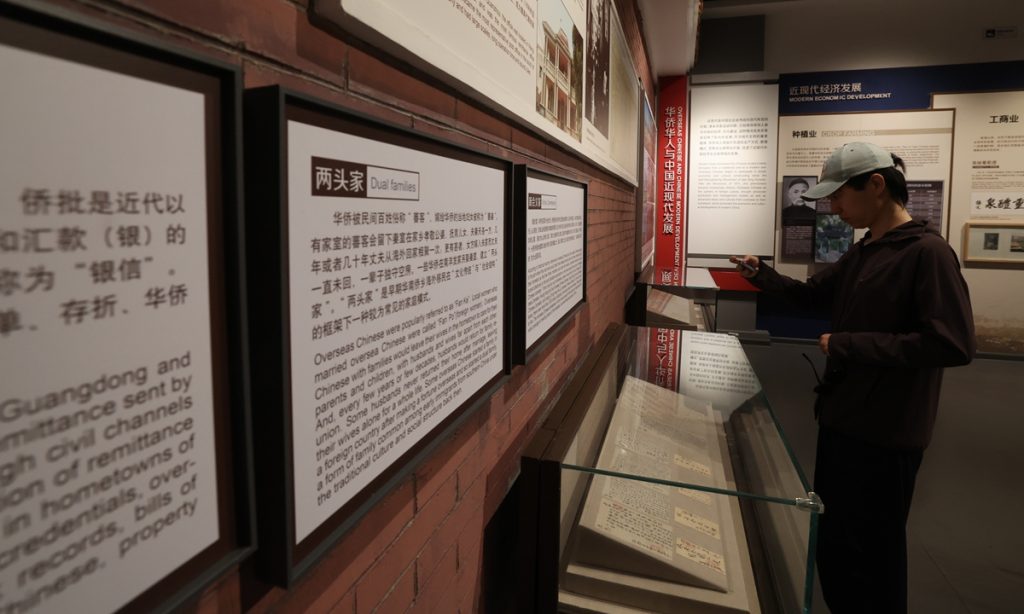
A visitor views exhibits related to "qiaopi," or personal letters sent by overseas Chinese, at the Overseas Chinese History Museum of China in Beijing on May 21, 2026. The unique form of family correspondence has drawn renewed public attention following the release of the film Dear You, which centers on the history and emotions behind "qiaopi." Photo: VCG

Water lilies bloom

Visitors admire and photograph blooming water lilies at Huqiu Wetland Park in Suzhou, East China's Jiangsu Province, on Thursday, May 21, 2026. Photos on this page: VCG

US business leaders express optimism on cooperation, highlight vital importance of Chinese market

Top US business leaders from Silicon Valley and Wall Street, joining US President Donald Trump on his China trip, reaffirmed the vital role of the Chinese market, as a key leaders' meeting in Beijing on Thursday brought renewed focus to deepening bilateral economic ties.

Besides meeting with President Trump, Chinese President Xi Jinping on Thursday also met with US entrepreneurs accompanying President Trump on his visit to China, the Xinhua News Agency reported.

Xi said that US companies are deeply involved in China's reform and opening up, and both sides have benefited from this. Noting that China's door will only open wider, the Chinese leader said China welcomes the US to enhance mutually beneficial cooperation with China, and expressed the belief that US companies will enjoy even broader prospects in China, according to Xinhua. 

Trump said that he had brought with him outstanding representatives from the US business community, all of whom respect and value China, and that he encourages them to expand cooperation with China, the report said.

The US entrepreneurs said that they attach great importance to the Chinese market, and hope to deepen their business operations in China and strengthen cooperation with China, Xinhua reported. 

According to Xinhua, senior executives from more than 10 well-known US companies are visiting China as part of the delegation, including Apple CEO Tim Cook, Nvidia founder and CEO Jensen Huang, and Tesla CEO Elon Musk.

The collective visit by these corporate leaders underscores the strong expectations within the US business community for deeper practical cooperation between China and the US, and for advancing mutual benefit and win-win outcomes, analysts said.

During the visit, multiple American business representatives in the delegation, who are leaders in their respective industries, expressed optimism about China-US cooperation while highlighting the importance of the Chinese market for their businesses. 

Apple CEO Tim Cook said it was "so great to be back in China," while NVIDIA CEO Jensen Huang described the experience as "incredible" and praised the warm hospitality, according to the CCTV News. 

Moreover, Huang said in an interview with the Xinhua News Agency that one of the single most important things China is already doing is focusing on AI and making sure that AI is being applied into every single industry, in healthcare and the life sciences and manufacturing. It's already opening up new opportunities for China, he added.

Tesla CEO Elon Musk told Xinhua that "I have a good feeling about these talks, and I think there will be good results." 

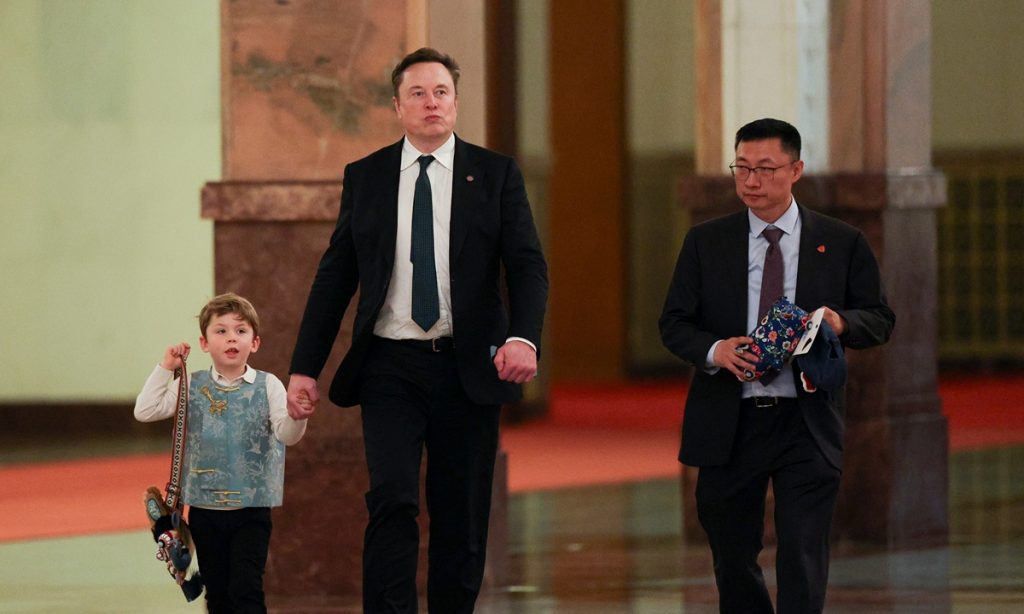
Furthermore, Musk was spotted in the Great Hall of the People in Beijing on Thursday, accompanied by his son, whose Chinese-style vest drew widespread media and online attention.

Cristiano Amon, president and CEO of Qualcomm, said in an interview with Xinhua that it's a great opportunity for everybody. "I'm very excited to be here and we had great meetings… I think you know China has a vibrant economy and will continue to play a role in the supply chain and especially we see a lot of opportunities combining US technology with China scale," Amon said.

These US CEOs are representatives of America's high-tech sector. Their statements showed that there is broad scope for cooperation between China and the US in high-tech fields, and that the Chinese market is of great importance to them, Hu Qimu, a professor at the Maritime Silk Road Institute of Huaqiao University, told the Global Times on Thursday.

On Thursday morning, Ren Hongbin, Chairman of the China Council for the Promotion of International Trade (CCPIT), met with Brendan Nelson, senior vice president of The Boeing Company and president of Boeing Global. A Global Times reporter on site observed that the two sides exchanged gifts: Nelson presented a model of the Boeing 777 aircraft, while Ren gave a mascot of the China International Supply Chain Expo.

In his remarks, Nelson mentioned that Boeing is full of confidence in cooperation and remains committed to deepening its partnerships in China. 

According to a latest report by the American Chamber of Commerce in China, despite global economic headwinds and heightened geopolitical risks, American companies in China continue to demonstrate remarkable resilience and confidence in the market. Half of the surveyed US companies still rank China among their top three global investment destinations, while 79 percent of respondents hold a positive or neutral outlook on the future of China-US relations in 2026, up 30 percentage points from last year.

Echoing the positive findings of the chamber survey, Jeffrey Lehman, chair of the American Chamber of Commerce in Shanghai, said, "I expect you will see the same results with the survey that the American Chamber of Commerce in Shanghai will publish in September."

Their business strategies are global strategies, and within those global strategies, the Chinese market remains an important component, said Lehman, noting that "Our members, stakeholders, benefit as long as they can sustain a strong competitive presence in China." 

Injecting greater stability

People across various sectors were closely watching the meeting between Chinese and US leaders, hoping that head-of-state diplomacy between China and the US will steer the giant ship of bilateral relations steadily forward and inject greater stability and certainty into a world marked by turbulence and change, Xinhua reported.

John Quelch, executive vice chancellor and distinguished professor of Social Science at Duke Kunshan University, told the Global Times on Thursday that head-of-state engagement helps reduce misunderstanding, builds channels of trust, and creates political space for pragmatic cooperation, even when differences remain in areas such as trade, technology, or security.

Quelch added that the world benefits when the two largest economies can maintain predictability, communicate candidly, and cooperate where interests align.

On a further note, Quelch said that the international environment today is undeniably complex. "Geopolitical tensions, economic fragmentation, armed conflicts, and technological disruption have all contributed to a heightened sense of uncertainty. In such an environment, major powers are increasingly expected to contribute not only to their own national development, but also to international stability," he said.

Echoing similar sentiments, Carl Fey, professor of Strategy, BI Norwegian Business School, told the Global Times, "A stable relationship between the US and China would be a huge benefit for China, the US, and the entire world… As the world's two largest economies in the world, if the two countries had a stable and collaborative relationship, it would provide an additional engine for growth."

China-US economic ties seek steadier footing after leaders’ meeting

As US President Donald Trump on Friday headed back to the US, the spotlight on Beijing did not move away from the two leaders' just-concluded summit. At the Foreign Ministry's regular press briefing, foreign reporters raised 11 questions related to the meeting between the two heads of state, seven of them on trade and economic issues.

From rare-earth supplies and Boeing aircraft to semiconductor export controls and oil purchases, those questions pointed to one issue now being closely watched by global markets: whether China and the US can turn recent high-level interactions into more stable economic and trade expectations, Chinese analysts said.

"The essence of China-US economic and trade relations is mutual benefit and win-win cooperation," and that both sides should jointly implement the important consensus reached by the two heads of state, so as to inject greater stability into China-US economic and trade cooperation and the world economy, Foreign Ministry spokesperson Guo Jiakun told the press briefing in response to reports that President Trump said in an interview with US media on Thursday that China had agreed to buy 200 Boeing jets.

During the visit, the two sides reached important common understandings on maintaining stable economic and trade ties, Guo said, when responding to a question by a US reporter over the status of export licenses of US beef.

"We stand ready to work with the US side to act on the important common understandings reached between the two presidents and continuously expand the list of cooperation and deliver for both peoples in the spirit of equality, respect and mutual benefit," Guo said.

Asked by The New York Times whether both sides had reached a new understanding regarding the supply of rare earths, Guo emphasized, " China is always committed to keeping global supply chains stable and secure."

On a question about whether China had agreed to purchase American oil in the future, the spokesperson said that China stands ready to work with all sides to ensure global energy security and keep global industrial and supply chains stable. "The pressing task is to restore peace and stability in the Gulf and Middle East region," he added.

Agriculture, long a major area of bilateral trade, was another field that received attention. When asked by The New York Times if there are any further agricultural deals that China has agreed to, Guo said that during the visit, the two sides reached important common understandings on maintaining stable economic and trade ties, expanding practical cooperation in various areas, and properly resolving respective concerns.

On the closely watched issue of AI cooperation, Guo said in response to a question on the outcomes and future implementation that "China believes all parties should jointly promote the open and inclusive development of AI for good and for all."

Economic and trade relations remain central to the broader China-US relationship. Despite friction and engagement continuing to coexist across key areas, sustained and open dialogue will help reduce miscalculation, manage risks and stabilize bilateral ties, Song Guoyou, deputy director of the Center for American Studies at Fudan University, told the Global Times on Friday.

Su Jian, a professor at Peking University's School of Economics and director of its National Center for Economic Research, told the Global Times that although China-US trade frictions have lasted for years, each round of dialogue has produced phased and practical outcomes that benefit both sides and the entire global economy.

When briefing the press about the just-concluded China-US leaders' meeting in Beijing on Friday, China's top diplomat Wang Yi said the economic and trade teams of China and the United States will work to expand two-way trade under a reciprocal tariff reduction framework.

The two sides have also agreed to establish a trade council and an investment council and address each other's concerns over market access for agricultural products, Wang said.

Expanding cooperation list

The positive signals were followed by concrete business engagement. Later the same day, officials from the National Development and Reform Commission (NDRC) and the China Council for the Promotion of International Trade (CCPIT) held separate meetings with senior US corporate executives.

The meetings involved senior US corporate executives from aviation, technology and agribusiness, including Boeing President and CEO Kelly Ortberg, GE Aerospace Chairman and CEO Larry Culp, Qualcomm President and CEO Cristiano Amon, and Cargill President, CEO and Board Chair Brian Sikes.

Chinese officials said that China's continued economic development will create long-term opportunities for companies from all countries, including US businesses, while pledging to deepen practical cooperation.

Ortberg said during his meeting with NDRC head Zheng Shanjie that Boeing remains committed to the Chinese market for the long term and is willing to work with Chinese partners to deepen aviation cooperation and deliver more practical results.

Amon and Sikes said during separate meetings with CCPIT Chairman Ren Hongbin that US businesses remain optimistic about China's development prospects and stand ready to deepen cooperation with China, contributing further to the growth of US-China economic and trade ties.

The positive tone struck by both leaders at what it called a productive summit sent a timely signal of confidence for American businesses in China, the American Chamber of Commerce in Shanghai told the Global Times on Friday.

Especially important is that both sides affirmed the significance of building a constructive China-US relationship of strategic stability. This new framing will foster healthy, sustainable growth in US-China economic and trade ties. A stable relationship is the top priority for our members, the chamber said.

Beyond traditional areas, AI points to the next frontier of China-US engagement - where competition remains evident but dialogue and cooperation are increasingly essential.

Nvidia CEO Jensen Huang said that the single most important things China is already doing is artificial intelligence and ensuring that AI is being applied into every industry, in healthcare and life science and manufacturing. "It is already opening up new opportunities in China," Huang said.

The visiting US press corps also saw that shift up close. Some reporters covering Trump's visit tried cashier-less supermarkets and watched performances by Unitree Robotics robots - a glimpse of China's AI applications beyond the policy table.

ABC News' Selina Wang sat down with young students in China who are embracing the new technology. An ABC News video put in its narration, "As the US debates the role of artificial intelligence in American life, China is racing to incorporate AI across society."

Xi says China, US must jointly answer questions of times

China and the United States must jointly answer the questions of our times, Chinese President Xi Jinping said on Thursday when holding talks with US President Donald Trump in Beijing.

Transformation not seen in a century is accelerating across the globe, and the international situation is fluid and turbulent, said Xi, stressing that the world has come to another crossroads.

"Can China and the United States overcome the Thucydides Trap and create a new paradigm of major-country relations? Can we meet global challenges together and provide greater stability for the world? Can we build a bright future together for our bilateral relations in the interest of the well-being of the two peoples and the future of humanity? These are the questions vital to history, to the world and to the people," said Xi.

"They are the questions of our times that the leaders of major countries need to answer together," he said. 

Report on Honduras 'reassessing ties, agreements with China' is distorted, inconsistent with facts: Chinese FM

A Chinese Foreign Ministry spokesperson on Friday rejected a Bloomberg report claiming that Honduras' newly elected president is reviewing ties and agreements with China, criticizing the report for distorting facts and sowing discord. The spokesperson stressed the one-China principle is the political foundation for China-Honduras relations and that bilateral cooperation should not be subject to interference from any third party.

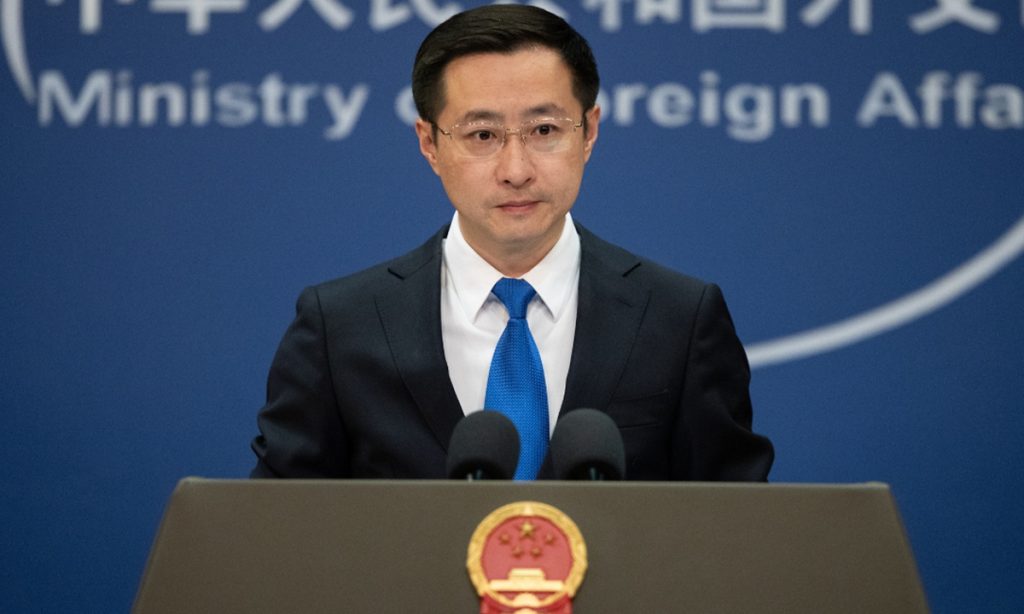
Chinese Foreign Ministry spokesperson Lin Jian made the remarks when asked by a foreign media reporter to comment on that according to Bloomberg on Thursday, Honduras' newly elected president, Nasry Asfura, "is reviewing" the country's relationship with China and several agreements previously reached between Honduras and China, as he seeks US investment.

Lin said, "I would like to point out that the relevant report distorted the facts, sowed discord, and is inconsistent with the facts. It seriously violates journalistic ethics. I want to emphasize that there is only one China in the world, Taiwan is an inalienable part of China's territory, and the Government of the People's Republic of China is the sole legal government representing the whole of China. The one-China principle is a universal consensus of the international community and a basic norm governing international relations. It is also the political foundation and prerequisite for China and Honduras to develop relations and carry out cooperation, and there is no room for any ambiguity."

Since China and Honduras established diplomatic relations, the two sides have carried out practical cooperation in various fields based on the principles of mutual respect and equal consultation, Lin said. Such cooperation has been mutually beneficial, achieved notable results, benefited the people of both countries, and received broad support from both peoples, said Lin. 

Facts have proven that upholding the one-China principle is the right decision, in line with the trend of history and the progress of the times, and serves the fundamental interests of Honduras and its people, Lin said. "Taiwan independence" separatist forces' attempts to split the country are unpopular and doomed to a dead end.

Regarding the China-related agreements involving Honduras mentioned by the reporter, Lin said, "I want to stress that China-Honduras cooperation targets no third party and should not be interfered with by any third party. China's legitimate and lawful rights and interests must be fully respected."

Chinese PLA Navy to host open-ship events celebrating 77th anniversary

The Chinese People's Liberation Army (PLA) Navy will open its barracks to the public in over 10 cities nationwide around April 23, marking its 77th anniversary, with over 40 active-duty vessels set for public visits.

A variety of active combat ships will be open to visitors, including guided-missile destroyers, as well as guided-missile frigates, minesweepers, missile boats and amphibious landing ships.

Additionally, auxiliary vessels, including comprehensive supply ships, ocean-going navigation training ships and hospital ships, will also be accessible to the public.

Many of the participating ships have carried out major missions such as escort missions in the Gulf of Aden, overseas visits and joint exercises.

The open-ship events will be held in cities including Dalian, Qingdao, Shanghai, Ningbo, Xiamen, Guangzhou and Sanya. Some vessels will be open to the public for the first time, while some will dock for the first time in the cities after which they are named.

Visitors will have opportunities to interact with naval personnel and experience naval culture.

In addition to ship visits, naval air force bases and ports will also be opened, alongside themed activities that highlight the ties between warships and their namesake cities.

Opening active-duty vessels to the public is a long-standing tradition among navies worldwide. In recent years, the PLA Navy has regularly held such events on its founding anniversary and the National Day, with growing scale and influence.

Reservation channels for this year's events have been gradually opening, and the public can register online through official platforms.