A Chinese woman in her 60s was injured and robbed of a shoulder bag containing approximately 8 million yen (about $50,000) in cash near Tokyo's busy Ikebukuro Station on Wednesday night, with police searching for two suspects who fled the scene, according to Japan's Kyodo News.
Kyodo News reported on Thursday that the incident occurred on a street in Tokyo's Toshima Ward. The victim told police that two individuals believed to be men robbed her shoulder bag. According to the Ikebukuro Police Station, the woman sustained minor head injuries during the robbery and said the bag contained about 8 million yen in cash.
When reached by the Global Times on Thursday for further details about the incident, a staff member at the Ikebukuro Police Station initially said the deputy chief responsible for the case was occupied and asked the reporter to leave contact information for a later response. After the reporter provided a phone number, the staff later called back to apologize and said they were unable to comment on the incident.
According to Kyodo News, police are investigating the case as a robbery resulting in injury and are searching for the two suspects who fled the scene.
The incident was reported at around 8:30 pm on Wednesday local time after a witness called emergency services and reported a bag-snatching, Kyodo News said.
Two suspects sprayed the woman with an unidentified substance, struck her in the head and then forcibly took her bag before fleeing, according to the report.
The robbery took place in a commercial district near JR Ikebukuro Station, one of Tokyo's busiest entertainment and shopping hubs.
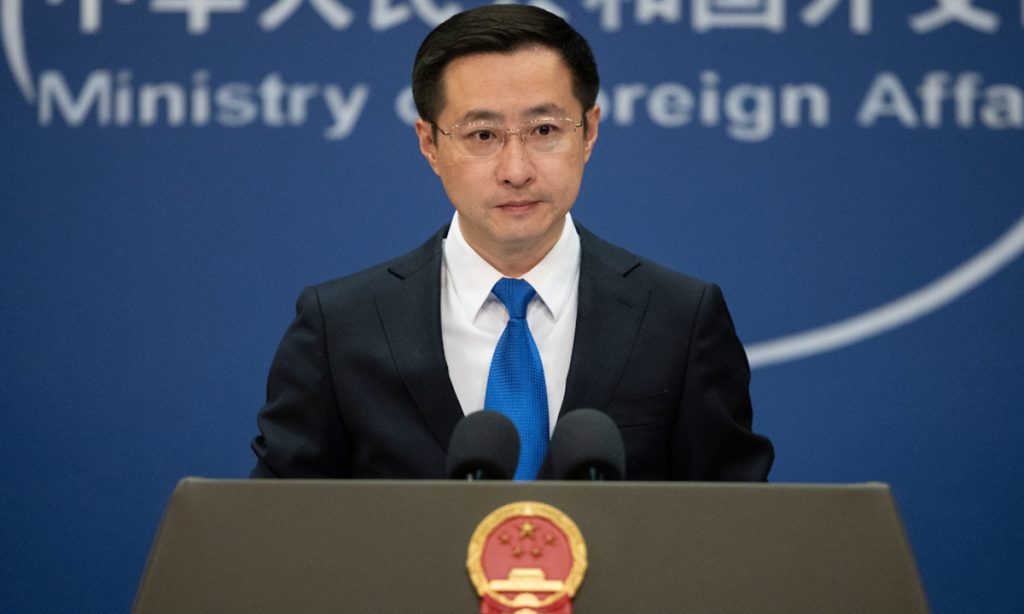
When asked by a foreign reporter to comment on the US Department of the Treasury's announcement of sanctions against nine individuals and entities from the Chinese mainland and Hong Kong Special Administrative Region (HKSAR) for allegedly providing support to the Iranian military in procuring weapons, Chinese Foreign Ministry spokesperson Lin Jian said on Friday that "we will take all necessary measures to firmly safeguard the legitimate rights and interests of Chinese companies and nationals."
Lin added that "as we have repeatedly made clear, China firmly opposes illegal unilateral sanctions that have no basis in international law or are not authorized by the UN Security Council."
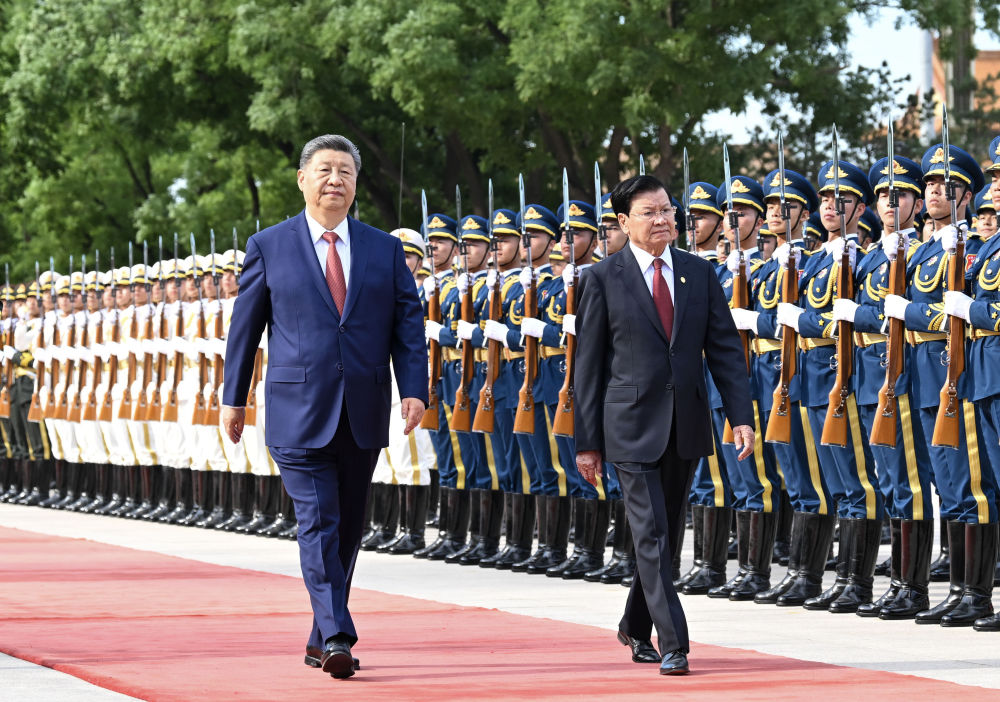
General Secretary of the Communist Party of China Central Committee and Chinese President Xi Jinping held talks with General Secretary of the Lao People's Revolutionary Party Central Committee and Lao President Thongloun Sisoulith in Beijing on Friday.
Chinese Vice President Han Zheng met with Belarusian First Deputy Prime Minister Nikolai Snopkov in Minsk on Saturday.
Han said China and Belarus are good friends and good partners. China is ready to work with Belarus to implement the important consensus reached by the two heads of state, enhance strategic mutual trust and deepen mutually beneficial cooperation to bring more benefits to the two peoples.
Noting China and Belarus enjoy strong economic complementarity and broad prospects for cooperation, Han said China is willing to strengthen the alignment of development strategies with Belarus and continue to open up new space for win-win cooperation.
He called for joint efforts to build the China-Belarus Industrial Park into an international industrial hub, welcomed more high-quality Belarusian products to the Chinese market, and urged both sides to step up youth exchanges to foster closer ties between the two peoples.
Snopkov said Belarus admires China's remarkable development achievements, and firmly believes the Chinese modernization will greatly contribute to world peace, development and common prosperity.
Belarus will always be a trustworthy and reliable strategic partner of China, he said, adding that his country is willing to work with China to implement the important consensus reached by the two heads of state and fully leverage existing bilateral cooperation mechanisms to enhance people-to-people exchanges and expand industrial cooperation.
Young people across the Shanghai Cooperation Organisation (SCO) widely endorse the concepts and actions of the SCO, highly appreciate its positive role in global governance and hold high expectations for deepening cooperation across various fields among member states, according to a report released in Bishkek, Kyrgyzstan, on May 27.
The report on interest trends among youth in SCO member states was jointly released by the Secretariat of the Belt and Road News Network (BRNN) and the Global Times at the 2026 China-Kyrgyzstan Media Cooperation Forum held in Bishkek. It is based on a 2025 survey of 10 official SCO member states, as well as data from Global Public Opinion. Focusing on youth perceptions and emerging trends, the report finds that young people are highly invested in employment, entrepreneurship, education, cultural ties, and global partnerships.
The findings show that young respondents strongly identify with the principles of the Shanghai Spirit, featuring mutual trust, mutual benefit, equality, consultation, respect for diverse civilizations and the pursuit of common development. More than 80 percent of respondents believe that development cooperation within the SCO framework has brought tangible benefits to their own countries. Among them, 72 percent cited "promoting high-quality development in home countries," and 62 percent pointed to "bringing more international cooperation and development opportunities." Over 80 percent also affirmed the SCO's positive role in global governance.
China, as a founding member of the SCO, has consistently upheld and acted on the Shanghai Spirit by deepening practical cooperation in various fields with other member states and promoting shared development. The survey shows that among young respondents in SCO countries other than China, more than 90 percent of respondents believe that cooperation with China can positively impact their own country's development and modernization.
More than 90 percent of respodents said that China's development experience in multiple areas is worth learning from. These figures reflect a strong desire among young people across the SCO to deepen cooperation with China and benefit from shared development opportunities.
People-to-people exchanges are one of the most-watched areas of cooperation for young people in SCO member states. More than 90 percent of respondents said they look forward to future SCO cultural and exchange programs and activities. Among the most popular were "youth exchanges," "university/student exchanges," "foreign language learning," and "vocational training." The report concludes that young people are not only interested in macro-level cooperation between countries, but also place great importance on the real-world opportunities brought by education, skills and cross-cultural communication.
Moreover, the concerns of young people in SCO member states show clear contemporary characteristics. Hot topics such as AI, skills development and cultural consumption have become key indicators of trends in employment, education and cultural life. According to the survey, in 2025, media coverage of topics related to "youth," "employment" and "entrepreneurship" in SCO member states saw a 141 percent year-on-year increase in mentions of AI. AI is emerging as an important driver for young people to explore innovation and expand their career opportunities. In education, young people place a high priority on digital skills, practical skills and innovation capabilities, with a clear trend toward digital, remote and cross-cultural learning. At the same time, young respondents maintain a strong sense of their own cultural identity and are developing a cultural awareness that is both locally rooted and globally minded.
Youth represent the future of the SCO and are an important force driving regional cooperation and shared development. The report provides a concentrated picture of the common understandings, real concerns and development expectations of young people in SCO member states, offering a valuable public opinion reference for deepening youth cooperation. Despite a complex and changing international environment, young people in the SCO remain positive about multilateral cooperation and shared development - a sign of the deep youth base and broad prospects for SCO cooperation.
General Secretary of the Lao People's Revolutionary Party Central Committee and Lao President Thongloun Sisoulith arrives in Beijing, capital of China, June 4, 2026. Thongloun is in China for a five-day state visit. (Photo: Xinhua)
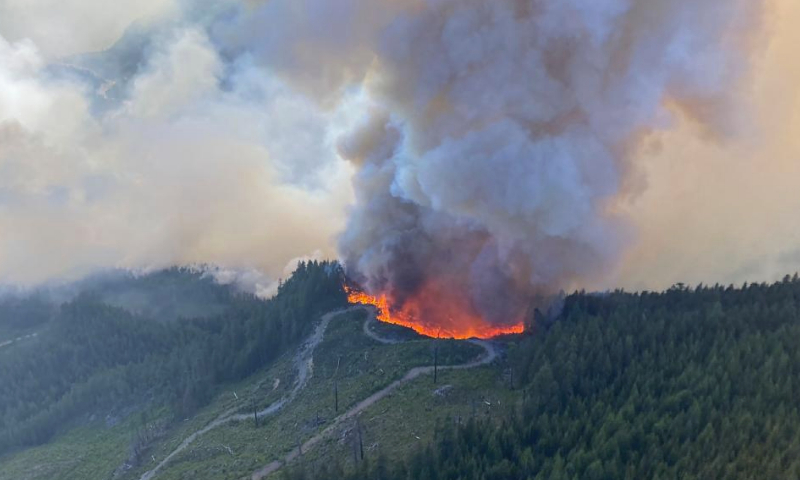
Chinese scientists urged the world to establish a comprehensive carbon accounting system that includes natural processes, especially extreme forest fires, as international delegates are gathering in Dubai to find a deal that will make a real difference in tackling the planet's climate issues at the 28th Conference of the Parties to the UN Framework Convention on Climate Change (COP28), according to the Shenyang-based Institute of Applied Ecology (IAE), Chinese Academy of Sciences (CAS), on Thursday at a press conference on a blue paper on the carbon emissions of forest fires.
Led by the Institute of Applied Ecology, and jointly compiled by the Institute of Earth Environment and the Institute of Atmospheric Physics of the CAS, the document points out that, from 2001 to 2022, the annual average area of forest burned globally was 46.95 million hectares, which is 11 times the annual average increase in artificial forest area during the same period.
During this period, the total carbon dioxide emissions from global forest fires reached 33.9 billion tons, which could increase atmospheric carbon dioxide concentration by 4.35 ppm (parts per million), the blue paper said.
Forest fires are a common disturbance in forest ecosystems, significantly affecting the composition, structure and succession characteristics of forests, thereby altering the material cycling and energy flow of forest ecosystems, said Xu Wenru, a researcher at the IAE and one of the lead authors of the blue paper.
Extreme forest fires have become more frequent in recent years, mainly due to climate change and human activities, leading to an increase in global carbon emissions, according to the blue paper.
"Our study has proven that the amount of emissions from forest fires is huge, so we think it is necessary to include forest fire carbon emissions into a carbon emission accounting system. On the other hand, once established, such a comprehensive accounting system will help urge related governments enhance prevention and management of extreme forest fires," Zhu Jiaojun, director of IAE, told the Global Times.
In terms of the impact of climate change and human activities on extreme forest fires, Zhu noted that these three elements are connected. He called for further scientific research and more international cooperation on fire carbon emissions.
Taking the extreme forest fires in Canada in 2023 as an example, the blue paper points out that direct carbon dioxide emissions from this fire exceeded 1.5 billion tons, higher than the total carbon dioxide emissions from forest fires in Canada over the past 22 years (1.374 billion tons). "This severely weakened the carbon sink function of forest ecosystems," Xu noted.
According to the blue paper, from May to August, the forest fires in Canada emitted a total of 10.02 million tons of PM2.5, causing environmental pollution not only in Canada but also significantly affecting air quality in large areas of the Northern Hemisphere.
The blue paper also presented significant spatial differences in global forest fire carbon dioxide emissions, with the carbon emissions from high-latitude coniferous forest areas in the Northern Hemisphere showing a rapid increasing trend. Between 2001 and 2022, Africa witnessed the largest areas that had been burned each year (33.32 million hectares), followed by Southern America (5.18 million hectares) and Asia (5.12 million hectares).
China's forest area accounts for 5.4 percent of the global total forest, but its carbon emissions from forest fires only account for 0.65 percent of the global total for forest fire emissions, significantly lower than the global average, the blue paper noted. From 2001 to 2022, China's carbon emissions from forest fires showed a significant downward trend, with annual average carbon dioxide emissions of 10 million tons.
China has adhered to the policy of "prevention as the primary focus, combining prevention and control." The country has also established an effective forest fire warning and monitoring system, and a comprehensive fire prevention network. Thanks to the efforts of the whole society, both the frequency and the burned area of forest fires have been declining since 2001, according to Xu.
Georgian Ambassador to China Archil Kalandia participated in the 5th China-CEEC SME Cooperation Forum held in Cangzhou, North China's Hebei Province on Monday, with a total of more than 600 Chinese and Central and Eastern European enterprises participating in the forum. During the meeting, Ambassador Kalandia met with China's Vice Foreign Minister Deng Li.
Ambassador Kalandia reiterated his desire for the Georgian side to be granted the status of observer state in the mechanism of cooperation between China and Central and Eastern European Countries (CEEC). Deng expressed his support for the ambassador's cause. The two sides will continue to hold consultations with the countries of Eastern and Central Europe on the above-mentioned issues.
Deng said that the strengthening of cooperation between small and medium-size enterprises (SME) in China and Central and Eastern European countries is of great practical significance. We should further buttress our development strategies, expand cooperation in areas such as green development and digital transformation, and create new growth points through innovative ways of cooperation, he said at the forum.
Launched in 2012, the China-CEEC Cooperation Mechanism is a platform for cross-regional cooperation between China and European countries to promote the deepening of economic and trade cooperation between China and Europe.
Around the six-month mark, babies start to get really fun. They’re not walking or talking, but they are probably babbling, grabbing and gumming, and teaching us about their likes and dislikes. I remember this as the time when my girls’ personalities really started making themselves known, which, really, is one of the best parts of raising a kid. After months of staring at those beautiful, bald heads, you start to get a glimpse of what’s going on inside them.
When it comes to learning language, it turns out that a lot has already happened inside those baby domes by age 6 months. A new study finds that babies this age understand quite a bit about words — in particular, the relationships between nouns. Work in toddlers, and even adults, reveals that people can struggle with word meanings under difficult circumstances. We might briefly falter with “shoe” when an image of a shoe is shown next to a boot, for instance, but not when the shoe appears next to a hat. But researchers wanted to know how early these sorts of word relationships form.
Psychologists Elika Bergelson of Duke University and Richard Aslin, formerly of the University of Rochester in New York and now at Haskins Laboratories in New Haven, Conn., put 51 6-month-olds to a similar test. Outfitted with eye-tracking gear, the babies sat on a parent’s lap and looked at a video screen that showed pairs of common objects. Sometimes the images were closely related: mouth and nose, for instance, or bottle and spoon. Other pairs were unrelated: blanket and dog, or juice and car.
When both objects were on the screen, the parents would say a sentence using one of the words: “Where is the nose?” for instance. If babies spent more time looking at the nose than the other object, researchers inferred that the babies had a good handle on that word.
When the babies were shown tricky pairs of closely related objects, like a cup of juice and a cup of milk, the babies spent nearly equal time looking at both pictures, no matter what word their parents said. But when the images were really distinct (juice and car, for instance) the babies spent more time looking at the spoken word. These babies detected a difference between the “milk-juice” pair and the “juice-car” pair, recognizing that one pair is similar and the other isn’t, the researchers conclude November 20 in the Proceedings of the National Academy of Sciences. To see whether this ability was tied to domestic life, the researchers sent the babies home with specialized gear: vests with audio recorders and adorable hats outfitted with small video cameras, one just above each ear. A camera on a tripod in a corner of the home also captured snippets of daily life. The resulting video and audio recordings revealed that babies whose caregivers used more nouns for objects in the room were better at the word task in the lab.
That means that babies learn words well when they can actually see the object being talked about. Hearing, “Open your mouth. Here comes the spoon!” as they watch the spoon come flying toward their face makes a bigger vocabulary impression than “Did you like riding in the car yesterday?”
A similar idea came from a recent study on preschoolers. These kids learned best when they saw one picture at a time (or when parents pointed at the relevant object). Babies — and older kids, too — like to see what you’re talking about.
The results are too early to provide advice to parents, says Bergelson, a cognitive and developmental psychologist. “But I think one thing suggested by our work is that parents should consider their young baby to be a real conversational partner,” she says. “Even young infants are listening and learning about words and the world around them before they start talking themselves, and their caregivers make that possible.”
There’s still lots to figure out about how babies soak up vocabulary. And as scientists come up with more ways to peer into the mysterious inner workings of a baby’s mind, those answers might lead to even more interesting conversations with our babies.
A new analysis is shedding light on drought in Mongolia, both past and future.
By studying the rings of semifossilized trees, researchers constructed a climate history for the semiarid Asian nation spanning the last 2,060 years — going 1,000 years further back than previous studies.
It was suspected that a harsh drought from about 2000 to 2010 that killed tens of thousands of livestock was unprecedented in the region’s history and primarily the result of human-caused climate change. But the tree ring data show that the dry spell, while rare in its severity, was not outside the realm of natural climate variability, researchers report online March 14 in Science Advances. “This is a part of the world where we don’t know about the past climate,” says Park Williams, a bioclimatologist at Columbia University’s Lamont-Doherty Earth Observatory in Palisades, N.Y., who was not involved with the study. “Having this record is a great resource for trying to understand past droughts in the region.”
In recent years, many studies have sought to unsnarl the role of anthropogenic climate change from natural variability on extreme weather events (SN: 1/20/18, p. 6). Such work is necessary for more accurately predicting future climate trends and helping governments prepare for the most severe scenarios, says study coauthor Amy Hessl, a physical geographer at West Virginia University in Morgantown. This is especially true in countries like Mongolia that lack certain infrastructure, such as enough water reservoirs, to ease the impact of events like prolonged drought.
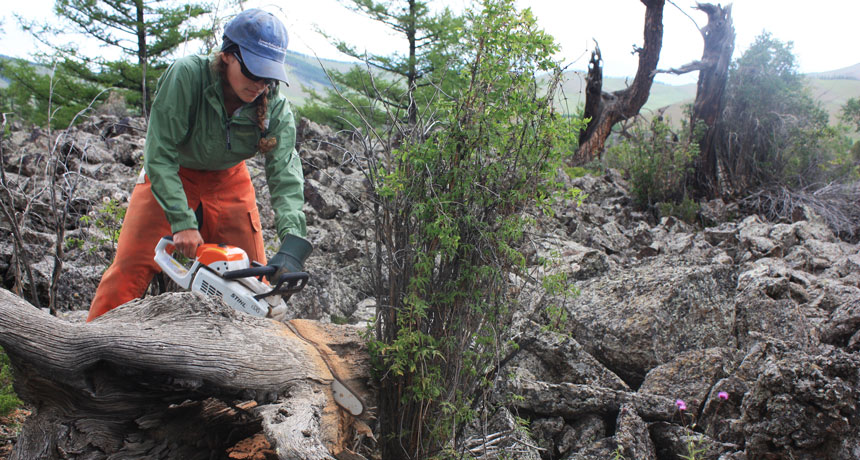
Hessl and her colleagues studied tree rings in hundreds of samples of Siberian pines, well-preserved by Mongolia’s naturally dry climate. A ring’s width indicates how much the tree grew in a year. In wet years, the rings are wider; in dry years, skinnier. The recent dry spell was the severest in recorded history. But the rings showed that an even more severe drought took place around the year 800, long before anthropogenic climate change began.
Still, computer simulations suggest that about a third of the recent drought’s severity could have been caused by elevated temperatures linked to climate change, the researchers found. The finding is consistent with studies on how climate change has affected other recent droughts in South Africa and California.
Using computer simulations, Hessl and her colleagues conclude that droughts in coming decades may not be any worse than those seen in Mongolia’s past. The team predicts that as global temperatures rise over the next century, Mongolia will first become drier, then wetter. Increased heat initially will dry out the plains. But at a certain point, hot air holds more moisture, leading to increased precipitation.
Those climate patterns will likely guide how Mongolia develops, Hessl says, because they have in the past. In 2014, she and colleagues published a paper detailing how a 15-year period of unprecedented temperate and rainy conditions in 13th century Mongolia may have led to the rise of Genghis Khan (SN Online: 3/10/14).