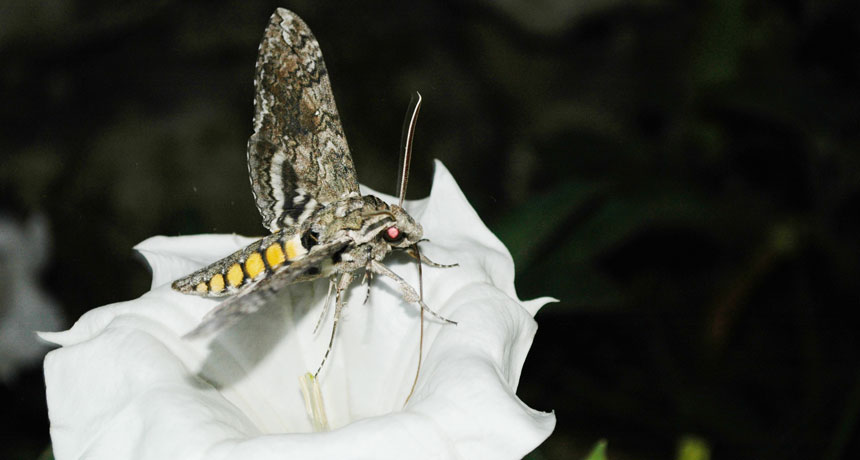
PORTLAND, ORE. — A great flower shape for a moth trying to get a drink in the dark turns out to be awful from the plant’s point of view.
Offering hawk moths (Manduca sexta) a range of 3-D printed flowers with different curvatures shows that a moderately curved trumpet shape lets moths sip most efficiently, Foen Peng reported June 24 at the Evolution 2017 meeting. That’s a win for a nocturnal flying insect searching for nectar. Yet drinking ease wasn’t best for the plant. During swift sips, the moths did less inadvertent bumping against the artificial flowers’ simulated sex organs than moths struggling to sip from an inconvenient shape. Less contact with real flower parts would mean less delivery and pickup of pollen.
Peng, of the University of Washington in Seattle, offered the moths three other shapes besides the gently curved trumpet. The best for the plant was a flat-topped “flower” with a right angle drop to a nectar well in the center. Previous work suggested that lack of curves made it very difficult for hawk moths hovering above a flower and extending their tonguelike proboscises to tap and probe the way to nectar in dim light.
Pollination at first glance may look like an easy mutualism evolving with the best interests of both plant and pollinator. But these experiments reveal a hidden, underlying conflict, Peng said.
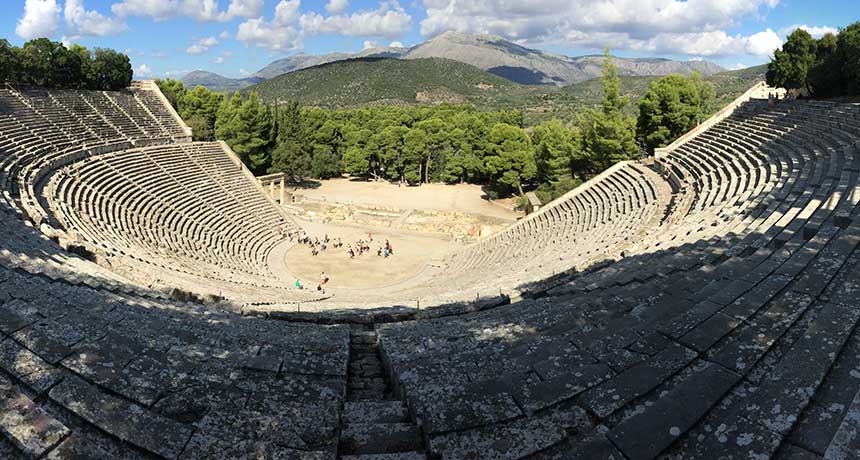
BOSTON — Guidebook claims about the superior acoustics of the ancient Greek amphitheater of Epidaurus are a tad melodramatic. An actor’s voice can be heard in the back row, but whispers and other quiet noises cannot, acoustician Remy Wenmaekers reported June 28 at a meeting of the Acoustical Society of America.
The acoustics of the 14,000-seat theater, which dates to the fourth century B.C., are often touted as carrying faint sounds with extraordinary clarity. Wenmaekers and colleagues at Eindhoven University of Technology in the Netherlands positioned microphones at 264 spots throughout the theater and recorded a slow whooping sound projected from the stage that went from low to high frequency with time like a fire truck siren. The team also recorded sounds made by a voice simulator that mimics the frequency spectrum of a male speaker. These tests provided acoustic parameters such as sound strength and reverberation time for various spots in the audience. Then, in a lab, researchers determined the threshold for hearing noises such as a pin dropping or person whispering against the background noise of the theater.
With no roads of humming traffic nearby, the theater, which is still in use today, is remarkably quiet, especially when there’s no wind, Wenmaekers said. But sounds like tearing a sheet of paper or striking a match would be discernable only for someone sitting near the stage. The sound of a dropped coin would just barely be audible for someone seated in the back, but a dropped pin would be too quiet to hear. It’s still unknown just how far noise made by an audience member unwrapping a piece of candy carries.
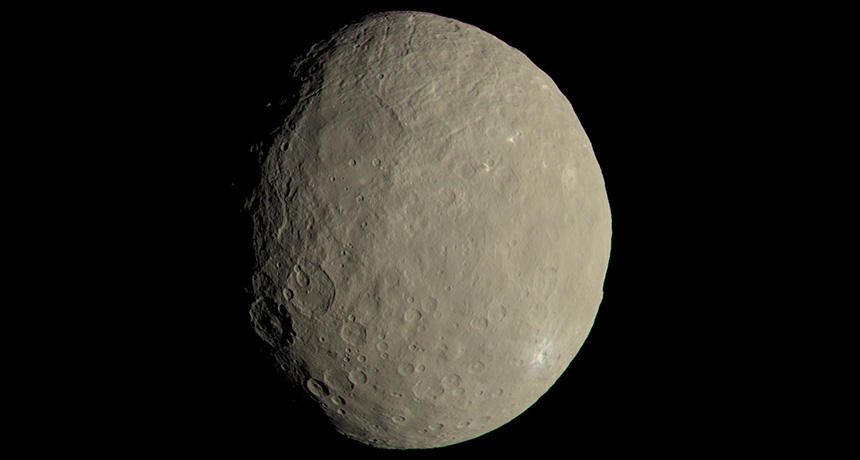
The earliest asteroids were probably made of mud, not rock.
Radioactive heat in the early solar system could have melted globs of dust and ice before they had a chance to turn to rock, a new simulation published July 14 in Science Advances shows. The results could solve several puzzles about the composition of meteorites found on Earth and may explain why asteroids are different from comets.
Most knowledge about the first solid bodies in the solar system comes from meteorites called carbonaceous chondrites, thought to be chunks of the first asteroids. Their chemical compositions are almost identical to the sun’s — if you took all the hydrogen and helium out of the sun, you’d get the mineral ratios found in these bits of rock. That similarity suggests the first asteroids formed directly from the disk of gas and dust that preceded the planets. The composition also suggests that these rocks formed in the presence of water and at relatively low temperatures, around 150° Celsius.
It’s hard to explain all those features at once. If the original asteroids were bigger than about 20 kilometers across — and there’s no reason to think they weren’t — decaying radioactive elements inside them would have made the rock hotter than that. Some planetary scientists have suggested that the asteroids were porous, and water flowing through a primitive plumbing system cooled them. But the water should have stripped some elements from the rock, ruining their sunlike chemistry.
“It was a paradox,” says planetary scientist Philip Bland of Curtin University of Technology in Perth, Australia. Bland was modeling how those original globs of ice and dust could have compressed into solid rock, when it hit him: What if they weren’t rock at all? “At that moment, nothing has happened to force those grains together to turn it into a rock,” he says. That was just something everyone had assumed.
Bland reasoned that heat from radioactive decay would melt the ice, and the resulting body would be an enormous dollop of mud. The mud would suspend sediment particles, so they wouldn’t be stripped of their sunlike elements. And it would allow the early asteroids to be any size and remain cool.
Bland and Bryan Travis of the Planetary Science Institute, who is based in Los Alamos, N.M., ran computer models of how the mud balls would evolve. Convection currents, like those that move molten rock within the Earth’s mantle, would develop, helping to transfer heat into space, the models showed. After several million years, the ball would harden completely, yielding the asteroids seen today.
“It nails the paradox,” Bland says.
Mud balls could even explain the difference between asteroids and comets, he says. Comets, which are more icy than rocky and tend to live farther from the sun, may simply have formed later in the solar system’s history, when there was less radioactive heat available to melt them.
The model also showed that some asteroids would be muddy all the way through, while others would develop cores of larger grains, with a great mud ocean on top of them.
The latter result could describe not just asteroids but bodies like the dwarf planet Ceres, the largest object in the asteroid belt. Observations from NASA’s Dawn spacecraft showed that Ceres has a rocky core and may once have had an ocean that has since evaporated, says UCLA planetary scientist Edward Young. “That process may have been something like what they’re describing.”
Planetary scientist Brandon Johnson of Brown University in Providence, R.I., thinks the model will inspire more research. “I’m interested in it myself, actually,” he says. “It makes a lot of sense and paints a clear picture of what might have been happening.”
But Young is concerned that the model’s flexibility means it won’t make specific enough predictions for future work to test it. “It has so many knobs, you can get it to do whatever you want,” he says. “I’m trying to think of what the killer observation would be.”
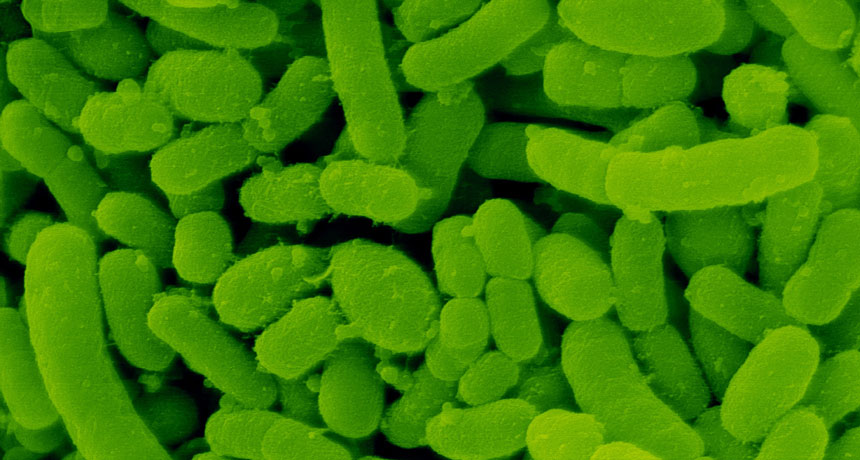
Out-of-whack microbes in the vagina can raise HIV risk — and now there’s evidence that the makeup of the penis microbiome matters, too. The greater the number of anaerobic bacteria tucked under the foreskin, the more likely an uncircumcised man is to become infected with the virus, researchers report July 25 in mBio.
“This mirrors what’s been seen in women, but it’s the first study of its kind in men,” says Deborah Anderson, a microbiologist and gynecologist at Boston University School of Medicine. The data come from heterosexual Ugandan men followed for two years as part of a larger study on circumcision. Researchers swabbed the men’s penises to collect bacteria samples at the beginning of the two-year study. Then they compared the penile bacterial composition of the 46 uncircumcised men who became infected with HIV over the course of the study with that of 136 uncircumcised men who didn’t.
The total amount of penile bacteria didn’t differ, but men with higher levels of anaerobic bacteria were more likely to have contracted HIV, researchers found. Having 10 times more Prevotella, Dialister, Finegoldia and Peptoniphilus bacteria raised the risk of contracting HIV by 54 to 63 percent after controlling for other factors that might affect risk, such as condom use habits and number of sexual partners.
The results might help explain why circumcision cuts the risk of HIV, says Thomas Hope, a cell biologist at Northwestern University Feinberg School of Medicine in Chicago: Removing the flap of foreskin takes away a moist hideout for bacteria that thrive in oxygen-starved environments. But, Hope cautions, the study only draws an association between the microbiome and HIV — not necessarily a cause and effect.
It’s not clear how certain bacteria might raise HIV risk, but the new study revealed one possible clue: Men with more anaerobic penis bacteria also had higher levels of inflammatory cytokine proteins, which call immune cells to the scene.
“Specific bacteria might cause inflammatory response that would cause the immune cells to congregate in the penis, where they’re more likely to be exposed to the virus,” says study coauthor Cindy Liu, a pathologist at George Washington University in Washington, D.C. HIV targets particular immune cells, so recruiting an immune response to the penis might have an unintended consequence — a free ferry ride for the virus into the bloodstream. Liu and colleagues hope to test that explanation more thoroughly by looking at tissue samples from circumcised foreskins, and seeing whether there’s a relationship between the penis microbiome and the kinds of immune cells found in the foreskin.
Some of these same bacteria are also linked to increased HIV risk in women, and the microbes can be swapped between partners during sex. While practicing safe sex is still the best HIV-prevention strategy, topical creams that adjust the bacterial balance on the penis might someday help lower the risk of infection, Liu says.
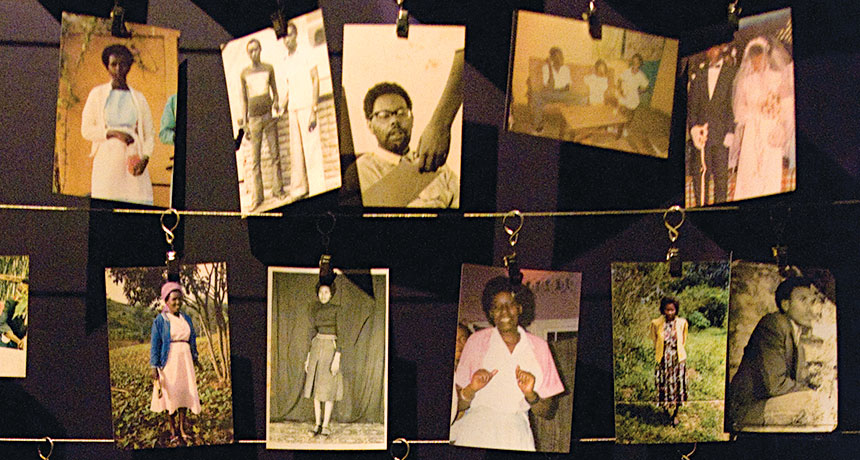
A string of state-directed, targeted mass killings left a bloody stain on the 20th century. A genocide more recent than the Holocaust is providing new insights into why some people join in such atrocities.
Adolf Hitler’s many accomplices in his campaign to exterminate Jews throughout Europe have justifiably attracted the attention of historians and social scientists. But a 100-day spasm of unprecedented violence in 1994 that wiped out about three-quarters of the ethnic Tutsi population in the African nation of Rwanda has the potential to reveal much about how mass killings unfold at ground level. There is no guarantee that a better, although inevitably incomplete, understanding of why certain members of Rwanda’s majority Hutu population nearly eliminated a Tutsi minority will prevent future large-scale slaughters. The research is worth the effort, though, especially in a 21st century already marked by massacres of hundreds of thousands of people in western Sudan’s Darfur region and in Syria.
Researchers have an advantage in Rwanda. When hostilities ended, Rwanda’s government gathered extensive data on genocide victims and suspected perpetrators through a national survey. And local courts tried more than 1 million cases of alleged involvement in the violence, making the case documents available to researchers.
Genocide studies have often split offenders into organizers — mainly political and community leaders — and “ordinary men” who kill out of blind obedience to central or local authorities and hatred of those deemed enemies. But the extensive data from Rwanda tell a different story: An individual’s willingness to take part in genocidal violence depends on many personal and social factors that influence whether and how deeply a person participates, says sociologist and Rwanda genocide researcher Hollie Nyseth Brehm of Ohio State University in Columbus.
Nyseth Brehm’s findings may not apply to some of Rwanda’s most avid killers, who eluded capture and fled the country as soon as hostilities stopped. But when it comes to the ordinary citizens swept up in the deadly campaign, involvement was not primarily about following political leaders’ orders to eliminate Tutsis.
New reports by Nyseth Brehm and others fuel skepticism about the popular idea that regular folks tend to do as they’re told by authorities. And a fresh look at a famous 1960s psychology study adds further doubt that people will blindly follow orders to harm or kill others. In reality, only about 20 percent of Hutu men, an estimated 200,000, seriously injured or killed at least one person during the genocidal outbreak, estimates Rwanda genocide researcher Omar McDoom of the London School of Economics and Political Science.
“Why did four in five Hutu men not engage in the killing?” McDoom asks. That puzzle goes against the ordinary man thesis that “implies there are no individual differences in genocide participation,” he says. He suspects participation hinged on personal motivations, such as wanting to defend Rwanda from enemies or make off with a Tutsi neighbor’s possessions. Social circumstances, such as living in high-violence areas or having friends or family members who had already murdered Tutsis, probably played a role too. Nyseth Brehm agrees.
Local triggers Genocides often fester before exploding. In Rwanda, Tutsi rebels attacked the Hutu-led government and set off a civil war several years before mass killings started. A turning point came when unidentified forces killed Rwanda’s president, shooting down his plane on April 6, 1994. Over the next three months, the government orchestrated a massacre of Tutsis and any Hutus deemed friendly or helpful to Tutsis. Most scholars place the death toll at around 800,000, although estimates range from 500,000 to 1.2 million. Bands of Hutus scoured the countryside for their sworn enemies. Killings took place at roadblocks and in raids on churches, schools and other community facilities. Hutu women killed on a much smaller scale than men did, although they often aided those involved in the carnage.
In many parts of Rwanda, local authorities appointed by the national government recruited Hutu men into groups that burned and looted homes of their Tutsi neighbors, killing everyone they encountered, says political scientist Scott Straus of the University of Wisconsin–Madison. In his 2016 book Fundamentals of Genocide and Mass Atrocity Prevention, Straus describes how Rwandan recruitment efforts coalesced into a killing machine. Politicians, business people, soldiers and others encouraged Hutu farmers to kill an enemy described as “cockroaches” in need of extermination. Similarly, Nazis portrayed Jews as cockroaches and vermin.
Despite the Rwandan state’s best efforts to encourage nationwide Tutsi annihilation, local conditions shaped how the 1994 genocide unfolded, Nyseth Brehm reported in February in Criminology. She looked at 142 of the nation’s 145 municipalities, known as communes. Some experienced as few as 71 killings, while in others, as many as 54,700 people were murdered, she found.
Communes with the fewest killings were those that had the highest marriage and employment rates, Nyseth Brehm says. In those settings, mainly farming communities where people knew and trusted each other, most citizens valued a peaceful status quo and discouraged a descent into mass killing, she suspects. Curiously, violence was worse in areas with the largest numbers of educated people. That points to the effectiveness of anti-Tutsi teachings in Rwandan schools, Nyseth Brehm suggests.
Her study relied on data from a postgenocide survey, published in 2004 by Rwanda’s government, intended to document every person killed during the atrocity. Citizens throughout Rwanda told interviewers about individuals in their communities who had been killed during the outburst of slaughter. Reported and confirmed deaths were checked against records of human remains linked to the 1994 genocide. Comparisons were also made to Rwanda’s 1991 census.
However, any data on killings during mass violence, including from the Rwandan survey, will be incomplete, Nyseth Brehm cautions. So she also analyzed data from 1,068,192 genocide-related cases tried in local Rwandan courts from 2002 to 2012. Of particular note, although most nongenocidal murders in Rwanda are carried out by men in their 20s, the average age of accused genocide perpetrators was 34.7 years old, Nyseth Brehm reported in the November 2016 Criminology.
Hutu men in their 30s joined the genocidal fray as a way to fulfill adult duties by defending their communities against an outside threat, she suggests. Preliminary analyses show that perpetrators tended to cluster in families; if one of several brothers killed Tutsis, the others were far more likely to follow suit.
Additional scouring of court data indicated that Rwandans who had siblings convicted of genocide killings were especially likely to have murdered Tutsis themselves. In earlier interviews of 130 Rwandans, some who had killed Tutsis and others who hadn’t, McDoom similarly found that perpetrators tended to cluster in families.
Missing murderers Unfortunately, the Rwandan genocide’s most prolific players have eluded both the law and science, says political scientist Cyanne Loyle of Indiana University Bloomington. Investigators have so far interviewed only a handful of the powerful “big fish” who orchestrated the genocide, plus several hundred people tried and imprisoned for genocide participation. Survey and court data are limited to killers who either stayed in Rwanda after atrocities ended or were caught trying to flee the country.
But perpetrators with the most blood on their hands traveled in bands, wiping out tens of thousands of people at a time before hiding abroad, Loyle says. For instance, local officials lured large numbers of Tutsis to a school near the town of Murambi, where Hutu militias used machine guns, explosives and other weapons to kill more than 40,000 people in just three days.
“Scholars have studied Rwandans who killed on the sidelines while a larger and deadlier campaign was under way,” Loyle says. “They have mistaken a sideshow for the main event.”
Perpetrators of colossal atrocities at Murambi and elsewhere were less powerful than the government’s genocide masterminds, Loyle says. These “murderers in the middle,” however, were better equipped and far more effective at killing than common folk who got caught up in events, she contends.
There are no good estimates of how many members of large-scale killing squads escaped Rwanda and now live elsewhere. From 15,000 to 22,000 members of the Rwandan army and local militia groups were at large in the Democratic Republic of the Congo, near Rwanda’s border, in January 2003, according to a report by the International Crisis Group, a nonprofit organization.
Nyseth Brehm acknowledges the difficulty of accounting for genocide perpetrators who eluded justice. She and others, including Straus, have interviewed genocide offenders who stayed in Rwanda, often imprisoned for their crimes. Many of those who fled must have traveled in groups that murdered on a grand scale, she says. Those mass killers represent crucial missing data on who participates in genocide, and for what reasons. Vicious virtue In interviews by Nyseth Brehm, McDoom and others, perpetrators listed many reasons for joining the 1994 killing spree — hatred of Tutsis, a perceived need to protect nation and family, a desire to claim a neighbor’s property or a decision to join a suddenly popular cause, to name a few. Blind obedience to brutal leaders was far from the only reason cited.
That finding conflicts with the late psychologist Stanley Milgram’s interpretation of his famous “obedience to authority” experiments. Milgram described those trials, in which volunteers were told to administer increasingly intense shocks to another person, as a demonstration of people’s frequent willingness to follow heinous commands. He saw the experiments as approximating the more extreme situations in which Germans had participated in the Holocaust. On closer inspection, though, Milgram’s study aligns closely with what’s known about Rwandan genocide perpetrators, says S. Alexander Haslam, a psychologist at the University of Queensland in Australia. In Milgram’s experiments, as in Rwanda and Nazi Germany, “those willing to harm others were not so much passive ciphers as motivated instruments of a collective cause,” Haslam says. “They perceived themselves as acting virtuously and doing good things.”
Although Milgram’s tests upset some volunteers, most participants identified with his scientific mission to understand human behavior and wanted to prove themselves as worthy of the project, Haslam and psychologist Stephen Reicher of the University of St. Andrews in Fife, Scotland, conclude in a research review scheduled to appear in the 2017 Annual Review of Law and Social Science.
Milgram conducted 23 obedience experiments with New Haven, Conn., residents in 1961 and 1962 (SN: 9/21/13, p. 30). Most attention has focused on only one of those experiments. Volunteers designated as “teachers” were asked by an experimenter to continue upping the intensity of what they thought were electric shocks to a “learner” — who was actually in league with Milgram — who erred time and again on a word-recall test. Through screams, shouts and eventually dead silence from the learner, 26 of 40 volunteers, or 65 percent, administered shocks all the way to a maximum of 450 volts.
But experiments that undermined participants’ identification with the scientific mission lowered their willingness to deliver the harshest shocks, Haslam and Reicher say. Fewer volunteers shocked to the bitter end if, for instance, the study was conducted in an office building rather than a university laboratory or if the experimenter was not physically present. An analysis of data available from 21 of the 23 experiments finds that 43.6 percent of 740 volunteers shocked learners to the limit. Participants were most compliant when an experimenter encouraged them to continue shocking for the sake of the experiment (by saying, “The experiment requires that you continue”), the psychologists add. Participants never followed the order: “You have no choice, you must continue.”
Milgram’s archives at Yale University contain letters and survey responses from former participants reporting high levels of support for Milgram’s project and for science in general. Many former volunteers told Milgram that they administered shocks out of a duty to collaborate on what they viewed as important research, even if it caused them distress at the time. Still, Milgram’s recruits often admitted having had suspicions during the experiments that learners were not really being zapped.
Milgram was right that his experiments applied to real-world genocides, Haslam concludes, but erred in assuming that obedience to authority explained his results. From Milgram’s laboratory to Rwanda’s killing squads and Nazi concentration camps, orders to harm others are carried out by motivated followers, not passive conformists, he asserts.
If anything, that makes genocide all the more horrifying.
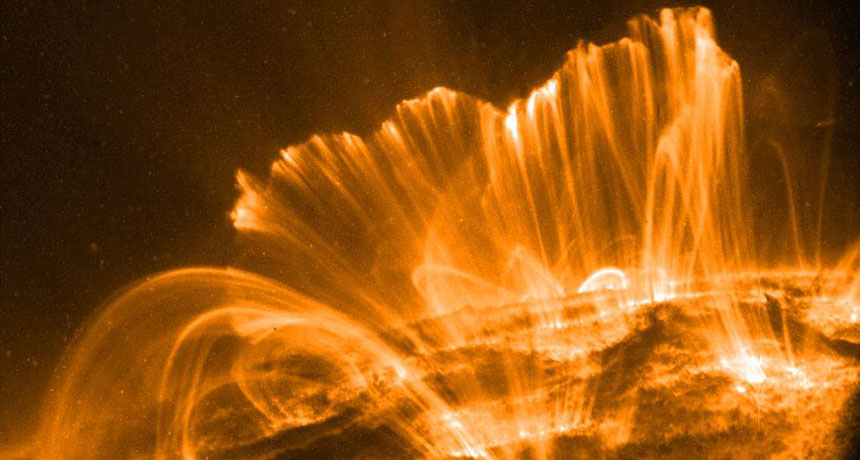
When the Aug. 21 solar eclipse unveils the sun’s normally dim atmosphere, the corona will look like an intricate, orderly network of loops, fans and streamers. These features trace the corona’s magnetic field, which guides coronal plasma to take on the shape of tubes and sheets.
These wispy coronal structures arise from the magnetic field on the sun’s visible surface, or its photosphere. Unlike the corona, the photosphere’s magnetism is a complete mess. “It’s not a static surface like the ground, it’s more like an ocean,” says solar physicist Amir Caspi of the Southwest Research Institute in Boulder, Colo. “And not just an ocean. It’s like a boiling ocean.”
Because the corona’s loops and streamers all originate in the turbulent photosphere, their roots should get twisted and turned around.
“And yet these structures in the corona are not tangled and snarled and matted like kelp or seaweed in the ocean,” Caspi says. “They seem to still be these organized, smooth loops. Nobody understands why.”
To unknot the photosphere’s tangled mats, the corona must release some of the energy stored there, Caspi says. So during the eclipse, he and his colleagues will be looking for the release valves that set the corona free. One possibility is that wave motion in the corona’s magnetic field lines helps untie the snarls. Magnetic waves in plasma, called Alfvén waves, are thought to ripple through the sun’s magnetic field lines like vibrations in a guitar string. Researchers have directly observed Alfvén waves in the lower corona, within about half a solar radius of the surface (SN: 4/11/09, p. 12), but not farther out where similar waves with higher amplitudes would travel. Those close-in waves were too weak to explain the corona’s features, but perhaps more distant waves could shake things up enough. Another option is that little hypothetical spurts of magnetic energy could help release the tangles. These nanoflares and nanojets would be like solar flares but with a billionth of the energy. By going off all the time, nanoflares and nanojets could collectively release enough energy to give the corona some structure, simulations have shown.
“Both are symptoms of tiny rearrangements of the magnetic field — magnetic reconnection,” says solar physicist Craig DeForest, also at the Southwest Research Institute. Solar flares and bigger outbursts called coronal mass ejections are also signs of magnetic reconnection, but they’re not frequent enough to account for the corona’s smoothness. “Nanojets and/or nanoflares in the middle corona would be a smoking gun that would explain why the corona is so organized,” DeForest says.
No one has actually seen any nanoflares or nanojets. Theories suggest that they’re too small and quick to see individually — but they should be visible as a cacophony of little pops when the solar eclipse reveals the lower corona.
The shaking from Alfvén waves and the flickers of nanoflares could not only loosen up the tangled skein of magnetism, but also transfer heat high up into the corona. Caspi, DeForest and their colleagues hope to see both effects on August 21, when they fly a pair of telescopes on twin NASA WB-57 high-altitude research jets along the path of the eclipse (SN Online: 8/14/17).
“We’re taking high-speed movies of the sun and analyzing them for things that look like waves,” Caspi says. “We’re just overall looking at the structure of the corona.”
Some people might think that online privacy is a, well, private matter. If you don’t want your information getting out online, don’t put it on social media. Simple, right?
But keeping your information private isn’t just about your own choices. It’s about your friends’ choices, too. Results from a study of a now-defunct social media site show that the inhabitants of the digital age may need to stop and think about just how much they control their personal information, and where the boundaries of their privacy are.
When someone joins a social network, the first order of business is, of course, to find friends. To aid the process, many apps offer to import contact lists from someone’s phone or e-mail or Facebook, to find matches with people already in the network.
Sharing those contact lists seems innocuous, notes David Garcia, a computational social scientist at the Complexity Science Hub Vienna in Austria. “People giving contact lists, they’re not doing anything wrong,” he says. “You are their friend. You gave them the e-mail address and phone number.” Most of the time, you probably want to stay in touch with the person, possibly even via the social media site.
But the social network then has that information — whether or not the owner of it wanted it shared.
Social platforms’ ability to collect and curate this extra information into what are called shadow profiles first came to light with a Facebook bug in 2013. The bug inadvertently shared the e-mail addresses and phone numbers of some 6 million users with all of their friends, even when the information wasn’t public.
Facebook immediately addressed the bug. But afterward, some users noticed that the phone numbers on their Facebook profiles had still been filled in — even though they had not given Facebook their digits. Instead, Facebook had collected the numbers from the contact lists innocently provided by their friends, and filled in the missing information for them. A shadow profile had become reality. It’s no surprise that a social platform could take names, e-mail addresses and phone numbers and match them up with other people on the same platform. But Garcia wondered if these shadow profiles could be extended to people not on the social platform at all.
He turned to a now-defunct social network called Friendster. A precursor to sites like MySpace and Facebook, Friendster launched in 2002. In 2008, the social site boasted more than 115 million users. But by 2009 people began to jump ship for other sites, and in 2015 Friendster closed for good. Millions of abandoned public profiles vanished into the ether.
Or did they? The Internet Archive — a nonprofit library — has an archive of more than 200 billion web pages, including Friendster. Garcia was able to use that repository to get data on 100 million public accounts from the social media site. Garcia dug through the records in a process he calls Internet Archaeology, after a satirical video from The Onion in which an internet archaeologist announces that he has, ironically, discovered Friendster. “The time scale of online media is very fast, but it’s still studying things in society that don’t exist anymore,” he explains.
Garcia hunted for patterns in the data. Most people don’t have a random assortment of friends. Married people tend to be friends with other married people, for example. But people also have connections that complicate the ability to predict who’s connected to who. People who identified as gay men were more likely to be friends with other gay men, but also likely to be friends with women. Straight women were more likely to be friends with men.
Using this information, Garcia was able to show that he could predict characteristics such as the marital status and sexual orientation of users’ friends who were not on the social media network. And the more people in the social network who shared their own personal information, the more information the network received about their contacts, and the better the prediction about people not on the network got.
“You are not in full control of your privacy,” he concludes. If your friend is on a social platform, so are you. And you don’t have a choice in the matter. Garcia published his findings August 4 in Science Advances.
This does not mean that social platforms are creating shadow profiles of your social media–averse friends, Garcia notes. But with the information people give to social networks and with the platforms’ computing abilities, they certainly could. To prevent the data being used this way, Garcia only used the most basic, public information. He didn’t predict anything about specific people. He only checked to see if it was possible. Garcia also kept the power of his predictions low and very general. And he was careful to not construct an algorithm that could actually build a shadow profile, to make sure that others cannot misuse the findings.
But the results do show that information from your friends on a social network could accurately predict your marital status, location, sexual orientation or political affiliation — information that you may not want anyone to know, let alone in a social network you’re not even on.
“It’s a good illustration of an issue we have in society, which is that we no longer have control over what people can infer about us,” says Elena Zheleva, a computer scientist at the University of Illinois in Chicago. “If I decide not to participate in a certain social network, that doesn’t mean that people won’t be able to find things about me on that network.”
This means we might need to think differently about what privacy means. “We’re used to thinking of having a private space,” Garcia says. “We think we’ve got a room with keys and we let some people in.” But a better image, he argues, might be to imagine ourselves covered in the wet paint of our personal information. If we touch someone else, we leave a handprint. “The more you touch other people, the more you leave on them,” he explains. Touch enough people, and anyone who looks at those people and their paint-covered sleeves will be able to pick out your personal shade of teal.
And because we are no longer in full control of our privacy, Garcia notes, it also means that protecting privacy isn’t something any one person can do. “In some sense it resembles climate change,” he says. “It’s not something you can solve on your own. It’s everyone’s problem or it’s no one’s problem.”
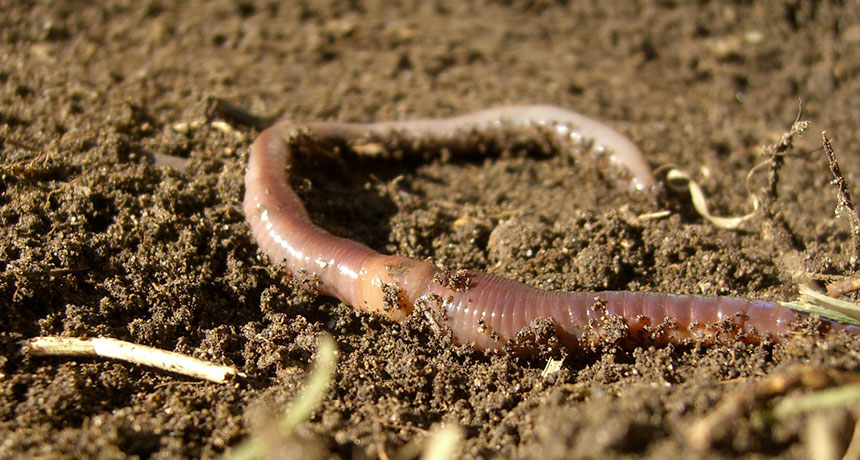
Earthworms are great for soil, right? Well, not always. In places where there have been no earthworms for thousands of years, foreign worms can wreak havoc on soils. And that can cause a cascade of problems throughout an area’s food web. Now comes evidence that invader worms in the Upper Great Lakes may be stressing the region’s sugar maples.
There are native earthworms in North America, but not in regions that had been covered in glaciers during the Ice Age. Once the ice melted, living things returned. Earthworms don’t move that quickly, though, and even after 10,000 years, they’ve only made small inroads into the north on their own.
But people have inadvertently intervened. Sometimes they’ve dumped their leftover bait in worm-free zones. Or they’ve accidentally brought worms or eggs in the soil stuck to cars or trucks. And the worms took up residence as far north as Alberta’s boreal forests.
Earthworms “are not really supposed to be in some of these areas,” says Tara Bal, a forest health scientist at Michigan Technological University in Houghton. “In a garden, they’re good,” she notes. They help to mix soil. But that isn’t a good thing in a northern forest where soil is naturally stratified and nutrients tend to be found only in the uppermost layer near the leaf litter. “That’s what the trees have been used to,” Bal says. Those trees include sugar maples, which have shallow roots to get those nutrients. But worms mix up the soils and take away that nutrient-rich layer. Bal didn’t start out studying worms in northern regions. She and her colleagues were brought in to address a problem that sugar maple growers were experiencing. Some of the trees appeared to be stressed out. They were experiencing what’s called dieback, when whole branches die, fall off and regrow. This is worrisome because if enough of the tree dies off, “it’s a slow spiral from there,” Bal says — the whole tree eventually dies. To investigate, the researchers collected data on trees and anything that could be affecting them, from soil type to slope to insects. They looked at trees in 120 plots in Michigan, Wisconsin and Minnesota. And they compared trees that were on growers’ land with those on public land, thinking that how the trees were managed might have some effect. When the researchers analyzed the data, “the same thing that kept coming up over and over again was the forest floor condition,” Bal says. “That is directly related to the presence of earthworms.” They didn’t go out to look for the worms, but they could see signs of them in the amount of carbon in the soil and in changes in the ground cover. Wildflowers, for instance, were replaced by grasses and sedges, the researchers report July 26 in Biological Invasions.
Bal and her team can’t say what this means for maple syrup production. It might not mean anything at all. But “worms are ecosystem engineers,” she notes. “They’re changing the food chain.” Everything from insects to birds to salamanders could be affected by the arrival of worms.
Even if the sugar maples take a hit, though, there could be an upside, Bal says. These trees are often grown with few other types of trees around. Such a grove is naturally less resilient to climate change and extreme weather. So replacing some of those sugar maples with other trees could result in a healthier, more resilient forest in the future, Bal says.
Zika’s damaging neurological effects might someday be enlisted for good — to treat brain cancer.
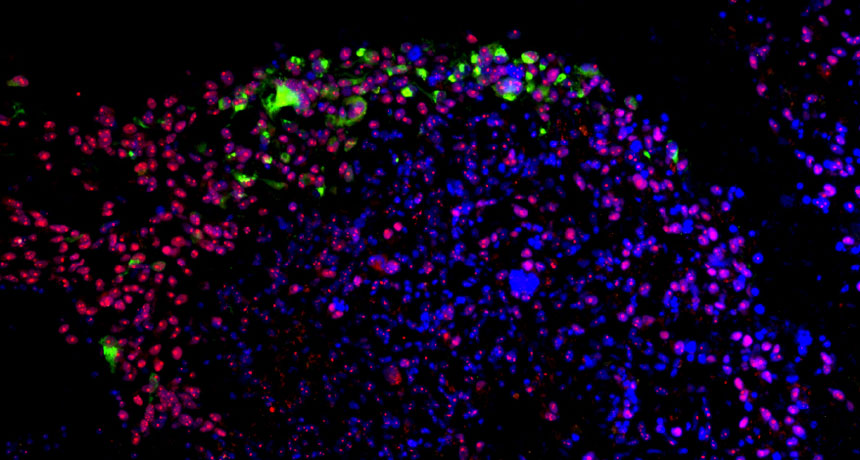
In human cells and in mice, the virus infected and killed the stem cells that become a glioblastoma, an aggressive brain tumor, but left healthy brain cells alone. Jeremy Rich, a regenerative medicine scientist at the University of California, San Diego, and colleagues report the findings online September 5 in the Journal of Experimental Medicine.
Previous studies had shown that Zika kills stem cells that generate nerve cells in developing brains (SN: 4/2/16, p. 26). Because of similarities between those neural precursor cells and stem cells that turn into glioblastomas, Rich’s team suspected the virus might also target the cells that cause the notoriously deadly type of cancer. In the United States, about 12,000 people are expected to be diagnosed with glioblastoma in 2017. (It’s the type of cancer U.S. Senator John McCain was found to have in July.) Even with treatment, most patients live only about a year after diagnosis, and tumors frequently recur. In cultures of human cells, Zika infected glioblastoma stem cells and halted their growth, Rich and colleagues report. The virus also infected full-blown glioblastoma cells but at a lower rate, and didn’t infect normal brain tissues. Zika-infected mice with glioblastoma either saw their tumors shrink or their tumor growth slow compared with uninfected mice. The virus-infected mice lived longer, too. In one trial, almost half of the mice survived more than six weeks after being infected with Zika, while all of the uninfected mice died within two weeks of receiving a placebo.
Using a virus to knock out cancer isn’t a completely new idea. Treatments that rely on modified polioviruses to target tumors such as glioblastomas are already in clinical trials in the United States, and there’s a modified herpesvirus approved by the U.S. Food and Drug Administration for treating melanoma.
These cancer-fighting viruses seem to work in two ways, says Andrew Zloza, head of surgical oncology research at the Rutgers Cancer Institute of New Jersey in New Brunswick. First, the viruses infect and kill cancer cells. Then, as those cancer cells split open, previously hidden tumor fragments become visible to the immune system, which can recognize and fight them.
“Right now we don’t know what kind of viruses are best” for fighting cancer, Zloza says — whether it’s more effective to use a common virus that many people have been exposed to or something more unusual. But now, Zika is yet another candidate.
Further testing is needed to determine whether the virus is safe and effective in humans. Since Zika’s effects are more harmful in developing brains, a Zika-based cancer therapy might be safe only in adults. And the virus would need to be genetically modified to make it safer and less transmissible. Rich and colleagues are now testing in mice whether combining Zika with traditional cancer treatments such as chemotherapy is more effective than either treatment by itself. Because Zika targets the cells that generate tumor cells, it might prevent tumors from recurring.
Around the six-month mark, babies start to get really fun. They’re not walking or talking, but they are probably babbling, grabbing and gumming, and teaching us about their likes and dislikes. I remember this as the time when my girls’ personalities really started making themselves known, which, really, is one of the best parts of raising a kid. After months of staring at those beautiful, bald heads, you start to get a glimpse of what’s going on inside them.
When it comes to learning language, it turns out that a lot has already happened inside those baby domes by age 6 months. A new study finds that babies this age understand quite a bit about words — in particular, the relationships between nouns. Work in toddlers, and even adults, reveals that people can struggle with word meanings under difficult circumstances. We might briefly falter with “shoe” when an image of a shoe is shown next to a boot, for instance, but not when the shoe appears next to a hat. But researchers wanted to know how early these sorts of word relationships form.
Psychologists Elika Bergelson of Duke University and Richard Aslin, formerly of the University of Rochester in New York and now at Haskins Laboratories in New Haven, Conn., put 51 6-month-olds to a similar test. Outfitted with eye-tracking gear, the babies sat on a parent’s lap and looked at a video screen that showed pairs of common objects. Sometimes the images were closely related: mouth and nose, for instance, or bottle and spoon. Other pairs were unrelated: blanket and dog, or juice and car.
When both objects were on the screen, the parents would say a sentence using one of the words: “Where is the nose?” for instance. If babies spent more time looking at the nose than the other object, researchers inferred that the babies had a good handle on that word.
When the babies were shown tricky pairs of closely related objects, like a cup of juice and a cup of milk, the babies spent nearly equal time looking at both pictures, no matter what word their parents said. But when the images were really distinct (juice and car, for instance) the babies spent more time looking at the spoken word. These babies detected a difference between the “milk-juice” pair and the “juice-car” pair, recognizing that one pair is similar and the other isn’t, the researchers conclude November 20 in the Proceedings of the National Academy of Sciences. To see whether this ability was tied to domestic life, the researchers sent the babies home with specialized gear: vests with audio recorders and adorable hats outfitted with small video cameras, one just above each ear. A camera on a tripod in a corner of the home also captured snippets of daily life. The resulting video and audio recordings revealed that babies whose caregivers used more nouns for objects in the room were better at the word task in the lab.
That means that babies learn words well when they can actually see the object being talked about. Hearing, “Open your mouth. Here comes the spoon!” as they watch the spoon come flying toward their face makes a bigger vocabulary impression than “Did you like riding in the car yesterday?”
A similar idea came from a recent study on preschoolers. These kids learned best when they saw one picture at a time (or when parents pointed at the relevant object). Babies — and older kids, too — like to see what you’re talking about.
The results are too early to provide advice to parents, says Bergelson, a cognitive and developmental psychologist. “But I think one thing suggested by our work is that parents should consider their young baby to be a real conversational partner,” she says. “Even young infants are listening and learning about words and the world around them before they start talking themselves, and their caregivers make that possible.”
There’s still lots to figure out about how babies soak up vocabulary. And as scientists come up with more ways to peer into the mysterious inner workings of a baby’s mind, those answers might lead to even more interesting conversations with our babies.