ASEAN-China media forum opens in Shenyang to boost cooperation

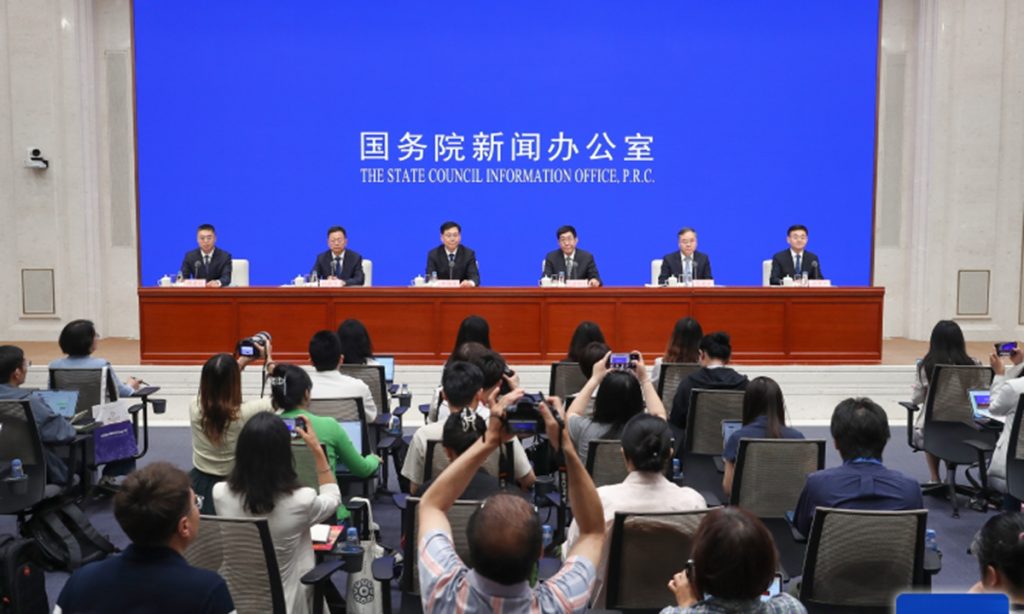
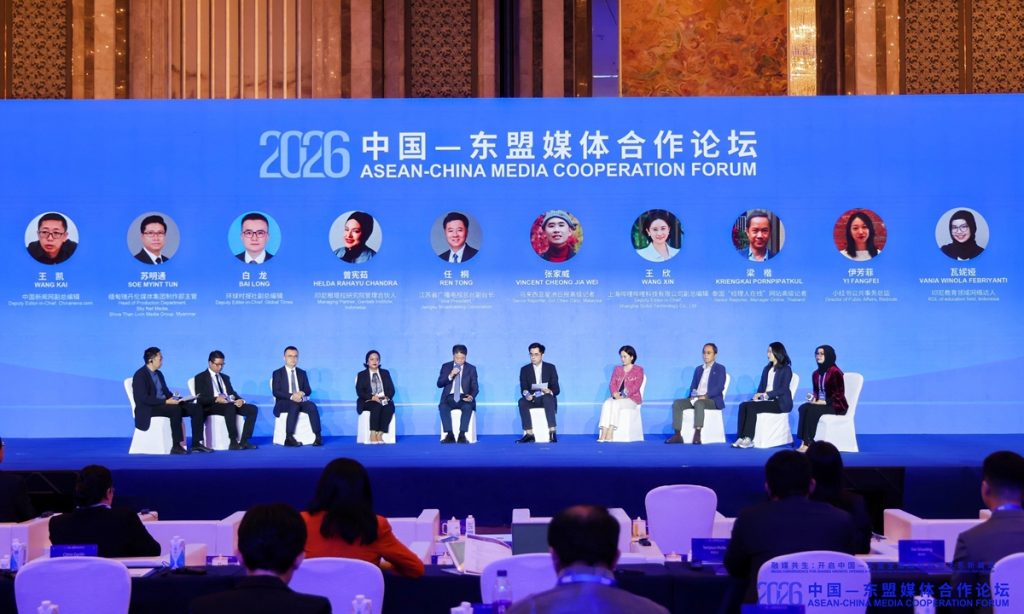
Held in Shenyang, Liaoning Province in Northeast China on Tuesday, the 2026 ASEAN-China Media Cooperation Forum gathered some 150 delegates from governmental bodies, media institutions, think tanks, enterprises and international organizations. Participants exchanged views in a cordial atmosphere and held thorough discussions on ways to further expand bilateral media engagement and collaboration.

Under the theme "Media Convergence for Shared Growth: Opening a New Chapter in the ASEAN-China Comprehensive Strategic Partnership," the forum was held at a significant moment: The year 2026 marks the 35th anniversary of the establishment of China-ASEAN Dialogue Relations, as well as the fifth anniversary of the China-ASEAN Comprehensive Strategic Partnership.

First launched in 2018, the event is co-organized by the China International Communications Group and the China-ASEAN Center. Now in its ninth year, it has grown into a vital institutional platform for media interaction and collaboration between China and ASEAN.

President of CICG Chang Bo delivered the opening address on Tuesday. He noted that media plays a unique role in deepening mutual understanding and fostering emotional connections between peoples. He voiced the hope that closer media cooperation will foster a sound public opinion environment for ASEAN-China collaboration, strengthen people-to-people bonds and solidify the friendship between the two sides.

Khammone Chanthachith, a deputy head of the Propaganda and Training Committee of the Central Committee of the Lao People's Revolutionary Party, shared similar views. He noted that media acts as an essential bridge for building trust and enhancing understanding, and expressed confidence that deeper media cooperation will usher in a new chapter for ASEAN-China relations. 

Undersecretary of State at Cambodia's Ministry of Information Prak Thaveak Amida said digital transformation and technological progress have brought new opportunities alongside challenges such as misleading content and disinformation. He stressed the need to bolster cooperation frameworks and called on media from China and ASEAN to uphold professional credibility, leverage new media platforms, and jointly present inspiring stories of ASEAN-China friendship.

On Tuesday, two round-table dialogues were also held during the forum, themed "Social Responsibility and the Media's Mission in Our Times" and "Innovative Practices and Diversified Development in the Digital Age," respectively.

Participants agreed that media organizations from both sides should step up exchanges and cooperation to reinforce mutual trust and friendship, and contribute to building a closer ASEAN-China community with a shared future. In the digital media landscape, they also pledged to advance sound public opinion governance, improve the global media ecosystem and amplify the voice of the Global South.

Besides, two new initiatives were unveiled at the forum: the ASEAN-China Social Media Content Creators Programme and the 2026 ASEAN-China Youth Cultural Heritage Tour Series. 

According to organizers, the programmes aim to encourage young people across China and ASEAN to create innovative digital stories, so that the long-standing friendship between the two sides can reach wider audiences.

Nararya S. Soeprapto, a deputy secretary-general of ASEAN, hailed ASEAN-China relations as one of the most dynamic partnerships worldwide. He pointed out that China has been ASEAN's largest trading partner for 17 consecutive years, while ASEAN has ranked as China's top trading partner over the past six years. 

Nararya also underscored media's value in nurturing mutual trust, deeper understanding and friendship.

In an interview with the Global Times, he said he has decades of experience working on ASEAN affairs. Over the past 30 years, he has witnessed remarkable progress in all-round exchanges between China and ASEAN. Media has been instrumental in strengthening bilateral relations by covering people-to-people exchanges as well as trade and investment cooperation.

"People to people connectivity is one of the most important elements in building a comprehensive strategic partnership between China and ASEAN," he remarked, adding that people want to learn about one another through news and stories, and media serves as a crucial channel to spread these stories and further cement our bilateral ties.

He urged media outlets on both sides to keep fostering rapport and collaboration to enhance mutual understanding across all sectors, adding that the annual media forum is an important undertaking that should be continued. 

Buji Babiera, a Filipino content creator with 3.8 million followers on TikTok, told the Global Times on the sidelines of the forum that he is impressed by China's rapid development and advanced technologies, and hoped his vlogs about China would help more people form an objective and rational perception of the country, instead of being misled by politicians' nationalist rhetoric.

Showing Instagram posts that capture his friends' travels in Southwest China's Yunnan Province, he asked the reporter: "Have you visited these spots? I truly hope to go there someday."

Chinese woman injured, robbed of bag containing 8 million yen near Tokyo's Ikebukuro Station; police search suspects: report

A Chinese woman in her 60s was injured and robbed of a shoulder bag containing approximately 8 million yen (about $50,000) in cash near Tokyo's busy Ikebukuro Station on Wednesday night, with police searching for two suspects who fled the scene, according to Japan's Kyodo News.

Kyodo News reported on Thursday that the incident occurred on a street in Tokyo's Toshima Ward. The victim told police that two individuals believed to be men robbed her shoulder bag. According to the Ikebukuro Police Station, the woman sustained minor head injuries during the robbery and said the bag contained about 8 million yen in cash.

When reached by the Global Times on Thursday for further details about the incident, a staff member at the Ikebukuro Police Station initially said the deputy chief responsible for the case was occupied and asked the reporter to leave contact information for a later response. After the reporter provided a phone number, the staff later called back to apologize and said they were unable to comment on the incident.

According to Kyodo News, police are investigating the case as a robbery resulting in injury and are searching for the two suspects who fled the scene.

The incident was reported at around 8:30 pm on Wednesday local time after a witness called emergency services and reported a bag-snatching, Kyodo News said.

Two suspects sprayed the woman with an unidentified substance, struck her in the head and then forcibly took her bag before fleeing, according to the report.

The robbery took place in a commercial district near JR Ikebukuro Station, one of Tokyo's busiest entertainment and shopping hubs.

China to take necessary measures to safeguard legitimate rights of Chinese companies and nationals: FM on US sanctions of Chinese entities related to Iran

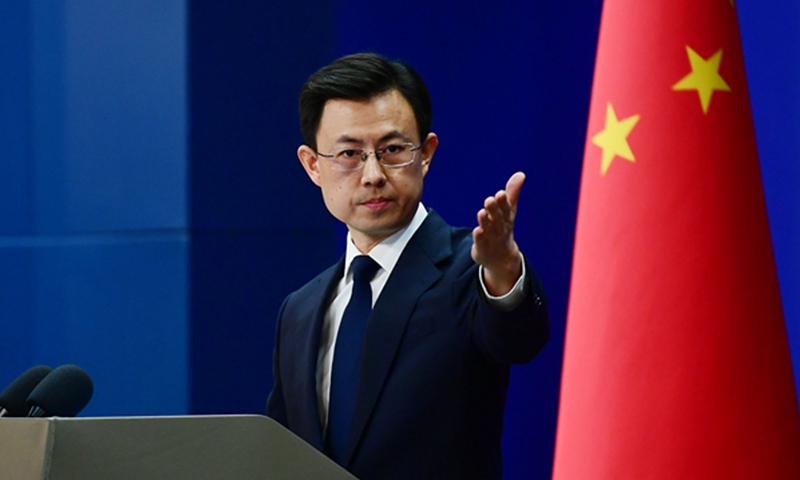
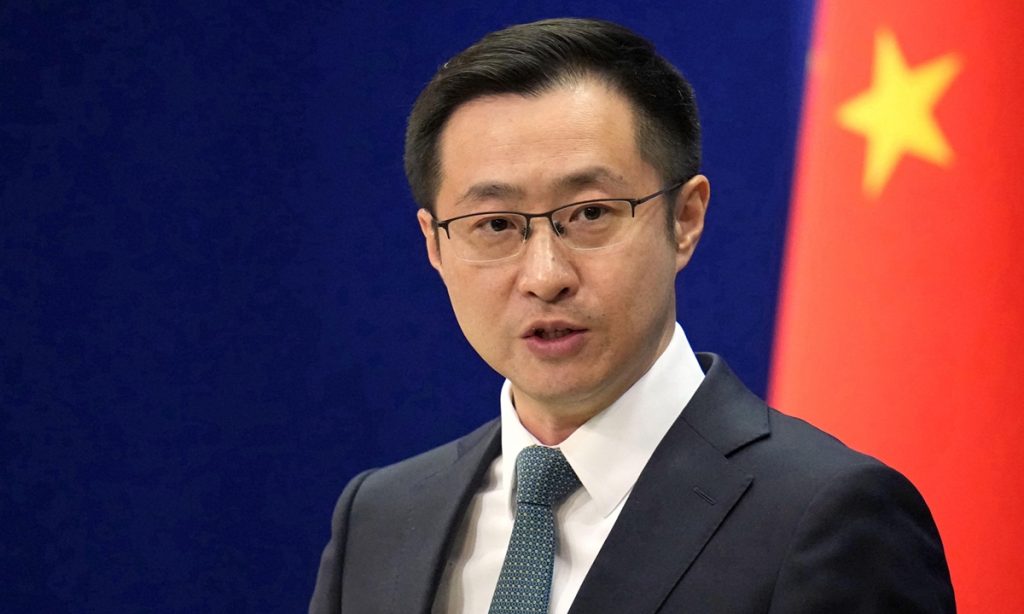
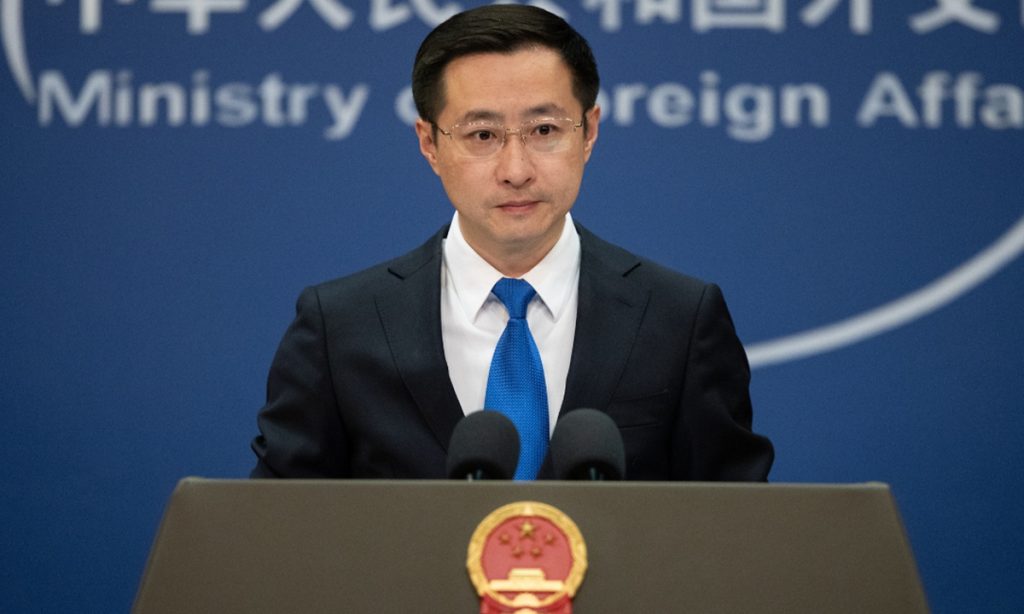
When asked by a foreign reporter to comment on the US Department of the Treasury's announcement of sanctions against nine individuals and entities from the Chinese mainland and Hong Kong Special Administrative Region (HKSAR) for allegedly providing support to the Iranian military in procuring weapons, Chinese Foreign Ministry spokesperson Lin Jian said on Friday that "we will take all necessary measures to firmly safeguard the legitimate rights and interests of Chinese companies and nationals." 

Lin added that "as we have repeatedly made clear, China firmly opposes illegal unilateral sanctions that have no basis in international law or are not authorized by the UN Security Council."

Chinese VP meets Belarusian first deputy prime minister

Chinese Vice President Han Zheng met with Belarusian First Deputy Prime Minister Nikolai Snopkov in Minsk on Saturday.

Han said China and Belarus are good friends and good partners. China is ready to work with Belarus to implement the important consensus reached by the two heads of state, enhance strategic mutual trust and deepen mutually beneficial cooperation to bring more benefits to the two peoples.

Noting China and Belarus enjoy strong economic complementarity and broad prospects for cooperation, Han said China is willing to strengthen the alignment of development strategies with Belarus and continue to open up new space for win-win cooperation.

He called for joint efforts to build the China-Belarus Industrial Park into an international industrial hub, welcomed more high-quality Belarusian products to the Chinese market, and urged both sides to step up youth exchanges to foster closer ties between the two peoples.

Snopkov said Belarus admires China's remarkable development achievements, and firmly believes the Chinese modernization will greatly contribute to world peace, development and common prosperity.

Belarus will always be a trustworthy and reliable strategic partner of China, he said, adding that his country is willing to work with China to implement the important consensus reached by the two heads of state and fully leverage existing bilateral cooperation mechanisms to enhance people-to-people exchanges and expand industrial cooperation.

GT survey shows SCO member states’ youth embrace Shanghai Spirit, seek closer ties with China

Young people across the Shanghai Cooperation Organisation (SCO) widely endorse the concepts and actions of the SCO, highly appreciate its positive role in global governance and hold high expectations for deepening cooperation across various fields among member states, according to a report released in Bishkek, Kyrgyzstan, on May 27.

The report on interest trends among youth in SCO member states was jointly released by the Secretariat of the Belt and Road News Network (BRNN) and the Global Times at the 2026 China-Kyrgyzstan Media Cooperation Forum held in Bishkek. It is based on a 2025 survey of 10 official SCO member states, as well as data from Global Public Opinion. Focusing on youth perceptions and emerging trends, the report finds that young people are highly invested in employment, entrepreneurship, education, cultural ties, and global partnerships.

The findings show that young respondents strongly identify with the principles of the Shanghai Spirit, featuring mutual trust, mutual benefit, equality, consultation, respect for diverse civilizations and the pursuit of common development. More than 80 percent of respondents believe that development cooperation within the SCO framework has brought tangible benefits to their own countries. Among them, 72 percent cited "promoting high-quality development in home countries," and 62 percent pointed to "bringing more international cooperation and development opportunities." Over 80 percent also affirmed the SCO's positive role in global governance.

China, as a founding member of the SCO, has consistently upheld and acted on the Shanghai Spirit by deepening practical cooperation in various fields with other member states and promoting shared development. The survey shows that among young respondents in SCO countries other than China, more than 90 percent of respondents believe that cooperation with China can positively impact their own country's development and modernization.

More than 90 percent of respodents said that China's development experience in multiple areas is worth learning from. These figures reflect a strong desire among young people across the SCO to deepen cooperation with China and benefit from shared development opportunities.

People-to-people exchanges are one of the most-watched areas of cooperation for young people in SCO member states. More than 90 percent of respondents said they look forward to future SCO cultural and exchange programs and activities. Among the most popular were "youth exchanges," "university/student exchanges," "foreign language learning," and "vocational training." The report concludes that young people are not only interested in macro-level cooperation between countries, but also place great importance on the real-world opportunities brought by education, skills and cross-cultural communication.

Moreover, the concerns of young people in SCO member states show clear contemporary characteristics. Hot topics such as AI, skills development and cultural consumption have become key indicators of trends in employment, education and cultural life. According to the survey, in 2025, media coverage of topics related to "youth," "employment" and "entrepreneurship" in SCO member states saw a 141 percent year-on-year increase in mentions of AI. AI is emerging as an important driver for young people to explore innovation and expand their career opportunities. In education, young people place a high priority on digital skills, practical skills and innovation capabilities, with a clear trend toward digital, remote and cross-cultural learning. At the same time, young respondents maintain a strong sense of their own cultural identity and are developing a cultural awareness that is both locally rooted and globally minded.

Youth represent the future of the SCO and are an important force driving regional cooperation and shared development. The report provides a concentrated picture of the common understandings, real concerns and development expectations of young people in SCO member states, offering a valuable public opinion reference for deepening youth cooperation. Despite a complex and changing international environment, young people in the SCO remain positive about multilateral cooperation and shared development - a sign of the deep youth base and broad prospects for SCO cooperation.

Lao president arrives in Beijing

General Secretary of the Lao People's Revolutionary Party Central Committee and Lao President Thongloun Sisoulith arrives in Beijing, capital of China, June 4, 2026. Thongloun is in China for a five-day state visit. (Photo: Xinhua)

Post-95 girl with no art training crafts 7-meter-long Chinese masterpiece with chocolate

Can you believe a giant 7-meter-long "Along the River During the Qingming Festival," an iconic painting from the Northern Song Dynasty (960-1126), was hand-sculpted out of chocolate? This isn't fantasy — it's the amazing handiwork of Fan Sumu (pseudonym), a 1995-born creator from Northeast China who has no formal art training, domestic news site gmw.cn reported.

Fan recently shared a video online showcasing how she made the classic painting with chocolate, which has garnered 584,000 likes, according to the report.

The piece, made from chocolate, fondant, wafer paper and other edible materials, measures over seven meters in length and 1.22 meters in width. It recreated the scenes from the iconic painting, including 176 houses, 281 trees, over 20 boats, and 816 human figures, gmw.cn reported.

Fan says the project took her more than half a year and cost over 10,000 yuan (approximately $1,400).

Working as a food vlogger and content creator, Fan has never received professional training in crafting architectural replicas with chocolate, nor does she have an art background. She majored in international trade and mastered her skills purely by watching online tutorials and practicing independently, gmw.cn reported.

Fan recalled that she first started recreating fictional delicacies from animations and movies back in 2022, before moving on to reproducing classic works by world-famous pastry masters. 

Currently, Fan focuses on reconstructing famous architecture at home and abroad using chocolate and other dessert materials. She has recreated numerous ancient Chinese buildings with sweet treats and has also reproduced dozens of renowned Chinese and Western paintings with vivid and lifelike details, the report said.

Fan said she finds traditional Chinese architecture deeply captivating, hoping to dig deeper into this field, and help more people learn about China's architectural heritage.

New US tariffs on China seriously hurt global environmental protection: Global Times editorial

The recent increase in tariffs imposed by the US on imports from China, particularly on electric vehicles (EVs), lithium batteries, and semiconductors, has sparked criticism globally. Not only did the International Monetary Fund (IMF) spokesperson criticize the move, saying it "can distort trade and investment, and fragment supply chains," several US media, including The Washington Post, also slammed that the new tariffs raise costs for companies using green energy devices and make electric vehicles less affordable for US consumers. 

"Forcing consumers, via tariffs, to subsidize domestic clean energy companies that are far from the cutting edge of technology is an economic and environmental loser," The Washington Post article said. Colorado Governor Jared Polis also stated that the new tariffs are "a major setback for clean energy."

The concerns are far-sighted and realistic. The new tariffs represent another escalation of the US' policy to contain China in recent years, forcing its companies to restructure supply and industrial chains, and disrupting the normal global trade order. This restructuring will have a profound negative impact on the global industrial system centered around emission reduction goals, leading to serious environmental issues worldwide. 

It should be pointed out that the timing of the new US tariffs coincides with a critical moment in the global transition from traditional to new energy and the construction of a global green economy. On April 17, Dubai, a country located in a desert region, experienced a sudden downpour, with one day's rainfall equivalent to half the average annual rainfall. 

This most severe rainstorm in 75 years caused Dubai International Airport to close for three days. Extreme heat waves, severe cold, torrential rains, hurricanes, droughts and floods... the increasingly frequent extreme weather events highlight the urgency of global efforts to address climate change to a degree felt by everyone.

At the beginning of this year, the World Meteorological Organization released a report officially confirming 2023 as the warmest year on record. The report indicates that new record-high levels were set in 2023 for all three of the main greenhouse gases. Carbon dioxide levels are 50 percent higher than in the pre-industrial era.

According to a report released by the United Nations Environment Programme at the end of last year, predicted 2030 greenhouse gas emissions still must fall by 28 percent for the Paris Agreement 2 C pathway and 42 percent for the 1.5 C pathway.

Against this backdrop, it has become a widespread consensus in the international community to achieve effective emission reduction and build a new form of sustainable economic development for humanity by significantly adjusting the energy structure, especially by promoting the widespread use of new energy products to achieve low-carbon emissions. It is precisely for this reason that China's "new three" products have been widely welcomed in markets around the world. 

Data shows that in 2023, China contributed more than half of the global renewable energy installed capacity of 510 million kilowatts. In 2022, China's renewable energy generation contributed to a reduction of approximately 2.26 billion tons in domestic CO2 emissions, while exports of wind power and solar products aided other nations in decreasing CO2 emissions by an additional 573 million tons. 

The two figures add up to 2.83 billion tonnes of emissions reduction, or about 41 percent of the global total of carbon emissions reduction due to renewable energy. 

At the World Energy Congress held in April, Amin Nasser, CEO of Saudi Aramco, one of the world's largest oil companies, said that "China has made these green products so affordable, and they will help the West achieve its target of cutting carbon emissions to a net zero level by 2050." Imagine what the global energy transition would look like without China's green production capacity, and how it would impact humanity's ability to address climate change.

Especially for developing countries, it is China's progress in the field of new energy that allows them to purchase more cost-effective EVs, lithium batteries, and photovoltaic products. The report from the International Renewable Energy Agency pointed out that in the past 10 years, the average cost of wind and photovoltaic power generation projects globally has cumulatively decreased by over 60 percent and 80 percent, respectively, with a large part of it attributed to Chinese innovation, manufacturing, and engineering. In this sense, the development and progress of China's new energy industry are not only accelerators of the global energy transition, but also the vanguard of humanity's response to climate change. This represents not only high-quality and advanced production capacity, but also widespread development justice.

There is only one Earth, and all countries share the same planet. Responding to global climate change and promoting energy transition in various countries is a task filled with both difficulties and hope. It requires a true spirit of "working together for the world" from all countries, as well as the joint maintenance of an open and fair international economic system. Nowadays, some people in the US, out of short-sighted and narrow political motives and fragile anxiety, are waving a big stick in the field of tariffs, undoubtedly weakening the cohesion of countries and their ability to respond to climate change, damaging the positive prospects of global green transformation. 

This will also be a "protectionist disaster" for humanity. It is hoped that they will wake up soon!