Around the six-month mark, babies start to get really fun. They’re not walking or talking, but they are probably babbling, grabbing and gumming, and teaching us about their likes and dislikes. I remember this as the time when my girls’ personalities really started making themselves known, which, really, is one of the best parts of raising a kid. After months of staring at those beautiful, bald heads, you start to get a glimpse of what’s going on inside them.
When it comes to learning language, it turns out that a lot has already happened inside those baby domes by age 6 months. A new study finds that babies this age understand quite a bit about words — in particular, the relationships between nouns. Work in toddlers, and even adults, reveals that people can struggle with word meanings under difficult circumstances. We might briefly falter with “shoe” when an image of a shoe is shown next to a boot, for instance, but not when the shoe appears next to a hat. But researchers wanted to know how early these sorts of word relationships form.
Psychologists Elika Bergelson of Duke University and Richard Aslin, formerly of the University of Rochester in New York and now at Haskins Laboratories in New Haven, Conn., put 51 6-month-olds to a similar test. Outfitted with eye-tracking gear, the babies sat on a parent’s lap and looked at a video screen that showed pairs of common objects. Sometimes the images were closely related: mouth and nose, for instance, or bottle and spoon. Other pairs were unrelated: blanket and dog, or juice and car.
When both objects were on the screen, the parents would say a sentence using one of the words: “Where is the nose?” for instance. If babies spent more time looking at the nose than the other object, researchers inferred that the babies had a good handle on that word.
When the babies were shown tricky pairs of closely related objects, like a cup of juice and a cup of milk, the babies spent nearly equal time looking at both pictures, no matter what word their parents said. But when the images were really distinct (juice and car, for instance) the babies spent more time looking at the spoken word. These babies detected a difference between the “milk-juice” pair and the “juice-car” pair, recognizing that one pair is similar and the other isn’t, the researchers conclude November 20 in the Proceedings of the National Academy of Sciences. To see whether this ability was tied to domestic life, the researchers sent the babies home with specialized gear: vests with audio recorders and adorable hats outfitted with small video cameras, one just above each ear. A camera on a tripod in a corner of the home also captured snippets of daily life. The resulting video and audio recordings revealed that babies whose caregivers used more nouns for objects in the room were better at the word task in the lab.
That means that babies learn words well when they can actually see the object being talked about. Hearing, “Open your mouth. Here comes the spoon!” as they watch the spoon come flying toward their face makes a bigger vocabulary impression than “Did you like riding in the car yesterday?”
A similar idea came from a recent study on preschoolers. These kids learned best when they saw one picture at a time (or when parents pointed at the relevant object). Babies — and older kids, too — like to see what you’re talking about.
The results are too early to provide advice to parents, says Bergelson, a cognitive and developmental psychologist. “But I think one thing suggested by our work is that parents should consider their young baby to be a real conversational partner,” she says. “Even young infants are listening and learning about words and the world around them before they start talking themselves, and their caregivers make that possible.”
There’s still lots to figure out about how babies soak up vocabulary. And as scientists come up with more ways to peer into the mysterious inner workings of a baby’s mind, those answers might lead to even more interesting conversations with our babies.
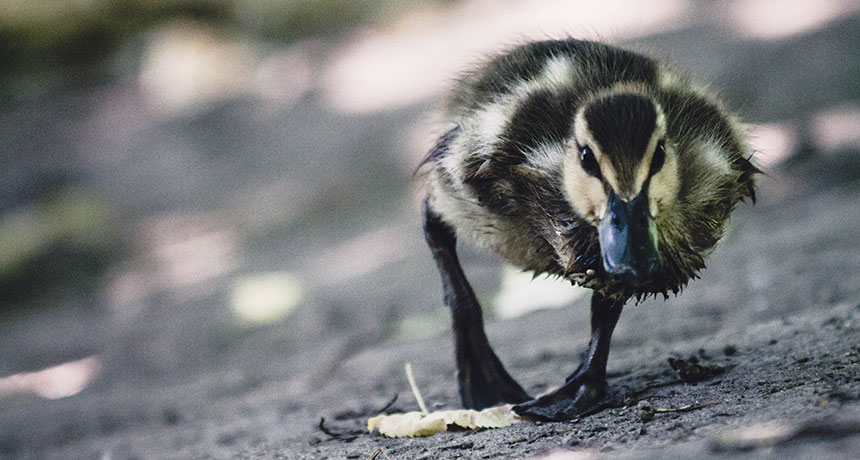
MINNEAPOLIS — Birds don’t need to be drenched in crude oil to be harmed by spills and leaks.
Ingesting even small amounts of oil can interfere with the animals’ normal behavior, researchers reported November 15 at the annual meeting of the Society of Environmental Toxicology and Chemistry North America. Birds can take in these smaller doses by preening slightly greasy feathers or eating contaminated food, for example.
Big oil spills, such as the 2010 Deepwater Horizon disaster, leave a trail of dead and visibly oily birds (SN: 4/18/15, p. 22). But incidents like last week’s 5,000-barrel spill from the Keystone pipeline — and smaller spills that don’t make national headlines — can also impact wildlife, even if they don’t spur dramatic photos. To test how oil snacks might affect birds, researchers fed zebra finches small amounts of crude oil or peanut oil for two weeks, then analyzed the birds’ blood and behavior. Birds fed the crude oil were less active and spent less time preening their feathers than birds fed peanut oil, said study coauthor Christopher Goodchild, an ecotoxicologist at Oklahoma State University in Stillwater.
Oil-soaked birds will often preen excessively to try to remove the oil, sometimes at the expense of other important activities such as feeding. But in this case, the birds didn’t have any crude oil on their feathers, so the decrease in preening is probably a sign they’re not feeling well, the researchers say.
Exactly how the oil affects the birds’ activity levels isn’t clear. Researchers suspected that oil might deprive birds of oxygen by affecting hemoglobin, which carries oxygen in the blood. Blood tests didn’t turn up any evidence of damaged hemoglobin proteins but did find some evidence that oil-sipping birds might be anemic, Goodchild said. At the higher of two crude oil doses, birds’ blood contained less hemoglobin per red blood cell, a sign of anemia. The findings, while preliminary, add to a growing pile of evidence that estimates of the number of animals impacted by oil spills might be too low. For instance, even a light sheen of oil on sandpipers’ wings makes it harder to fly, costing birds more energy, a different group of researchers reported earlier this year. That could affect everything from birds’ daily movements to long-distance migration.
Movies and other media are full of mixed messages about the risks and rewards of building machines with minds of their own. For every manipulative automaton like Ex Machina’s Ava (SN: 5/16/15, p. 26), there’s a helpful Star Wars droid. And while some tech titans such as Elon Musk warn of the threats artificial intelligence presents, others, including Mark Zuckerberg, dismiss the doomsayers.
AI researcher Toby Walsh’s Machines That Think is for anyone who has heard the hype and is seeking a critical assessment of what the technology can do — and what it might do in the future. Walsh’s conversational style is welcoming to nonexperts while his endnotes point readers to opportunities for deeper dives into specific aspects of AI. Walsh begins with a history of AI, from Aristotle’s foundation of formal logic to modern facial-recognition systems. Excerpts from computer-composed poetry and tales of computers trouncing humans at strategy games (SN: 11/11/17, p. 13) are a testament to how far AI has come. But Walsh also highlights weaknesses, such as machine-learning algorithms’ reliance on so much data to master a single task.
This 30,000-foot view of AI research packs a lot of history, as well as philosophical and technical explanation. Walsh personalizes the account with stories of his own programming experiences, anecdotes about AI in daily life — like his daughter’s use of Siri — and his absolute, unapologetic love of puns.
Later in the book, Walsh speculates about technical hurdles that may curb further AI development and legal limits that society may want to impose. He also explores the societal impact that increasingly intelligent computers may have. For instance, Walsh evaluates how likely various jobs are to be outsourced to AI. Some occupations, like journalist, will almost certainly be automated, he argues. Others, like oral surgeon, are probably safe. For future job security, Walsh recommends pursuing careers that require programming acumen, emotional intelligence or creativity.
AI also has the potential to revolutionize warfare. “Like Moore’s law, we are likely to see exponential growth in the capabilities of autonomous weapons,” Walsh writes. “I have named this ‘Schwarzenegger’s law’ to remind us of where it will end.” Walsh isn’t resigned to a Terminator-like future, though. If governments ban killer robots and arms developers use automation to enhance defensive equipment, he believes military AI could actually save many lives.
In fact, Walsh argues, all aspects of AI’s future impacts are in our hands. “Artificial intelligence can lead us down many different paths, some good and some bad,” he writes. “Society must choose which path to take.”
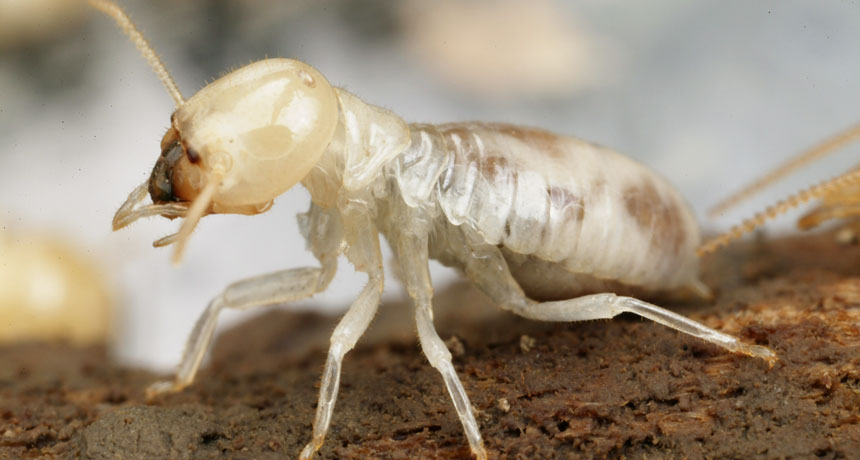
Literally. The Entomological Society of America is updating its master list of insect names to reflect decades of genetic and other evidence that termites belong in the cockroach order, called Blattodea.
As of February 15, “it’s official … that termites no longer have their own order,” says Mike Merchant of Texas A&M University in College Station, chair of the organization’s common names committee. Now all termites on the list are being recategorized. The demotion brings to mind Pluto getting kicked off the roster of planets, says termite biologist Paul Eggleton of the Natural History Museum in London. He does not, however, expect a galactic outpouring of heartbreak and protest over the termite downgrade. Among specialists, discussions of termites as a form of roaches go back at least to 1934, when researchers reported that several groups of microbes that digest wood in termite guts live in some wood-eating cockroaches too.
Once biologists figured out how to use DNA to work out genealogical relationships, evidence began to grow that termites had evolved as a branch on the many-limbed family tree of cockroaches. In 2007, Eggleton and two museum colleagues used genetic evidence from an unusually broad sampling of species to publish a new tree of these insects (SN: 5/19/07, p. 318). Titled “Death of an order,” the study placed termites on the tree near a Cryptocercus cockroach.
Cryptocercus roaches live in almost termitelike style in the Appalachian Mountains, not too far from chemical ecologist and cockroach fan Coby Schal at North Carolina State University in Raleigh. Monogamous pairs of Cryptocercus roaches eat tunnels in wood and raise young there. The offspring feed on anal secretions from their parents, which provide both nutrition and starter doses of the wood-digesting gut microbes that will eventually let the youngsters eat their way into homes of their own. Termites are “nothing but social cockroaches,” Schal says. Various roaches have some form of social life, but termites go to extremes. They’re eusocial, with just a few individuals in colonies doing all of the reproducing. In extreme examples, Macrotermes colonies can grow to 3 million individuals with only one queen and one king.
After several years of debate, the common names committee of the American entomologists’ organization voted it was time to switch to the new view of termites. At a February meeting of the society board, there was no objection. The common names of individual termite species, of course, will remain as something-something “termite.”
Considering whether to demote a whole order of insects is an uncommon problem, says Whitney Cranshaw of Colorado State University in Fort Collins, a longtime member of the society’s naming committee. “Probably some of us, including myself, didn’t want to make the change because we liked it the way it was,” he says. Termites and cockroaches as separate orders were easy to memorize for the undergraduates he teaches. Yet, he voted yes. “It’s what’s right.”
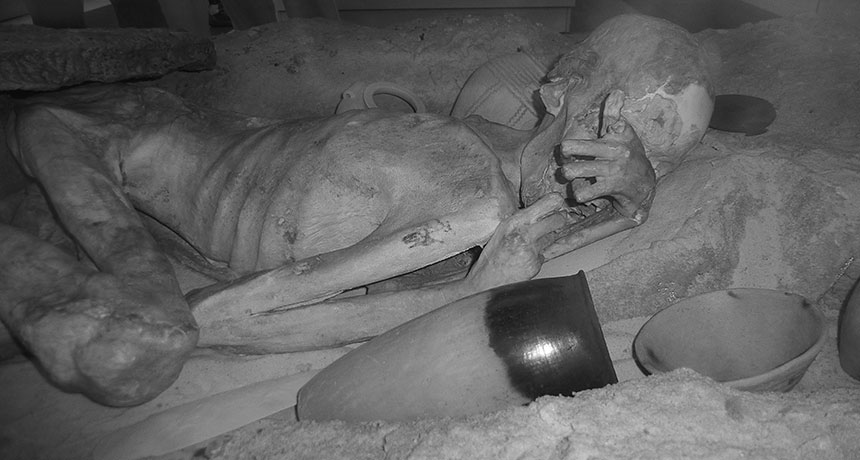
Two human mummies housed at the British Museum in London for more than a century boast the world’s oldest known — and longest hidden — tattoos of figures and designs, a new investigation finds. These people lived in Egypt at or shortly before the rise of the first pharaoh around 5,100 years ago.
Radiocarbon analyses of hairs from the mummies date the bodies to between 3351 B.C. and 3017 B.C., says a team led by Egyptologist Renée Friedman of the University of Oxford and bioarchaeologist Daniel Antoine of the British Museum in London. Infrared photography revealed that smudges on a male mummy’s upper right arm depict a wild bull and a Barbary sheep, while a female mummy bears four S-shaped patterns on her right shoulder and a line with bent ends on her right arm. These animals and figures appear in Egyptian art from the same period, the researchers report online March 1 in the Journal of Archaeological Science. Both sets of tattoos — which consist of a carbon-based pigment, possibly soot — may have symbolized power, social status or knowledge of cult activities, but their precise meanings are unclear. The two were the only mummies found with tattoos, out of seven mummies originally buried at a southern Egyptian site and now held at the British Museum. All of the bodies had been preserved by the desert’s dry heat.
The tattooed Egyptian mummies are approximately as old as Ötzi the Iceman. The mummified man found in the Italian Alps has 61 dark lines tattooed on his limbs and torso, but no pictures or designs (SN: 1/23/16, p. 5). Some of the Iceman’s tattoos covered areas of joint disease and may have been intended as treatments. CT scans of the two Egyptian mummies found no signs of bone disease near or below tattoos.
A new analysis is shedding light on drought in Mongolia, both past and future.
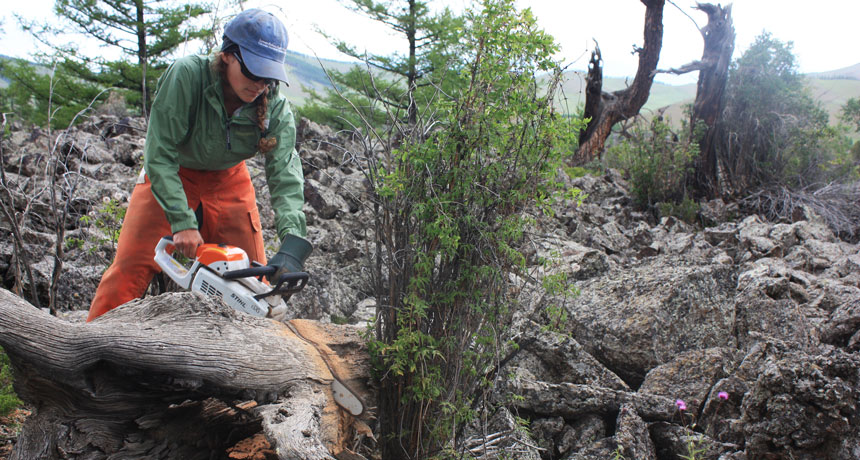
By studying the rings of semifossilized trees, researchers constructed a climate history for the semiarid Asian nation spanning the last 2,060 years — going 1,000 years further back than previous studies.
It was suspected that a harsh drought from about 2000 to 2010 that killed tens of thousands of livestock was unprecedented in the region’s history and primarily the result of human-caused climate change. But the tree ring data show that the dry spell, while rare in its severity, was not outside the realm of natural climate variability, researchers report online March 14 in Science Advances. “This is a part of the world where we don’t know about the past climate,” says Park Williams, a bioclimatologist at Columbia University’s Lamont-Doherty Earth Observatory in Palisades, N.Y., who was not involved with the study. “Having this record is a great resource for trying to understand past droughts in the region.”
In recent years, many studies have sought to unsnarl the role of anthropogenic climate change from natural variability on extreme weather events (SN: 1/20/18, p. 6). Such work is necessary for more accurately predicting future climate trends and helping governments prepare for the most severe scenarios, says study coauthor Amy Hessl, a physical geographer at West Virginia University in Morgantown. This is especially true in countries like Mongolia that lack certain infrastructure, such as enough water reservoirs, to ease the impact of events like prolonged drought.
Hessl and her colleagues studied tree rings in hundreds of samples of Siberian pines, well-preserved by Mongolia’s naturally dry climate. A ring’s width indicates how much the tree grew in a year. In wet years, the rings are wider; in dry years, skinnier. The recent dry spell was the severest in recorded history. But the rings showed that an even more severe drought took place around the year 800, long before anthropogenic climate change began.
Still, computer simulations suggest that about a third of the recent drought’s severity could have been caused by elevated temperatures linked to climate change, the researchers found. The finding is consistent with studies on how climate change has affected other recent droughts in South Africa and California.
Using computer simulations, Hessl and her colleagues conclude that droughts in coming decades may not be any worse than those seen in Mongolia’s past. The team predicts that as global temperatures rise over the next century, Mongolia will first become drier, then wetter. Increased heat initially will dry out the plains. But at a certain point, hot air holds more moisture, leading to increased precipitation.
Those climate patterns will likely guide how Mongolia develops, Hessl says, because they have in the past. In 2014, she and colleagues published a paper detailing how a 15-year period of unprecedented temperate and rainy conditions in 13th century Mongolia may have led to the rise of Genghis Khan (SN Online: 3/10/14).
Making day-to-day activities more vigorous for a few minutes — such as briefly stepping up the pace of a walk — could offer people who don’t exercise some of the health benefits that exercisers enjoy.
That’s according to a new study of roughly 25,000 adults who reported no exercise in their free time. Those who incorporated three one- to two-minute bursts of intense activity per day saw a nearly a 40 percent drop in the risk of death from any cause compared with those whose days didn’t include such activity. The risk of death from cancer also fell by nearly 40 percent, and the risk of death from cardiovascular disease dropped almost 50 percent, researchers report online December 8 in Nature Medicine.
In a comparison with around 62,000 people who exercised regularly, including runners, gym-goers and recreational cyclists, the mortality risk reduction was similar.
“This study adds to other literature showing that even short amounts of activity are beneficial,” says Lisa Cadmus-Bertram, a physical activity epidemiologist at the University of Wisconsin–Madison, who was not involved in the research. “So many people are daunted by feeling that they don’t have the time, money, motivation, transportation, etc. to go to a gym regularly or work out for long periods of time,” she says. “The message we can take is that it is absolutely worth doing what you can.”
Emmanuel Stamatakis, an epidemiologist at the University of Sydney, and his colleagues analyzed a subset of records from the UK Biobank, a biomedical database containing health information on half a million people in the United Kingdom. The study’s non-exercising participants — more than half of whom were women and were 62 years old on average — had worn movement-tracking devices for a week.
Over an average seven years of follow-up, for those whose days included three to four bursts of activity, the mortality rate was 4.2 deaths from any cause per 1,000 people for one year. For those with no activity bursts, it was 10.4 deaths per 1,000 people for one year.
The researchers were looking for bursts of vigorous activity that met a definition determined in a laboratory study, including reaching at least 77 percent of maximum heart rate and at least 64 percent of maximum oxygen consumption. In real life, the signs that someone has reached the needed intensity level are “an increase in heart rate and feeling out of breath” in the first 15 to 30 seconds of an activity, Stamatakis says.
Regular daily activities offer several opportunities for these vigorous bursts, he says. “The simplest one is maximizing walking pace for a minute or two during any regular walk.” Other options, he says, include carrying grocery bags to the car or taking the stairs. “The largest population health gains will be realized by finding ways to get the least physically active people to move a little more.”
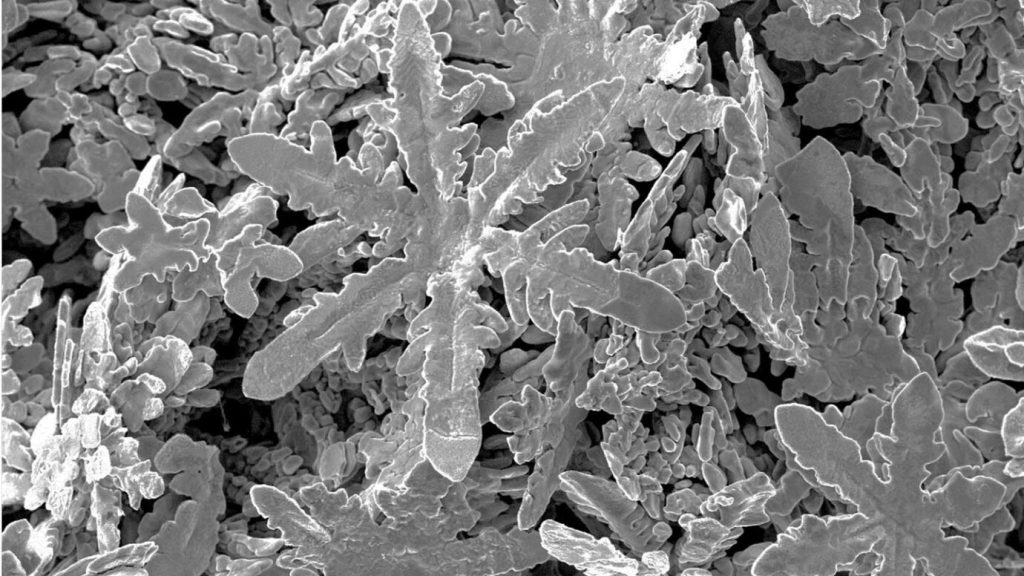
Look closely at a snowflake, and you’ll observe a one-of-a-kind gossamer lattice, its growth influenced by ambient conditions like temperature and humidity. Turns out, this sort of intricate self-assemblage can also occur in metals, researchers report in the Dec. 9 Science.
In pools of molten gallium, physicist Nicola Gaston and colleagues grew zinc nanostructures with symmetrical, hexagonal crystal frameworks. Such metal snowflakes could be useful for catalyzing chemical reactions and constructing electronics, says Gaston, of the MacDiarmid Institute for Advanced Materials and Nanotechnology at the University of Auckland in New Zealand.
“Self-assembly is the way nature makes nanostructures,” she says. “We’re trying to learn to do the same things.” Figuring out how to craft tiny, complex metal shapes in fewer steps and with less energy could be a boon for manufacturers.
The researchers chose gallium as a growth medium, due to its relatively low melting point, ability to dissolve many other metals and the tendency for its atoms to loosely organize while in a liquid state.
After mixing zinc into the gallium, the team subjected the alloy to elevated temperatures and different pressures, and then let the mixture cool to room temperature. The loose ordering of gallium atoms appeared to coax the crystallizing zinc to bloom into symmetrical, hexagonal structures resembling natural snowflakes and other shapes, the team found. It’s somewhat like how a fruit tray imparts order on the fruits stacked within, Gaston says.
The future may be bright for research into applications of gallium and other low-temperature liquid metals. “Not to take that snowflake metaphor too far, but [this work] really hints at new branches for scientific discovery,” Gaston says.
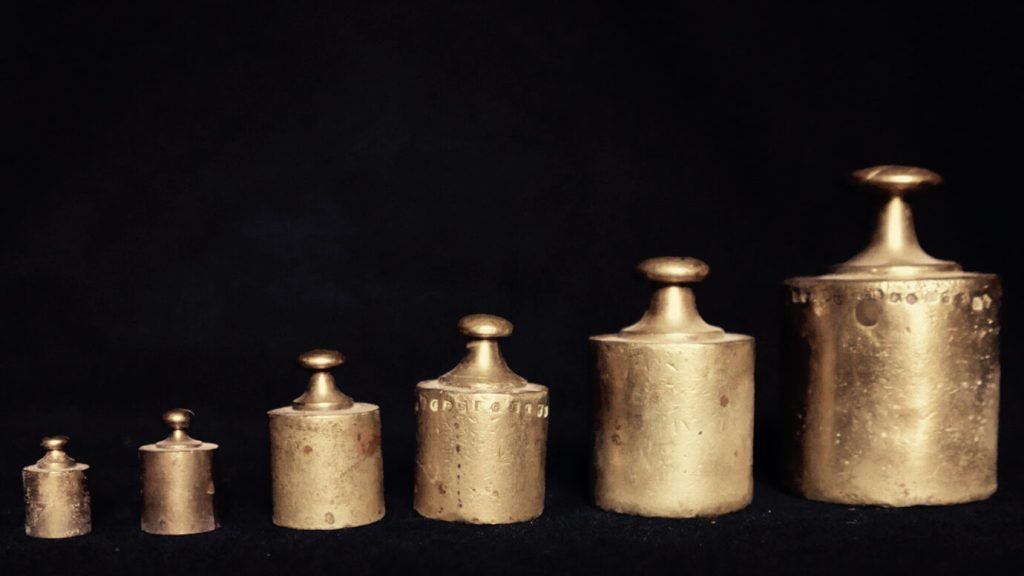
Meet the metric system’s newest prefixes: ronna-, quetta-, ronto- and quecto-.
Adopted November 18 at the 27th General Conference on Weights and Measures in Versailles, France, ronna- and quetta- describe exceedingly large numbers while ronto- and quecto- describe the exceedingly small. This is the first time that the International System of Units, or SI, has expanded since 1991, when the prefixes zetta-, yotta-, zepto and yocto- were added (SN: 1/16/93).
Numerically, ronna- is 1027 (that’s a digit followed by 27 zeroes) and quetta- is 1030 (30 zeroes). Their tiny counterparts ronto- and quecto- also refer to 27 and 30 zeroes, but those come after a decimal point. Until now, yotta- and yocto- (24 zeros) capped off the metric system’s range.
Science News spoke with Richard Brown, head of metrology at the National Physical Laboratory in Teddington, England, about what the latest SI expansion means for science. The following conversation has been edited for clarity and brevity.
SN: Why do we need the new prefixes?
Brown: The quantity of data in the world is increasing exponentially. And we expect that to continue to increase and probably accelerate because of quantum computing, digitalization and things like that. At the same time, this quantity of data is starting to get close to the top range of the prefixes we currently use. People start to ask what comes next?
SN: Where do the prefix names come from?
Brown: About five years ago, I heard a BBC podcast about these new names for quantities of data. And the two that they mentioned were brontobyte and hellabyte. Brontobyte, I think comes from brontosaurus being a big dinosaur and hellabyte comes from “‘hell of a big number.”
The problem with those from a metrology point of view, or measurement point of view, is they start with letters B and H, which already are in use for other units and prefixes. So we can’t have those as names. [It was clear] that we had to do something official because people were starting to need these prefixes. R and Q are not used for anything else, really, in terms of units or SI prefixes. [The prefix names themselves are] very, very loosely based on the Greek and Latin names for nine and 10. SN: How will the prefixes be used?
Brown: The whole point of the International System of Units is it’s an accepted global system, which if you use, you will be understood.
When you use a prefix with a unit, it means that the number associated with the unit changes. And people like small numbers that they can understand. So you can express the mass of the Earth in terms of ronnagrams; it’s six ronnagrams. And equally the mass of Jupiter is two quettagrams. Some good examples of [small numbers] are that the mass of an electron is about one rontogram, and the mass of one bit of data as stored on a mobile phone is around one quectogram.
I think the use of a suitable prefix makes things more understandable. And I think we shouldn’t forget that even if there’s not always a direct scientific usage immediately, they will gain traction over time.
Tyrannosaurus rex isn’t just a king to paleontologists — the dinosaur increasingly reigns over the world of art auctions. A nearly complete skeleton known as Stan the T. rex smashed records in October 2020 when a bidding war drove its price to $31.8 million, the highest ever paid for any fossil. Before that, Sue the T. rex held the top spot; it went for $8.3 million in 1997.
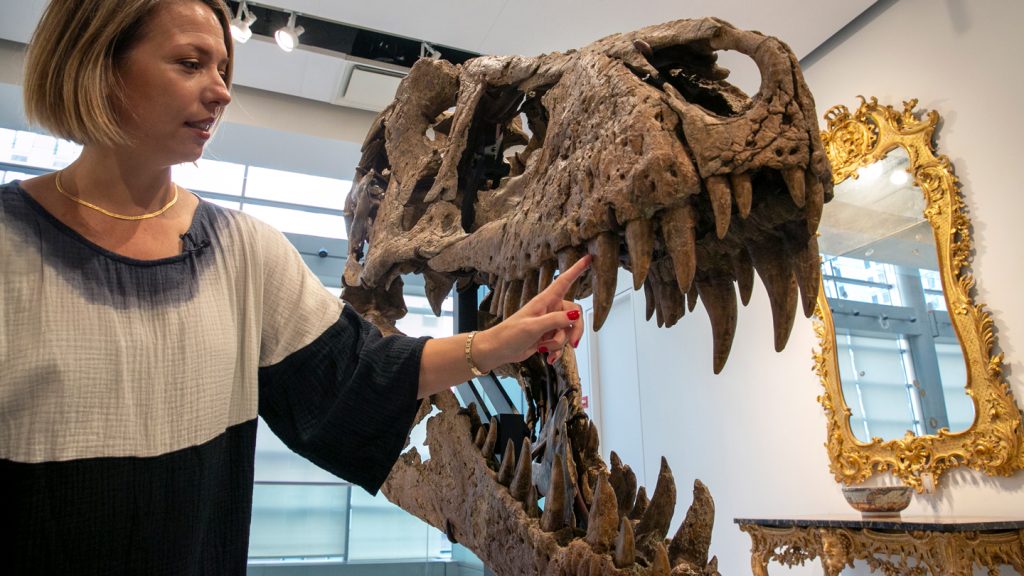
That kind of publicity — and cachet — means that T. rex’s value is sky-high, and the dinosaur continues to have its teeth firmly sunk into the auction world in 2022. In December, Maximus, a T. rex skull, will be the centerpiece of a Sotheby’s auction in New York City. It’s expected to sell for about $15 million.
Another T. rex fossil named Shen was anticipated to sell for between $15 million and $25 million at a Christie’s auction in Hong Kong in late November. However, the auction house pulled it over concerns about the number of replica bones used in the fossil. “These are astronomical sums of money, really surprising sums of money,” says Donna Yates, a criminologist at Maastricht University in the Netherlands who studies high-value collectibles.
Stan’s final price “was completely unexpected,” Yates says. The fossil was originally appraised at about $6 million — still a very large sum, though nothing like the final tally, which was the result of a three-way bidding war.
But the staggering amounts of money T. rex fossils now fetch at auction can mean a big loss for science. At those prices, the public institutions that might try to claim these glimpses into the deep past are unable to compete with deep-pocketed private buyers, researchers say.
One reason for the sky-high prices may be that T. rex fossils are increasingly being treated more like rare works of art than bits of scientific evidence, Yates says. The bones might once have been bought and sold at dusty “cowboy fossil” dealerships. But nowadays these fossils are on display in shiny gallery spaces and are being appraised and marketed as rare objets d’art. That’s appealing to collectors, she adds: “If you’re a high-value buyer, you’re a person who wants the finest things.”
But fossils’ true value is the information they hold, says Thomas Carr, a paleontologist at Carthage College in Kenosha, Wis. “They are our only means of understanding the biology and evolution of extinct animals.”
Keeping fossils of T. rex and other dinosaurs and animals in public repositories, such as museums, ensures that scientists have consistent access to study the objects, including being able to replicate or reevaluate previous findings. But a fossil sold into private or commercial hands is subject to the whim of its owner — which means anything could happen to it at any time, Carr says. “It doesn’t matter if [a T. rex fossil] is bought by some oligarch in Russia who says scientists can come and study it,” he says. “You might as well take a sledgehammer to it and destroy it.”
A desire for one’s own T. rex There are only about 120 known specimens of T. rex in the world. At least half of them are owned privately and aren’t available to the public. That loss is “wreaking havoc on our dataset. If we don’t have a good sample size, we can’t claim to know anything about [T. rex],” Carr says.
For example, to be able to tell all the ways that T. rex males differed from females, researchers need between 70 and 100 good specimens for statistically significant analyses, an amount scientists don’t currently have.
Similarly, scientists know little about how T. rex grew, and studying fossils of youngsters could help (SN: 1/6/20). But only a handful of juvenile T. rex specimens are publicly available to researchers. That number would double if private specimens were included.
Museums and academic institutions typically don’t have the kind of money it takes to compete with private bidders in auctions or any such competitive sales. That’s why, in the month before Stan went up for auction in 2020, the Society for Vertebrate Paleontology, or SVP, wrote a letter to Christie’s asking the auction house to consider restricting bidding to public institutions. The hope was that this would give scientists a fighting chance to obtain the specimens.
But the request was ignored — and unfortunately may have only increased publicity for the sale, says Stuart Sumida, a paleontologist at California State University in San Bernardino and SVP’s current vice president. That’s why SVP didn’t issue a public statement this time ahead of the auctions for Shen and Maximus, Sumida says, though the organization continues to strongly condemn fossil sales — whether of large, dramatic specimens or less well-known creatures. “All fossils are data. Our position is that selling fossils is not scientific and it damages science.”
Sumida is particularly appalled at statements made by auction houses that suggest the skeletons “have already been studied,” an attempt to reassure researchers that the data contained in that fossil won’t be lost, regardless of who purchases it. That’s deeply misleading, he says, because of the need for reproducibility, as well as the always-improving development of new analysis techniques. “When they make public statements like that, they are undermining not only paleontology, but the scientific process as well.”
And the high prices earned by Stan and Sue are helping to drive the market skyward, not only for other T. rex fossils but also for less famous species. “It creates this ripple effect that is incredibly damaging to science in general,” Sumida says. Sotheby’s, for example, auctioned off a Gorgosaurus, a T. rex relative, in July for $6.1 million. In May, a Deinonychus antirrhopus — the inspiration for Jurassic Park’s velociraptor — was sold by Christie’s for $12.4 million.
Protecting T. rex from collectors Compounding the problem is the fact that the United States has no protections in place for fossils unearthed from the backyards or dusty fields of private landowners. The U.S. is home to just about every T. rex skeleton ever found. Stan, Sue and Maximus hail from the Black Hills of South Dakota. Shen was found in Montana.
As of 2009, U.S. law prohibits collecting scientifically valuable fossils, particularly fossils of vertebrate species like T. rex, from public lands without permits. But fossils found on private lands are still considered the landowner’s personal property. And landowners can grant digging access to whomever they wish. Before the discovery of Sue the T. rex (SN: 9/6/14), private owners often gave scientific institutions free access to hunt for fossils on their land, says Bridget Roddy, currently a researcher at the legal news company Bloomberg Law in Washington, D.C. But in the wake of Sue’s sale in 1997, researchers began to have to compete for digging access with commercial fossil hunters.
These hunters can afford to pay landowners large sums for the right to dig, or even a share of the profits from fossil sales. And many of these commercial dealers sell their finds at auction houses, where the fossils can earn far more than most museums are able to pay.
Lack of federal protections for paleontological resources found on private land — combined with the large available supply of fossils — is a situation unique to the United States, Roddy says. Fossil-rich countries such as China, Canada, Italy and France consider any such finds to be under government protection, part of a national legacy.
In the United States, seizing such materials from private landowners — under an eminent domain argument — would require the government to pay “just compensation” to the landowners. But using eminent domain to generally protect such fossils wouldn’t be financially sustainable for the government, Roddy says, not least because most fossils dug up aren’t of great scientific value anyway.
There may be other, more grassroots ways to at least better regulate fossil sales, she says. While still a law student at DePaul University in Chicago, Roddy outlined some of those ideas in an article published in Texas A&M Journal of Property Law in May.
One option, she suggests, is for states to create a selective sales tax attached to fossil purchases, specifically for buyers who intend to keep their purchases in private collections that are not readily available to the public. It’s “similar to if you want to buy a pack of cigarettes, which is meant to offset the harm that buying cigarettes does to society in general,” Roddy says. That strategy could be particularly effective in states with large auction houses, like New York.
Another possibility is to model any new, expanded fossil preservation laws on existing U.S. antiquities laws, intended to preserve cultural heritage. After all, Roddy says, fossils aren’t just bones, but they’re also part of the human story. “Fossils have influenced our folklore; they’re a unifier of humanity and culture rather than a separate thing.”
Though fossils from private lands aren’t protected, many states do impose restrictions on searches for archaeological and cultural artifacts, by requiring those looking for antiquities to restore excavated land or by fining the excavation of certain antiquities without state permission. Expanding those restrictions to fossil hunting, perhaps by requiring state approval through permits, could also give states the opportunity to purchase any significant finds before they’re lost to private buyers.
Preserving fossils for science and the public Such protections could be a huge boon to paleontologists, who may not even know what’s being lost. “The problem is, we’ll never know” all the fossils that are being sold, Sumida says. “They’re shutting scientists out of the conversation.”
And when it comes to dinosaurs, “so many of the species we know about are represented by a single fossil,” says Stephen Brusatte, a paleontologist at the University of Edinburgh. “If that fossil was never found, or disappeared into the vault of a collector, then we wouldn’t know about that dinosaur.”
Or, he says, sometimes a particularly complete or beautifully preserved dinosaur skeleton is found, and without it, “we wouldn’t be able to study what that dinosaur looked like, how it moved, what it ate, how it sensed its world, how it grew.”
The point isn’t to put restrictions on collecting fossils so much as making sure they remain in public view, Brusatte adds. “There’s nothing as magical as finding your own fossils, being the first person ever to see something that lived millions of years ago.” But, he says, unique and scientifically invaluable fossils such as dinosaur skeletons should be placed in museums “where they can be conserved and studied and inspire the public, rather than in the basements or yachts of the oligarch class.”
After its record-breaking sale, Stan vanished for a year and a half, its new owners a mystery. Then in March 2022, news surfaced that the fossil had been bought by the United Arab Emirates, which stated it intends to place Stan in a new natural history museum.
Sue, too, is on public view. The fossil is housed at Chicago’s Field Museum of Natural History, thanks to the pooled financial resources of the Walt Disney Corporation, the McDonald Corporation, the California State University System and others. That’s the kind of money it took to get the highest bid on a T. rex 25 years ago.
And those prices only seem to be going up. Researchers got lucky with Sue, and possibly Stan.
As for Shen, the fossil’s fate remains in limbo: It was pulled from auction not due to outcry from paleontologists, but over concerns about intellectual property rights. The fossil, at 54 percent complete, may have been supplemented with a polyurethane cast of bones from Stan, according to representatives of the Black Hills Institute of Geological Research in Hill City, S.D. That organization, which discovered Stan, retains a copyright over the skeleton.
In response to those concerns, Christie’s pulled the lot, and now says that it intends to loan the fossil to a museum. But this move doesn’t reassure paleontologists. “A lot of people are pleased that the sale didn’t go through,” Sumida says. “But it sort of just kicks the can down the road.… It doesn’t mean they’re not going to try and sell it in another form, somewhere down the road.”
Ultimately, scientists simply can’t count on every important fossil finding its way to the public, Carr says. “Those fossils belong in a museum; it’s right out of Indiana Jones,” he says. “It’s not like they’re made in a factory somewhere. Fossils are nonrenewable resources. Once Shen is gone, it’s gone.”